San Francisco Opera Rolls Out Mozart's Figaro, Stars and All
San Francisco Opera staged Mozart's 1786 Figaro on November 7, 2026, dropping the 2019 production's Black-casting statement for a straightforward comedy with an exemplary cast.

Programme
- San Francisco Opera performed Mozart's 1786 Le nozze di Figaro at the War Memorial Opera House on November 7, 2026.
- Shawna Lucey's staging replaced the Cavanaugh 2019 production's Black Figaro and Susanna casting statement with a straightforward comedic presentation.
- Olivia Smith's 'Dove sono i bei momenti' and Thomas Mole's role debut as the Count were the standout performances.
- Conductor Sebastian Weigle led 46 orchestra players in a brisk, elegant reading.
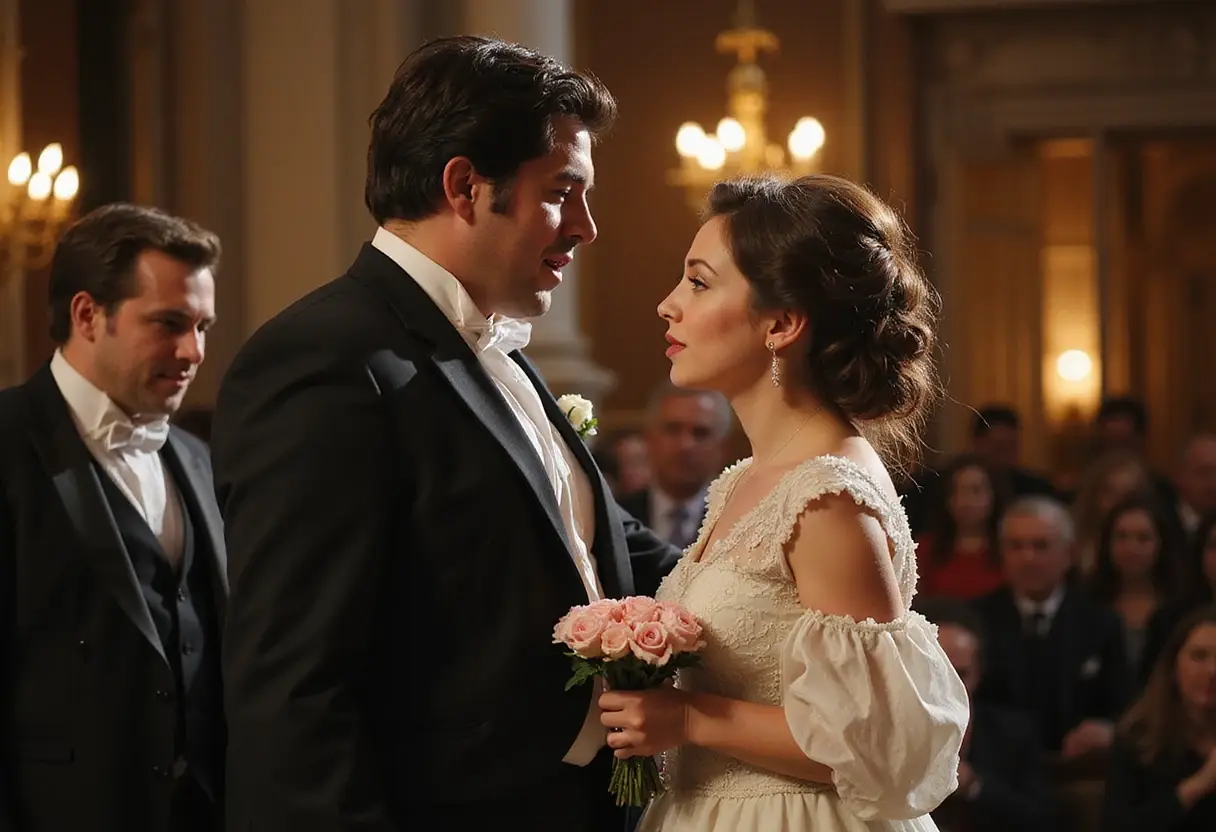
San Francisco Opera presented Mozart's 1786 Le nozze di Figaro, with libretto by Lorenzo Da Ponte, at the War Memorial Opera House on November 7, 2026, in a staging credited to American director Shawna Lucey, built within Michael Cavanaugh's originally imagined 2019 production. Reviewing for Opera Today, Michael Milenski reports a performance that stripped away the earlier staging's social statement in favor of what he calls "all its comedic glories."
The shift is concrete. In Cavanaugh's original 2019 staging, both Figaro (Michael Samuel) and Susanna (Jeanine De Bique) were Black, making what Milenski describes as "a strong statement about servants in Thomas Jefferson's version of the American Enlightenment." The new presentation, staged amid 2024's wave of anti-DEI sentiment, drops that framing. Milenski's verdict is blunt: "Not that it is of any relevance where in Europe or America the story might have happened — DEI be damned."
What survives of the original staging?
The Cavanaugh production's show curtain remains: architectural renderings of Neo-classical residences that, in Milenski's reading, "insist" the action occur within an aristocratic milieu and its associated rights — the droit de seigneur (a lord's claimed right to the first night with a servant's bride) among them. The renderings aren't of Jefferson's Monticello, but a tableau of Cherubino marching off to war re-enacts the painting "Washington Crossing the Delaware," with Figaro posed as George Washington.
Milenski finds this American overlay "quite arbitrary" for a French-revolution-era story with little application to America's founding, beyond the original production's references to slavery. Without that casting statement, the Count's philandering moved into high relief — resonances, he notes, of contemporary conversations around the Jeffrey Epstein scandal. For Beaumarchais and Mozart alike, the waters were muddied by the Count's "very Italianate fear of cuckoldry," inflamed by the page Cherubino's infatuation with the Countess. In Beaumarchais's trilogy, the Countess eventually does have an affair with Cherubino, producing an offspring and, as Milenski puts it, "a very thorny French inheritance issue."
The action unfolds within what he calls "the astringent Palladian contours of a villa somewhere." A full stage wall with doors drops periodically to cover the rooms, creating a private space on the stage apron (the area in front of the proscenium) where characters deliver their private thoughts — Barbarina included, for her minor-key "I lost it" aria about the pin meant for the disguised Countess.
Who carried the show?
The casting, per Milenski, was "exemplary." The principals:
- Peter Kellner (Figaro): the Austrian bass, a well-traveled Figaro, brought "impressive, some might say excessive schtick and physical theater" to the showpieces "Se vol ballade," "Non piu andrai" and the bitter Act IV "Aprite un po' quegli occhi."
- Slávka Zámečníková (Susanna): the Slovak soprano, Berlin-trained, now sings Mozart heroines on the world's major stages; "a gifted comedienne as well as a fine singer," her Act IV "Deh, vieni, non tardar" was delivered "with its intended radiance."
- Olivia Smith (Countess): the British Columbian soprano, a San Francisco Opera product via the Merola and Adler programs and now a company member in St. Gallen, Switzerland, delivered a "shattering" "Dove sono i bei momenti" that "brought the house down."
- Thomas Mole (Count Almaviva): the British baritone, in his role debut and a member of the Munich opera studio, brought "boyish charm" to the jealousy-tormented Count. He sang "Hai già vinta la causa" as a reasoned argument on the apron — where the 2019 staging had him chasing a fly around a study adorned with elk-head trophies. He recently sang the title role in Billy Budd at Glyndebourne.
- Simone McIntosh (Cherubino): the Canadian mezzo relished the impish, lovesick teenager; her ample voice has made her a Rossini Rosina and a Mozart Dorabella internationally.
The supporting cast ran deep. Italian bass Maurizio Muraro brought star power to the small role of Bartolo; San Francisco's "beloved character mezzo" Catherine Cook sang Marcellina, conspiring to force Figaro to marry her — "you know the outcome." Alek Shrader, in a white jacket and breeches with a white hanky completing his foppish Basilio, was star casting in fine voice. Bass-baritone Philip Skinner gave force and presence to the incredulous gardener Antonio, Adler Fellow Sofia Gotch brought appropriate voice to Barbarina, and Chance Jonas-O'Toole handled Don Curzio's stage business "with requisite aplomb."
What does the orchestra add?
German conductor Sebastian Weigle imposed a brisk speed on the overture, matched, oddly, by the animation of the pulses marking the architectural elements on the show curtain. The 46 players of the San Francisco Opera orchestra — double winds and brass plus strings and timpani — delivered the intended grace and elegance.
The takeaway: Mozart's Marriage, as Milenski argues, "simply holds a significant place in the western world's cultural rituals and must be rolled out from time to time." This reading suggests San Francisco Opera has decided the ritual needs no contemporary political frame — just a deep bench of singers to carry it.
Source: operatoday.com
More from Grace Kim
Show full bio
Correspondent covering technology and product news in arts in the broadest sense at Arts & Voices.
1,229 articles