Robert Nickelsberg documents 20 years of Kashmir conflict in new book
Robert Nickelsberg's Kashmir, the Valley, from Kehrer Verlag, gathers two decades of photographs of a conflict that began in 1989 and killed up to 45,000 people.
Programme
- Robert Nickelsberg photographed Kashmir repeatedly over more than 20 years; his book Kashmir, the Valley is published by Kehrer Verlag.
- The armed uprising for Kashmiri independence from India began in 1989 after a rigged state election, with support from Pakistan.
- Estimates of Kashmiri dead range from 10,000 to 45,000, and population mental health was severely affected after 18 years of conflict.
- Kashmir law minister Abdul Ghani Lone, a moderate favouring dialogue with India, was assassinated by a gunman at a campaign rally in 2000.
- The Kargil conflict lasted slightly over 11 weeks after Pakistani forces occupied Indian army positions abandoned during winter.
Robert Nickelsberg has photographed Kashmir for more than 20 years, and his new book, Kashmir, the Valley, published by Kehrer Verlag, collects the record. The photographer visited the region repeatedly across two decades, watching a political uprising become one of the world's longest unresolved conflicts.
The numbers frame the story. The armed uprising in favour of Kashmiri independence from India began in 1989, triggered by a rigged state election and sustained with material and political support from Pakistan. Estimates of Kashmiri dead vary from 10,000 to 45,000. After 18 years of conflict, the population's mental health had been severely affected.
"For me, as a photojournalist, the Kashmiris' plight was the essence of the story," Nickelsberg says. "This work is my personal commitment, over two decades, to recording the deadly tactics deployed by both Pakistan and India. Twenty years later, tragically, the picture is unchanged."
What does the book actually show?
The photographs stay close to daily life rather than front lines. One image shows a Kashmiri man suffering temporary loss of eyesight treated with prayers and curative koranic verses. Another shows an Indian schoolteacher beside a closed public high school.
A central picture documents Farida Sunderwani, a widow whose husband was killed in crossfire between Kashmiri militants and Indian army soldiers in 1992. She is treated by psychiatrist Dr Arshad Hussain at the outpatient department of the state-run Sri Maharaja Hari Singh Hospital in Srinagar. The image makes the mental health toll concrete.
Other frames carry the political chronology. Moderate and militant separatists argue at a mosque in Anantnag, after the allegedly rigged Jammu and Kashmir state legislative elections of 1987 prompted the Jammu and Kashmir Liberation Front's armed wing to call for independence and resistance. Mourners raise clenched fists at the funeral of a woman killed in crossfire at Eid Gah, a space reserved for Muslim prayers.
Women grieve over the body of Abdul Ghani Lone, Kashmir's law minister, in Sogam. A gunman assassinated Lone during a campaign rally for an upcoming state election. The moderate had favoured dialogue with the Indian government.
A pro-Pakistan militant brandishes a Kalashnikov during a street demonstration against Indian authorities on Pakistan's Independence Day. Two Pakistani soldiers stand at Mumtaz base camp near the Line of Control during the Kargil conflict, which began after Pakistani forces occupied Indian positions abandoned over winter and lasted slightly over 11 weeks. One soldier looks through binoculars down a valley toward an Indian Army convoy hit by direct artillery fire five to six kilometres away.
What holds the work together?
Nickelsberg returned to one place on most trips: the Shah-i-Hamdan shrine in Srinagar's old city. "Inside, I could quietly observe Kashmiris as they appeared to momentarily drop their fears and experience a period of calm, a sense of peace, either in deep thought or prayer, to recharge themselves, replenish their spiritual sides and find strength for their daily encounters with the conflict outside the walls of this historic site with an intricately decorated interior," he says.
At the Makhdoom Sahib shrine, visitors tie a "desh", a piece of cloth, to wish for a positive outcome during stress, trauma, sickness or sorrow. Shrines across Kashmir offer spiritual solace and prayer.
One tense frame catches a Border Security Force soldier patrolling houses on a weapons search. Nickelsberg notes that private citizens, even when uninvolved in the conflict, risked serious interrogation, torture or possible disappearance if militants had hidden weapons or ammunition in their homes.
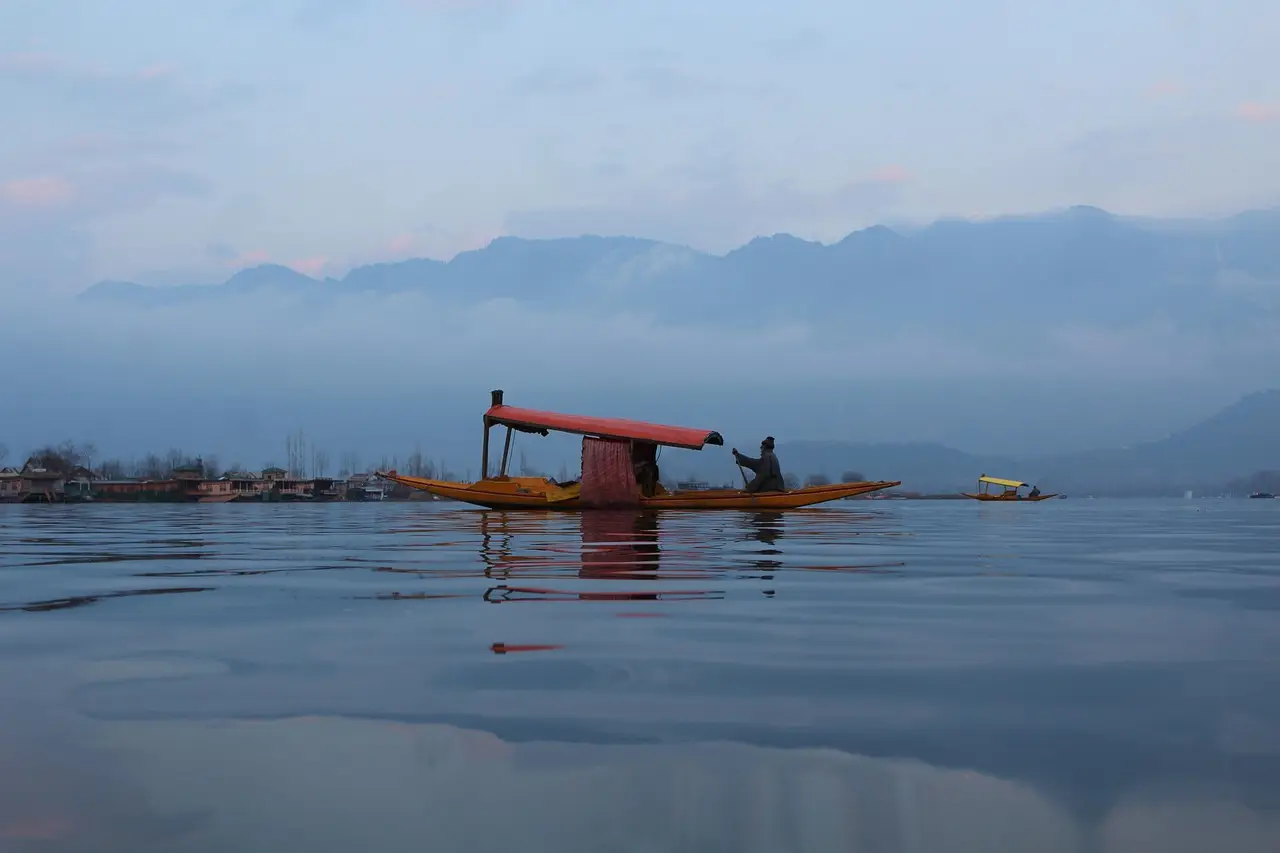
Muslim families, Hindu Pandits, soldiers, local politicians, children and pilgrims share the same visual field. Indian tourists sightsee from shikara boats on Dal Lake. The photographs resist easy hierarchies of victimhood or heroism; what holds the work together is sustained attention to lived experience.
Kashmir, the Valley is available to purchase from Kehrer Verlag. For readers asking what the book changes: it fixes a 20-year record on paper while, by the photographer's own account, the picture on the ground remains unchanged.
Source: theguardian.com
More from Marcus Bennett
Show full bio
Staff writer covering people, launches and day-to-day practice in arts in the broadest sense at Arts & Voices.
1,727 articles