Ron Athey stages Asclepeion in London at 65
Performance artist Ron Athey, 65 next month, stages Asclepeion in London this weekend. He reflects on HIV, Jesse Helms and why he'll never retire: 'My spirit is in performance.'
Programme
- Ron Athey stages Asclepeion in London this weekend and turns 65 next month
- In 1994 he was denounced on the Senate floor by Jesse Helms over Four Scenes in a Harsh Life
- The Minneapolis show took just $150 of indirect public money; co-performer Divinity Fudge was HIV negative
- In 1981 Athey co-founded Premature Ejaculation with Christian Death singer Rozz Williams
- He most recently received a $40,000 grant from the Trellis Art Fund
Ron Athey stages a new work, Asclepeion, in London this weekend, at the age of 65 next month. He is the performance artist once denounced on the floor of the US Senate, and his art has included suspending himself by chains while assistants pierce his flesh with arrows and needles.
"The nicest way to say what I do is that I want to create a miracle," Athey says. "The gnarly way is that I know what the edges are when it comes to the mortification of the flesh."
Speaking to the Guardian in a flat cap and Fred Perry hoodie — only his facial tattoos and platform boots give him away — Athey laid out the mechanics of a career built on punishing his own body in public. The point, as he frames it, is not shock for its own sake. It's transformation.
What does the new show actually draw on?
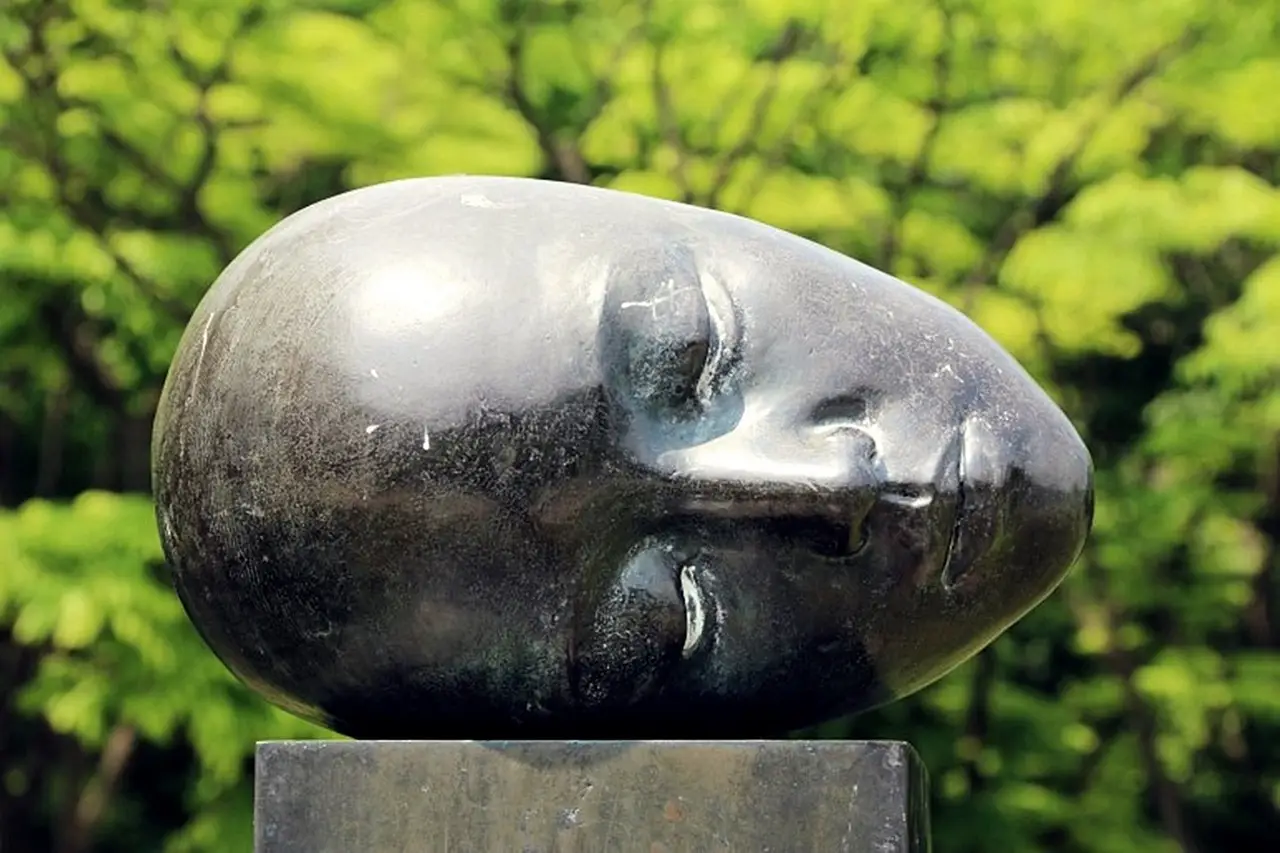
Asclepeion rests on Athey's research into Greek myth, including the figure of "the wounded healer, Asclepius." It also references Acéphale, the secret society founded in the 1930s by French writer Georges Bataille, whose emblem was a headless man. "In a juicy way, you could say they were doing chaos magick against fascism," Athey says.
A third source is the Eleusinian projector, an ancient camera obscura-style trick the Greeks used to make worshippers — who, Athey says, were "coming up on a primitive psychedelic wheat drink" — believe a goddess was appearing. Smoke, mirrors and illusions run through his work. So does flesh. He promises "a little bit of that" with suction in the new piece. "I think I'm a shapeshifter," he says.
His back catalogue explains the label "extreme." In Self-Obliteration, a naked Athey brushes a blond wig pinned to his head with blunt needles, then tears it off; blunt needles, he notes, make bigger holes. In Solar Anus, hooks stretch the skin of his face into something like an Egyptian death mask. In Deliverance, first staged in 1995, he appeared to be castrated — an illusion made by wrapping his scrotum around his penis and holding it with surgical staples. In another performance he injected his scrotum with two litres of saline. "I just like grotesque genitals," he says. His face, remarkably, shows little scarring: "I just have liquid skin. Not to brag!"
Where does the drive come from?
Athey points to his childhood in Pomona, California, raised by Pentecostal and spiritualist relatives he describes as in the grip of religious mania. His mother, severely schizophrenic and epileptic, was institutionalised. "My father was in the navy, so he was always somewhere far-flung on a submarine. I met him in my later 20s," he says.
At seven, he spontaneously cried in church and was declared an "ecstatic child" visited by the Holy Spirit. The congregation pinned squares of the minister's torn shirt inside their clothes. At nine, speaking in tongues, he was prescribed Valium four times a day — which became a full-blown drug addiction. The prescribing doctor was later arrested. "I always felt like I was doing time," Athey says of those years. "Just watching the clock, like, 'How the fuck do I get out of this situation?'"
He got out at 16, spending a summer at the Salk Institute in San Diego on a biochemistry track that thwarted his family's hopes he'd become a minister. He got his tear tattoo — matching his first boyfriend, an ex-con — to stay, as he puts it, in his own lane. "I never wanted to be anything conservative."
How did Aids shape the work?
A second chain of events set the art in motion. At 18 he dated Rozz Williams, the 16-year-old singer of Christian Death, often cited as the first US goth band. They soaked up punk, industrial music, LSD and the Viennese Actionists. In 1981 they formed the troupe Premature Ejaculation, whose early shows included Athey eating roadkill. The group collapsed as his addiction worsened; he got clean in 1986 through 12-step programmes and a friend's Nevada ranch, having refused treatment centres because of his institutionalised mother.
Then came an HIV-positive diagnosis, at a time when it usually meant early death. With no treatment available, he turned to reiki, Louise Hay's gatherings and vedanta, and returned to performance, urged on by the singer Lydia Lunch. His bleeding body became his answer to being a person living with Aids: "I'm not this frightening, dying thing — or I am, but I'm still alive and expressing myself."
What did the Senate fight change?
The 1994 work Four Scenes in a Harsh Life made him a culture-war target. Athey cut the skin of co-performer Divinity Fudge — who was HIV negative — and hoisted bloodied tissues on a pulley. The Republican senator Jesse Helms denounced him on the Senate floor, and a false claim spread that audiences risked contracting HIV from the dripping blood, even though the show had taken just $150 of indirect public money. "Suddenly I was in 200 newspapers," Athey says. Blacklisted from most US venues, he found his audience in Europe, at London's ICA and at the fetish club Torture Garden.
Athey is now respected enough to win grants — most recently $40,000 from the Trellis Art Fund — and he has no plans to retire. "My spirit is in performance," he says. "The pathos of older performers, it kind of thrills me. No one's crazier than a crazy old person."
Source: theguardian.com
More from Grace Kim
Show full bio
Correspondent covering technology and product news in arts in the broadest sense at Arts & Voices.
1,813 articles