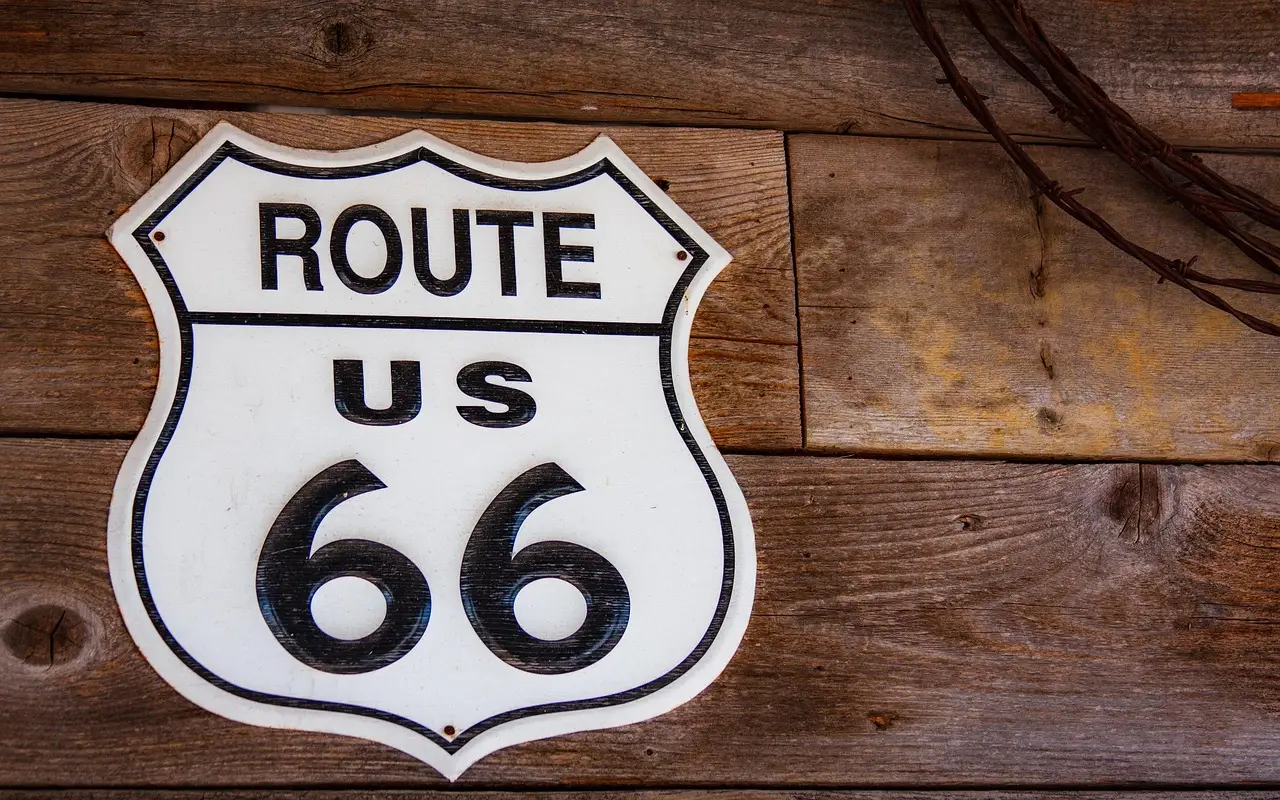
Route 66 Turns 100: America's Main Street Races to Save Itself
Route 66 turns 100 in November 2026. From a 42ft rocking chair to the last 9ft Model T pavement, preservationists race demolition across eight states.
Programme
- Route 66 was established on 11 November 1926 and decommissioned in 1985; its centennial falls in 2026.
- The highway spans almost 2,500 miles through eight states, from Chicago to Santa Monica.
- A bipartisan bill introduced last year proposes National Historic Trail designation.
- Oklahoma's Ribbon Road preserves the last 9ft-wide pavement segment built for Model Ts.
- Albuquerque's Route 66 Visitor Center opened last April with restored signs by Friends of the Orphan Signs, active since 2010.
US Route 66 turns 100 this 11 November 2026, and the birthday present is a scramble to save what's left. The road was officially born on 11 November 1926, with the launch of the nation's first federal highway system. It was decommissioned in 1985. Everything in between — the motels, the diners, the fibreglass — is now a preservation problem.
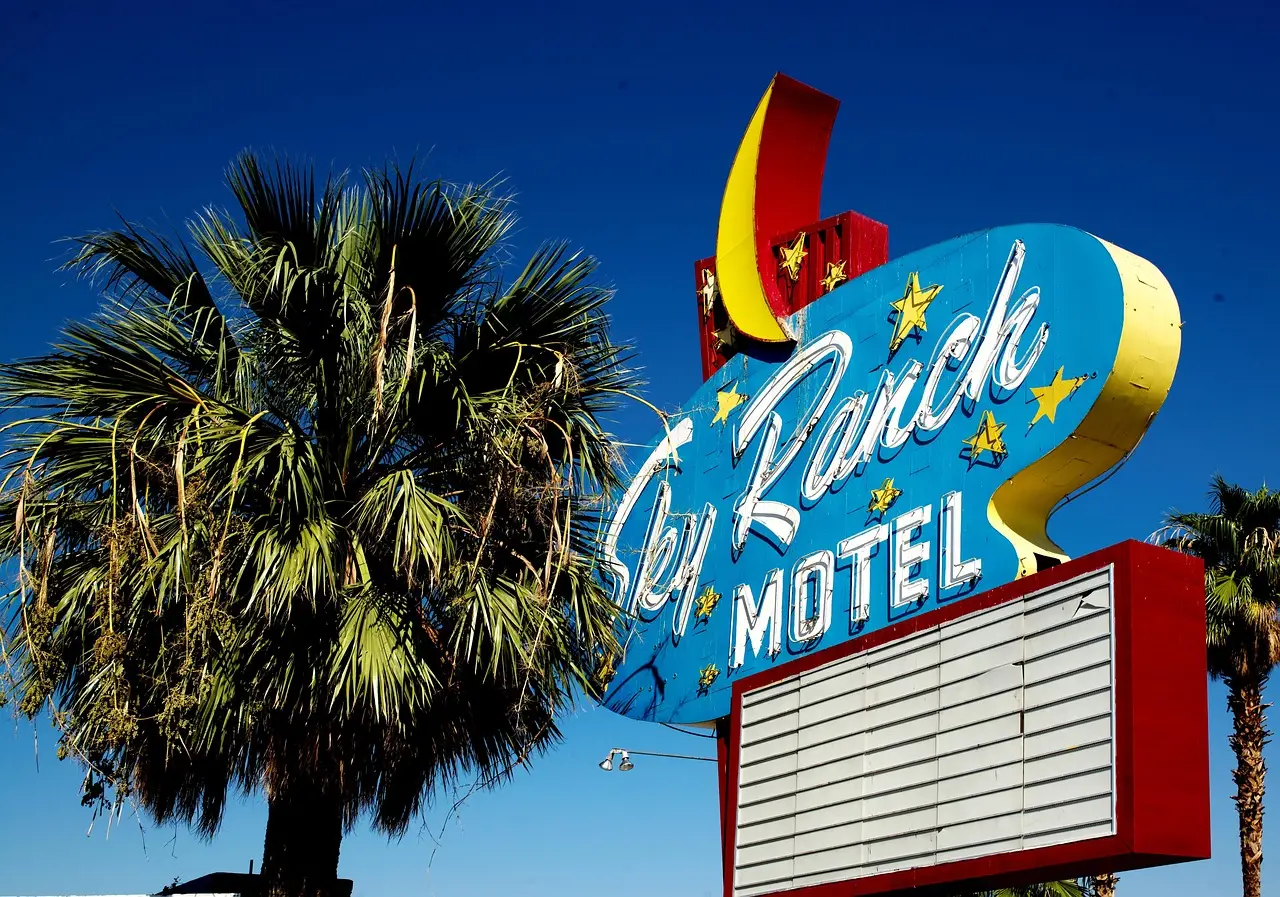
Nearly 2,500 miles run through eight states, from Chicago, Illinois, to Santa Monica, California. Affordable cars after the Second World War turned the highway into a destination, and a vernacular culture grew along it: neon signs, themed motels, roadside attractions in concrete and fibreglass. New highways bypassed the Art Deco service stations and mid-century diners. Time did the rest.
Who is fighting for the road?
The National Trust for Historic Preservation runs the Preserve Route 66 Initiative, managed by Rhys Martin. He wants the record corrected. "Most people think of '57 Chevys and cheeseburgers and Marilyn Monroe, and there's a lot of that, but there's so much more," Martin says. "It ties together so many diverse cultures, from Native American to African American."
He points to his home state, where the road passes the Asian District in Oklahoma City, built around Vietnamese refugees during the war, and to West Hollywood's large LGBTQ presence on the corridor. The initiative's grants reflect that range. They fund structural repairs — the Fanning 66 Outpost in Cuba, Missouri, with its 42ft-high rocking chair, the world's largest until 2015 — and storytelling projects, such as mapping Native American experiences along a road that crosses many tribal and ancestral lands with little representation of their voices.
Pavement counts too. The Ribbon Road in Ottawa County, Oklahoma, holds the last segment of a 9ft-wide design built for Model Ts. Local advocacy partially protected it from resurfacing this year.
"You might think a pavement's not art, but when you get out and look at it, especially compared to what it is today, it is very different," Martin says. "These are the same roads that the Model Ts went west on during the Dust Bowl to seek a better life, and the fact that I get to drive these same roads tells a story."
What would National Historic Trail status change?
A bipartisan bill introduced last year proposes National Historic Trail designation. Martin notes the road today resembles its pre-1926 self — a loose network of fragments. The designation would, in his words, "get people to sit at the same table, like the state Route 66 associations, the National Park Service and the Department of Transportation."
He calls it no roadblock but a signal: "This is important and we need to take care when the fabric of the road might be forever altered."
What are local groups saving?
The list is oddly touching.
- Martin, also president of the Oklahoma Route 66 Association, is restoring a U-Haul painted by the late artist Bob Waldmire, who illustrated maps and postcards of the road's wonders.
- Catoosa, Oklahoma acquired the Blue Whale in 2020 from the family of Hugh S. Davis, who sculpted the 80ft-long concrete attraction in 1972 as a gift for his wife. A new Blue Whale Visitor Center with retro illuminated signage opened last May.
- Albuquerque opened a Route 66 Visitor Center last April, with a park of restored signs.
The Albuquerque cluster includes the first major project by Friends of the Orphan Signs (FOS), which since 2010 has revived abandoned signs in underserved neighbourhoods. Executive director Lindsey Fromm recalls the context: "There were areas of Route 66 with dozens of towering empty signs," marking buildings razed by the city.
Most restorations return signs to former glory. FOS reimagines them as public art. Its Revivir (2012), now at the visitor centre, was made with students who designed visuals responding to local nature, bordered in purple neon.
"While artists lead these sign projects, they will collaborate with communities, archives, the surrounding environment, or will collect histories and stories to create the work that is displayed, so that it speaks to the immediate moment and surrounding community," Fromm says.
The road is no longer a main thoroughfare. But as the centennial approaches, these grassroots and national efforts treat Route 66 as what it remains: a working connector from the Midwest to the Pacific, linking urban and rural communities, residents and the travellers who keep driving those Dust Bowl ruts.
Source: theartnewspaper.com
More from Daniel Okafor
Show full bio
News editor covering companies, deals and strategy in arts in the broadest sense at Arts & Voices.
1,255 articles