Trump Returns to Supreme Court Over $400 Million White House Ballroom
One day after a historic electoral defeat, Trump's solicitor general asked the Supreme Court to bless his 70%-complete, $400 million White House ballroom and military complex.
Programme
- Sauer filed the Supreme Court petition on November 5, 2026, one day after Democratic election wins.
- The project costs $400 million and spans 90,000 square feet, including a 22,000-square-foot ballroom-military complex.
- Judge Richard Leon's April 2026 opinion rejected the plan; the Supreme Court allowed construction 5–4 on August 31.
- Sauer says the project is 70% complete and cannot be unwound.
- The East Wing was razed abruptly in October 2025.
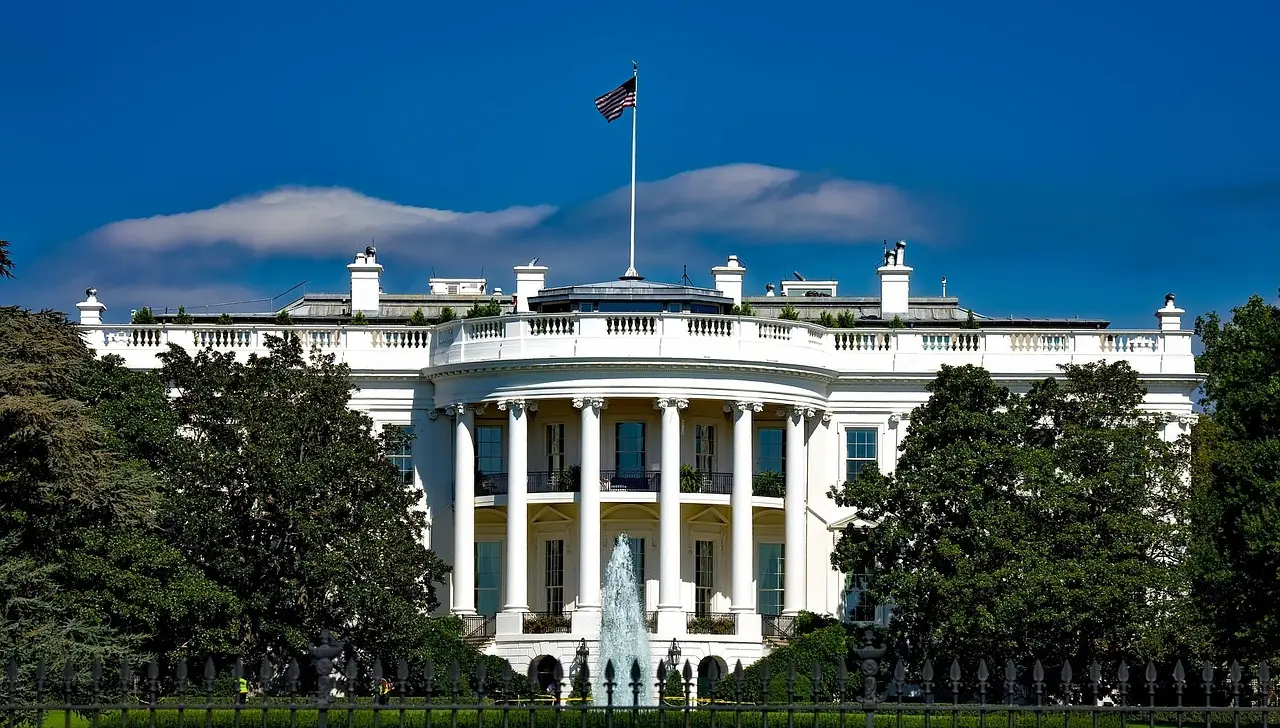
One day after Republicans suffered a historic electoral rout, Donald Trump toured the construction site of his White House ballroom and talked about it for nearly 20 minutes. PBS reported that he did so "without mentioning sweeping Republican defeats around the country the night before." The president's priorities remain, at minimum, consistent.
The next day, Solicitor General D. John Sauer filed a petition asking the Supreme Court to greenlight the 90,000-square-foot project, which includes a 22,000-square-foot ballroom-cum-military complex. The filing asks the justices to reverse outright, or at least hear arguments on, a district court injunction from August that halted the "renovation" of the East Wing. The $400 million project has drawn lawsuits and heated debate since its inception, as SCOTUSblog explains.
Who is actually suing?
The petition frames the case uncharitably. It claims the injunction was granted "at the behest of a single passerby claiming she will dislike how the new building looks." That passerby is Alison K. Hoagland, a board member of the National Trust for Historic Preservation. Whether she has legal standing (the right to sue because of a direct, personal injury) is the central issue.
Sauer argues she has none, citing precedent that "mere offense, disagreement, or distaste does not qualify as a concrete and particularized injury." He calls the ballroom "a vital national-security effort taking place on the White House grounds with the President's personal involvement," claiming the president faces "an onslaught of assassination attempts." Counting generously, there have been three.
What do the courts have to do with it?
Plenty, and they have not been shy. Trump razed the East Wing abruptly in October 2025. In April 2026, US District Court judge Richard J. Leon wrote a 35-page opinion — deploying some 18 exclamation marks — rejecting the plan. He wrote: "the President of the United States is the steward of the White House for future generations of First Families. He is not, however, the owner!"
The DC Circuit (the federal appeals court) froze Leon's order, then a three-judge panel upheld it in August, delaying the effective date two weeks so the government could appeal. The majority held that only Congress has the power "to regulate the construction and demolition of White House structures." One dissenting judge said Hoagland lacked standing.
The Supreme Court has already touched this case once. In August, a federal court ruled Trump lacked authority to build without Congressional approval, but Chief Justice John Roberts issued a stay, and on August 31 the Court ruled 5–4 for the White House. Roberts, joined by Ketanji Brown Jackson, Elena Kagan and Sonia Sotomayor in dissent, wrote that the construction "is likely unlawful" and that the decision was "no victory for the separation of powers." That dissent also found Hoagland did have standing.
The administration calls Leon's ruling "extraordinary and unlawful." Sauer argues construction is "vitally required by national security" and that Hoagland's "dislike" of the building is not a legal injury.
Why can't the project simply stop?
According to the petition, physics has voted too. Sauer writes that the project is 70% complete and that "there remains no sound way now to redesign or unwind the massive superstructure that is currently standing at the White House." The government also says the old East Wing could not have supported blast-proof windows, fortified walls and missile-resistant columns, nor an underground military installation; a consultation with the Secret Service and the National Park Service supposedly found demolition the most cost-effective path, keeping the new wing "minimally visible from public spaces."
Demolition as discretion, then. The justices must now decide whether a fait accompli is also a legal argument.
Original: pbs.org
More from Daniel Okafor
Show full bio
News editor covering companies, deals and strategy in arts in the broadest sense at Arts & Voices.
1,255 articles