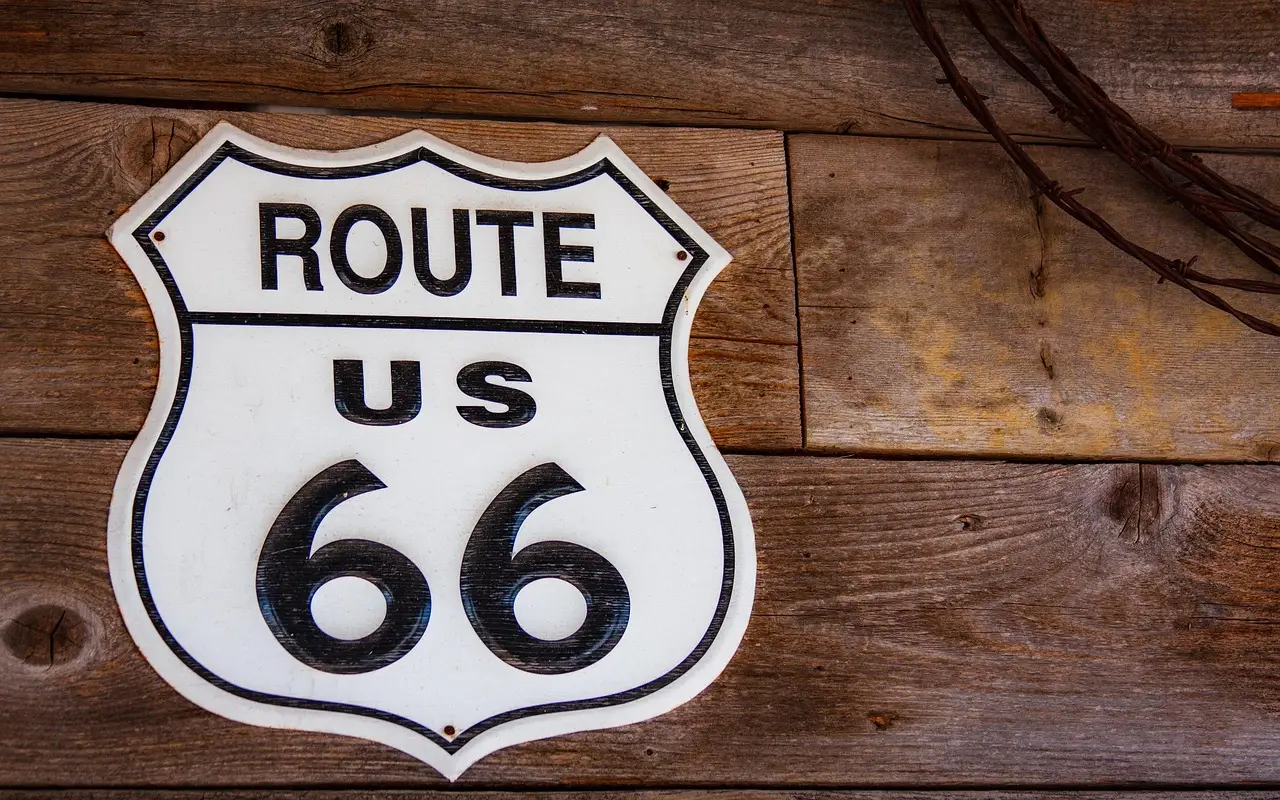
Route 66 Turns 100, and The Green Book Turns 90: A Double Anniversary in the Desert
Route 66 turns 100 and The Green Book turns 90. NPR's road trip through Flagstaff finds an oasis for Black travelers — and ghosts along the Mother Road.
Programme
- Route 66 was officially established on November 11, 1926, and turns 100 this month.
- The Green Book, first published 90 years ago by Harlem postman Victor Green, ceased publication in 1966.
- Flagstaff held the most Green Book listings of any Route 66 town between New Mexico and Los Angeles.
- Route 66 was decommissioned in 1985, replaced largely by Interstate 40.
- Coral Evans became Flagstaff's first Black mayor in 2016 and launched the city's Green Book Tour.
Route 66 turned 100 this month, and The Green Book — the travel guide that kept Black motorists alive on it — turned 90. NPR's Ayesha Rascoe marked the double anniversary with a road trip through Arizona, GPS failing, on a beat-up original alignment of the road near Townsend-Winona Road outside Flagstaff.
Her guide, archaeologist David Purcell of the Museum of Northern Arizona, supplied the founding date: November 11, 1926, when the federal highway system came into being after years of advocacy by "good roads" organizations. "Roads equal economic prosperity," Purcell said of their logic. Route 66 stretched more than 2,000 miles from Chicago to Los Angeles and became a central artery for Depression-era and Dust Bowl migration west.
Whose road was it, though?
Nostalgia paints the highway in neon and chrome. The reality was sharper. Rascoe's second guide, Fisk University historian Ricardo Guthrie, noted that Route 66 was dotted with sundown towns — communities where Black travelers could pass through by daylight at their peril. "Escaping Jim Crow legal segregation and running into de facto segregation or social custom was a reality," Guthrie said.
Enter Victor Green, a Harlem postman who published The Green Book nine decades ago. "He made 'The Green Book' as a directory of where you could eat, sleep and rest," Guthrie said, expanding it west once he saw travelers heading down Route 66. Green's stated aim: to "give the negro traveler information that will keep him from running into difficulties."
Why Flagstaff mattered
Flagstaff, at 7,000 feet in forested mountains, held the most Green Book listings of any town on Route 66 between New Mexico and Los Angeles. Black families from Louisiana, Texas and Alabama arrived with timber skills for the lumber industry. "The communities were built first, and then 'The Green Book' came along," Guthrie said.
Sissie Hickman, whose parents left Jim Crow Louisiana in the 1940s, recalled her father's brutal lumber work — "he was really injured and was literally laid up for one year" — and a childhood sustained by her mother's cinnamon rolls. At about 13, she joined a peaceful sit-in at the segregated El Charro restaurant. "Why can't we just go to the front door?" she remembered asking. "We pay up there, but we have to go to the back to get the fries."
What survives, and what doesn't
Surviving Green Book sites are scarce. The Park Plaza Motel is now a university parking lot; the El Rancho is a thrift shop. But the Motel Du Beau, opened in 1929 by a French-Canadian family from "the north end of the Underground Railroad," still bears its dove-and-peace sign. Owner John McCulloch says the family weren't "going to turn anybody away."
Coral Evans, Flagstaff's first Black mayor (elected 2016), launched the city's Green Book Tour. "Not everybody gets the same amount of freedom in the same amount of way," she said. Her daughter Destiney, 29, endured racial threats during her mother's tenure but remains unbowed: "If I got to deal with this stuff so that my kid has a little less stuff to deal with, then that's what we're going to do."
Route 66 was decommissioned in 1985; The Green Book ceased publication in 1966, two years after the Civil Rights Act. Green had predicted that day in his 1949 edition: "There will be a day sometime in the near future when this guide will not have to be published." Guthrie's verdict on the legacy: "The journey was worth it." NPR continues its Route 66 series in coming weeks, from Tulsa's neon revival to a quintessential Illinois diner.
Source: NPR Arts
More from Daniel Okafor
Show full bio
News editor covering companies, deals and strategy in arts in the broadest sense at Arts & Voices.
1,394 articles