Scottish Ballet's These Violent Delights: a 70-minute nightmare of Romeo and Juliet
Scottish Ballet compresses Romeo and Juliet into 70 minutes of dreamlike dread. Hampson and Sansom cut the balcony scene and reshape the ending into mutual despair.
Programme
- These Violent Delights runs 70 minutes, compressing Shakespeare's Romeo and Juliet.
- The film is directed by Christopher Hampson and Oscar Sansom for Scottish Ballet.
- The title quotes Friar Lawrence's warning: "these violent delights have violent ends".
- The balcony scene is cut; the ending suggests a deliberate mutual act of despair.
- The Guardian calls it "an engrossing and fiercely physical dance film".
Scottish Ballet has compressed Romeo and Juliet into 70 minutes of dreamlike dread. The company's new film, These Violent Delights, directed by Christopher Hampson and Oscar Sansom, discards the balcony scene entirely and reworks the ending into what may be an anguished mutual gesture of despair rather than a trick gone wrong.
The review, published by The Guardian, calls the work "an engrossing and fiercely physical dance film" — taut, athletic, knotty and sensual. It is not a filmed stage performance beneath a proscenium arch. It is a film that inhabits its own theatrical space.
Where does the title come from?
The title quotes Friar Lawrence. At the couple's secret wedding ceremony, he warns that "these violent delights have violent ends" — that their passion will consume itself in the act of marriage. The review notes the warning proves true, but not in the way the friar thinks.
Hampson and Sansom take that warning as their organising principle. Romance gives way to dread. The structure is described as a radically impressionistic compression of the play's action, an extended nightmarish dream sequence.
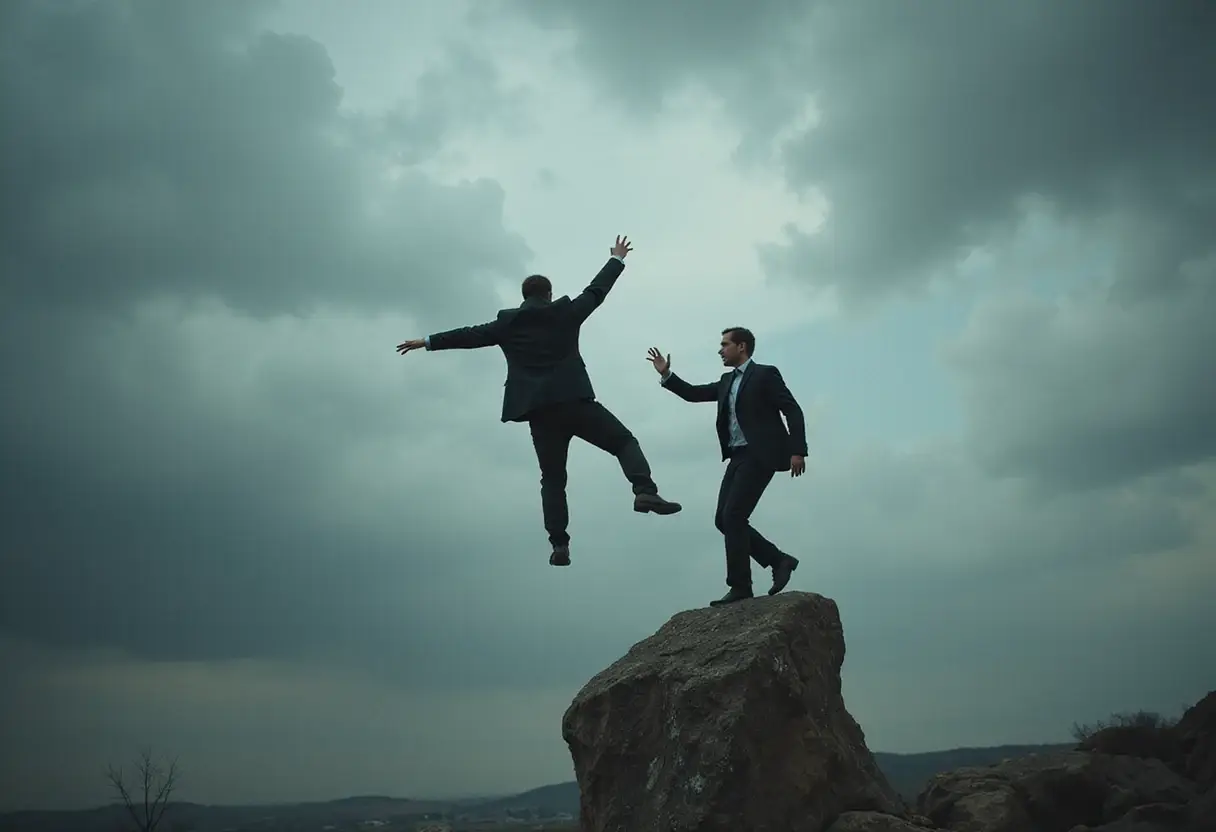
A repeated image anchors the unease: Juliet dragged across the grass by an unseen force. The Guardian's reviewer finds this scene disturbing each time it returns. It is the film's most insistent visual motif, and it signals from the outset that this Verona runs on compulsion rather than courtship.
What does this version change for the audience?
The practical question any viewer will ask is what survives the compression, and the answer is: the chemistry of bodies under pressure, not the familiar set pieces.
The cuts are substantial:
- The balcony scene is gone.
- The narrative is reframed as a single extended dream sequence.
- The ending is modified to suggest the double suicide might be deliberate — a mutual act of despair, not a tragic accident of timing.
That last change is the boldest. Shakespeare's plot turns on a letter that never arrives and a potion that works too well. Hampson and Sansom point toward something bleaker and more intentional, two people choosing an exit together.
The review does not treat this as a gimmick. It calls the modification "interesting", and frames the whole project as a reimagining that strips away romance in favour of dread — an engrossing one at that.
A film, not a recording
The medium matters here. Scottish Ballet has form in dance made specifically for the camera, and this production follows that line. The Guardian distinguishes it sharply from proscenium-arch capture: this is work conceived for film, with its own spatial logic and editing rhythm.
The choreography is described as fierce and physical throughout. The dancing bodies carry the argument that Shakespeare's words usually make. Passion, in the friar's phrase, consumes itself on screen rather than on stage.
What does this change for ballet audiences? It offers a model of how a classical company can keep a canonical story alive by cutting it to the bone and rebuilding it as cinema — a path other companies watching Scottish Ballet's film work may well follow.
Source: Guardian Film
More from Marcus Bennett
Show full bio
Staff writer covering people, launches and day-to-day practice in arts in the broadest sense at Arts & Voices.
627 articles