Serbia's Cultural Institutions Have Lost Their Independence
cancellations at BITEF 2025, a publisher revolt at the Book Fair and censorship rows at FEST expose a broader Serbian conflict over who controls public cultural space.
Programme
- BITEF's board rejected Milo Rau's The Pelicot Trial from the 2025 programme, prompting cancellations by international companies including Motus
- Publishers were completely excluded from the 2025 Belgrade Book Fair Board, triggering what Dejan Begović called a 'cold shower'
- FEST opened on 2 October 2026 with Lordan Zafranović's The Cutting Edge 42 (The Children of Kozara)
- BITEF was founded in 1967 by Mira Trailović and Jovan Ćirilov
- The Belgrade fair complex is to relocate to Surčin after EXPO 2027
By Marcus Bennett
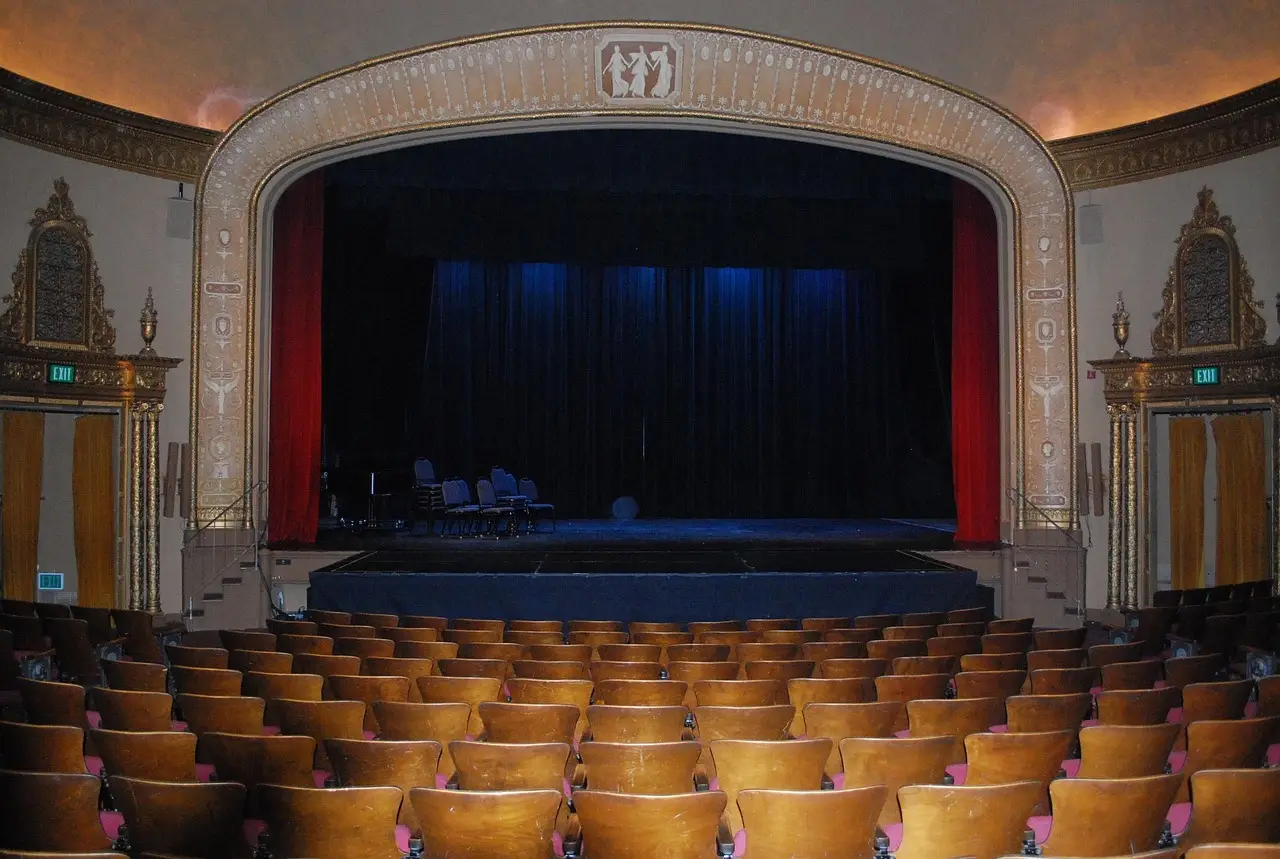
The board of the Belgrade International Theatre Festival rejected Milo Rau's internationally lauded play The Pelicot Trial from its 2025 programme, and the international theatre community walked away in response. The Italian company Motus led the cancellations, citing, as reported by Eurozine contributor Aleksandra Ilic Zadnikar, the festival's institutional crisis and its political context. The conflict over BITEF is no longer about one festival. It has become a fight over the relationship between art, institutions and political power in Serbia.
BITEF, founded in 1967 by Mira Trailović and Jovan Ćirilov, grew into one of Europe's oldest and most influential theatre festivals — a bridge between East and West. Its history tracks the wider trajectory of Serbian culture. Under socialist Yugoslavia, the festival opened the local scene to theatrical languages from around the world. During the wars, sanctions and isolation of the 1990s, it leaned on domestic artists. The Slovenian artist Dragan Živadinov, a participant since the 1980s, describes BITEF as a 'theatrical celebration' and a 'hippie zone of freedom' whose basic function remained 'to produce a disturbance within the established theatre system'.
What happened at BITEF 2025?
The trigger was Milo Rau himself. At BITEF 2024, the Swiss director — artistic director of the Vienna Festival — used his opening speech to condemn lithium mining projects in Serbia, a topic tied to widespread anti-government protests. Government circles effectively declared him persona non grata. When BITEF's artistic team selected The Pelicot Trial for 2025, the board overruled them. The theatre community condemned the rejection as political censorship and retaliation.
Many of the companies that cancelled responded by joining NE:BITEF, a guerrilla-style initiative run under the motto 'Bitef is wherever we gather'. It staged experimental local and international performances across dozens of alternative spaces, galleries and micro-scenes in Belgrade. Živadinov saw in it an artistic persistence at a moment when even the 'glimmer of hope' had disappeared.
Who controls the Book Fair?
The same logic drives this year's conflict over the Belgrade Book Fair. Dejan Begović, president of the Association of Publishers and Booksellers of Serbia, said the crisis resulted from the complete exclusion of publishers from the 2025 Fair Board. The Fair had already been weakened by a publisher boycott and by the closure of stands on the day commemorating the Novi Sad railway station tragedy. Begović called the board exclusion a 'cold shower'.
The stakes will grow. After EXPO 2027, the entire fair complex is to move to Surčin on Belgrade's outskirts, raising the question of who shapes the new institution: the administration, or the publishers, writers and translators who built the Fair's programme.
A pattern across film festivals
FEST, returning to the Sava Centre after a longer break, opened on 2 October 2026 with Lordan Zafranović's The Cutting Edge 42 (The Children of Kozara), a film about children who suffered in the Jasenovac concentration camp. In both Serbia and Croatia, the film's financing and its selection triggered fierce debate over who determines cultural programming. The Martovski Festival, once the Yugoslav Festival of Documentary and Short Film known as 'Kratki metar', and the Yugoslav Film Archive (Jugoslovenska kinoteka) show how institutions survive a change of state and name while losing the community that gave them meaning.
What does this change for Serbia?
The essay's central argument: today's conflict differs from the 1990s, when alternative culture grew outside politically compromised institutions. Today the institutions exist. The question is who controls them and how much space remains for the people who built them. Begović argues every society must have a system for financing alternative culture, while Serbian policy has moved the other way.
The defeat of the Vučić regime, the author writes, offers a historic opportunity for institutional reform — yet cultural independence, a central demand of the student protests that followed the Novi Sad canopy collapse, has vanished from the political agenda. Immediate priorities lie with reform of the public broadcaster RTS, the police and the judiciary. Culture has been pushed to the margins, with the sole exception of EXPO 2027. Whether it returns to the agenda remains open — but the author finds strong grounds for optimism about Serbian culture after 25 October 2026.
Source: artsjournal.com
More from Marcus Bennett
Show full bio
Staff writer covering people, launches and day-to-day practice in arts in the broadest sense at Arts & Voices.
1,638 articles