‘Sinners: Sounds That Summon’ Opens at California African American Museum
The first museum show devoted to 'Sinners' and its Oscar-winning score opens at CAAM in Los Angeles, built around Sammie's guitar and the Club Juke sequence. Runs through March 14.
Programme
- “Sinners: Sounds That Summon” runs October 20–March 14 at the California African American Museum.
- It is the first museum exhibition devoted to the film's music, co-organized with Warner Bros. Archives.
- “Sinners” received 16 Oscar nominations at the 98th Academy Awards, the most of any film in history, and won four.
- The show centers on the guitar played by Sammie “Preacher Boy” Moore and includes Smoke and Stack's costumes.
- Imani Y. Haynes curates the exhibition.
The first museum exhibition dedicated to the music of Ryan Coogler's “Sinners” opened October 20 at the California African American Museum in Los Angeles. “Sinners: Sounds That Summon” runs through March 14, co-organized by CAAM and Warner Bros. Archives and curated by Imani Y. Haynes.
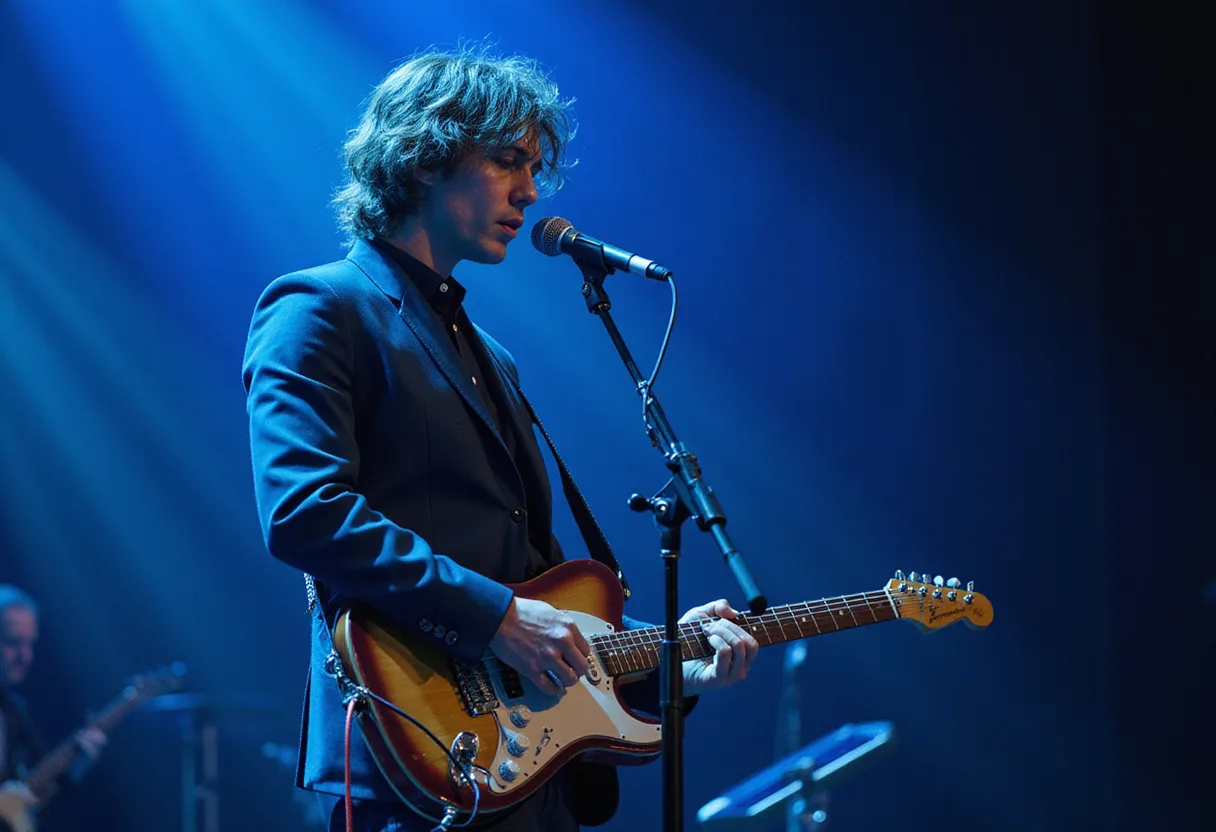
The show's center of gravity is a single object: the guitar played by Sammie “Preacher Boy” Moore, the film's young protagonist. Around it, the exhibition gathers costumes, props and archival material, including the outfits worn by Smoke and Stack — the twin brothers both played by Michael B. Jordan — and the Club Juke sign, staged to suggest the interior of the film's juke joint.
The museum frames the project in ambitious terms. “Sound has the power to form creative worlds that manifest joy, protection, belonging and freedom,” reads the official description. The exhibition “revisits the fan-favorite Club Juke sequence, in which music acts as a portal through time, from traditional African ritual to present-day street dance.”
That claim — music as a time-travel device — is the film's most discussed scene. Here it becomes the exhibition's organizing argument: that Black music carries “memory, movement, style and spirit across generations.”
What does the show actually contain?
The presentation divides into three themes: Music Makes Sound, Music Makes Movement and Music Makes Worlds. The first examines instruments and the traditions they carry. The second treats dance as embodied cultural memory, tracing how movement transforms across generations and communities. The third widens the lens to language, fashion, identity and community.
A fourth section, Sounds That Carry Us, closes the show as a participatory experience. Visitors will be asked to reflect on a song, sound or genre that returns them to joy, hope, freedom or community — a deliberate contrast, the museum says, between the safety inside Club Juke and the danger outside it.
The film behind the exhibition carries its own record. “Sinners,” set in 1932 in the Mississippi Delta, follows the twins as they fight supernatural forces after returning home. The cast includes Hailee Steinfeld, Miles Caton, Jack O'Connell, Wunmi Mosaku, Jayme Lawson, Omar Benson Miller, Li Jun Li and Delroy Lindo.
At the 98th Academy Awards, the film earned 16 nominations — the most of any film in history — and won four Oscars: best actor for Jordan, original screenplay for Coogler, cinematography for Autumn Durald Arkapaw and original score for Ludwig Göransson.
What changes for museumgoers?
For a studio and a museum, the exhibition is a test of whether a hit film's music can sustain a museum argument rather than a promotional display. The curators have staked the case on one guitar and one sequence; whether the three-theme structure adds analysis or simply arranges memorabilia is a question the objects themselves will answer.
For visitors, the payoff is access: props, costumes and archival material from the year's most-nominated film, viewable in Los Angeles at no remove, through March 14.
Source: Variety Film
More from Tom Whitfield
Show full bio
Market editor covering people, launches and day-to-day practice in arts in the broadest sense at Arts & Voices.
696 articles