Sleeping Beauty Reimagined: Humperdinck's Dornröschen Opens in Hamburg
Hamburg State Opera's new Dornröschen stretches Humperdinck's 90-minute fairy-tale opera with Tchaikovsky, Prokofiev and the Spice Girls, anchored by 89-year-old Nicole Heesters.

Programme
- Hamburg State Opera premiered Humperdinck's Dornröschen on 8 November 2026, further performances until 14 December.
- Nearly 600 people were involved in staging the production, directed by Anna Bergmann.
- The original opera lasts under 90 minutes and was expanded with music by Rossini, Wagner, Tchaikovsky, Prokofiev, Madonna and Cher.
- 89-year-old actress Nicole Heesters serves as time-travelling narrator, ending as a 200-year-old meeting her younger self.
- Oleksiy Palchykov sang Prince Reinhold; Markus Poschner conducted the Choir and Orchestra of Hamburg State Opera.
Hamburg State Opera premiered a new production of Engelbert Humperdinck's Dornröschen on 8 November 2026, with performances running until 14 December. The staging, directed by Anna Bergmann under Intendant Tobias Kratzer, mobilised nearly 600 people on stage and off.
The opera itself posed a structural problem. Humperdinck's Dornröschen, premiered in 1902 a decade after Hänsel und Gretel, lasts under ninety minutes — too short for a full evening in a major house. Bergmann's team stretched it with added dialogue, extended ballet sequences and inserted music by Rossini, Weber, Gounod, Wagner, Tchaikovsky, Prokofiev, Madonna and Cher. The production team defended the practice on one tenet: every orally transmitted fairy tale has been rewritten for each new era, so transformation is legitimate.
Who is Rosie in this version?
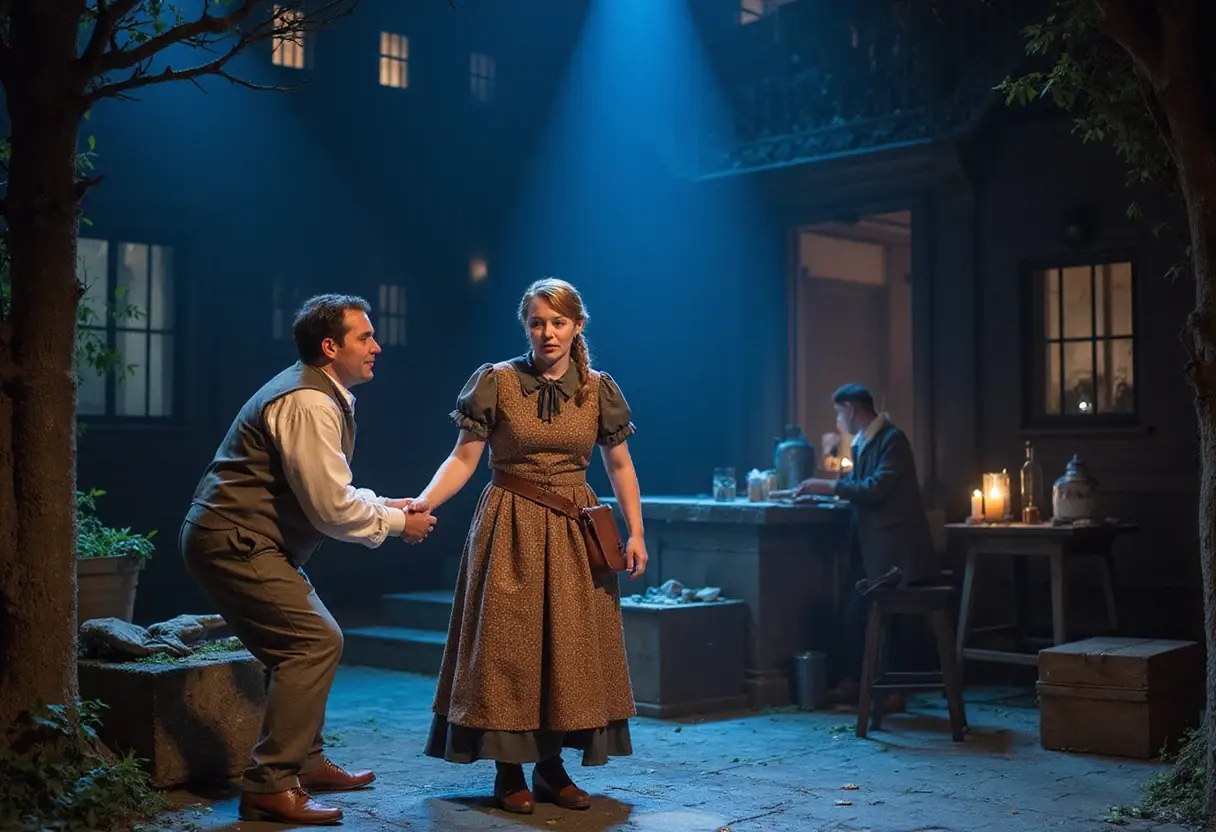
The German heroine is named — Röschen, a diminutive of Rose — unlike the unnamed heroines of the English and French (La Belle au bois dormant) traditions. Bergmann sets Rosie's back story in 1953. King Ringold, sung by Tim Porath, has rejected his lover, the thirteenth fairy Dämonia (Štěpánka Pučálková), in favour of Queen Armgart (Franziska Machens), who appears pregnant before the wedding. The twelve good fairies double as chorus and corps de ballet.
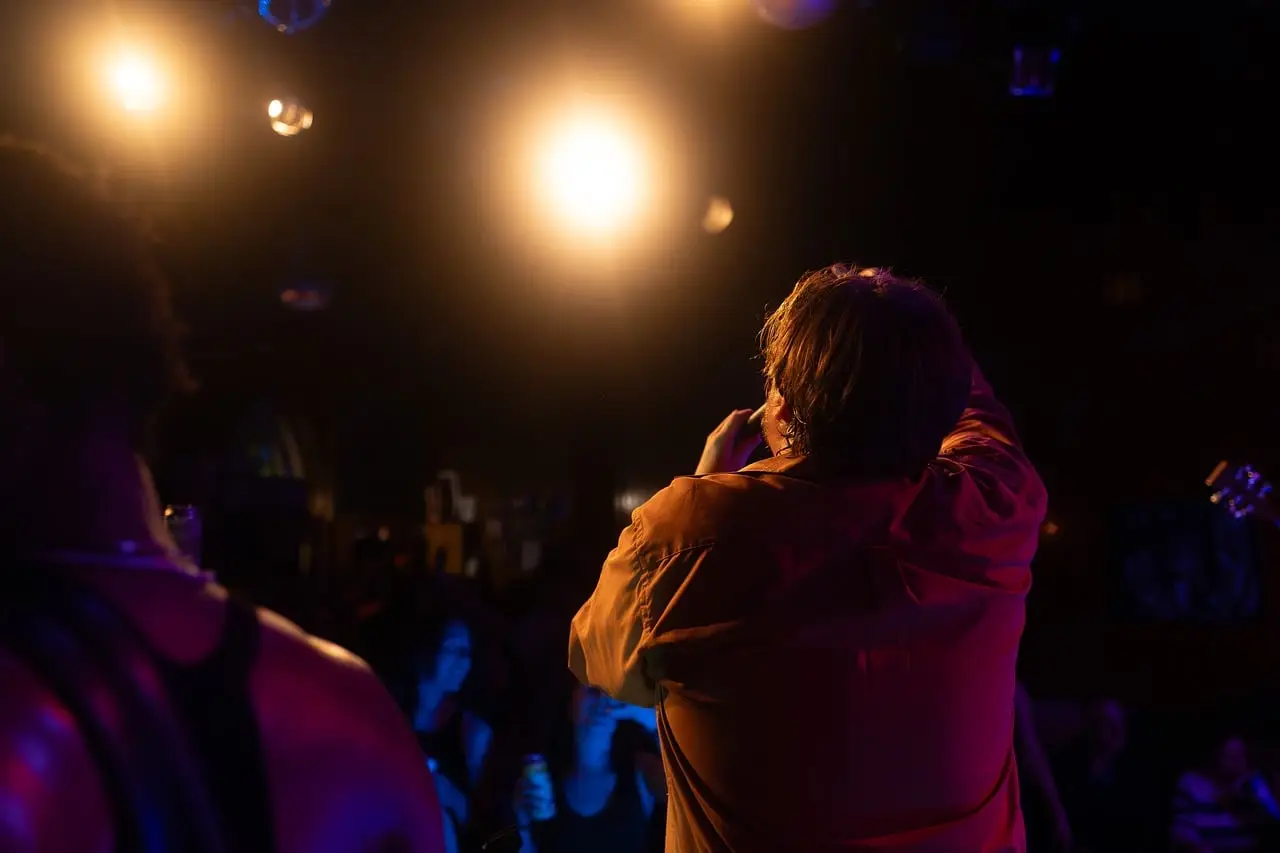
The production's narrative anchor is the 89-year-old actress Nicole Heesters, who travels through time and, as a 200-year-old, meets her younger self. She opens the evening in Cabaret-style from inside a suspended orb, declaring: "I have become what others have made of me." She closes with the words: "The relationship you have with yourself…is the most important relationship you'll ever have."
How much imported music does one Sleeping Beauty need?
The Gothic horror scenes unfold against Tchaikovsky's Romeo and Juliet. Dämonia's attempted seduction of Prince Reinhold borrows the Venus scene from Wagner's Tannhäuser, staged against a huge overflowing champagne glass. Her final gambit — plunging the fairy world into ice — arrives with the storm from Rossini's Guillaume Tell overture. Her duel with Reinhold, fought with a luminous laser sword against a magic wand tipped with emerald light, runs to "The Montagues and Capulets" from Prokofiev's Romeo and Juliet ballet. Conductor Markus Poschner, reviewer Alexander Hall noted, seemed to relish these imported episodes more than Humperdinck's own muted atmospheric writing. The grand finale adds the Spice Girls' "Wannabe" plus Madonna and Cher.
Jo Schramm's revolving set shows a turreted castle on one side and a steel-girdered factory warehouse on the other, where teenage Rosie defies her mother's warnings and meets the spinning-wheel. Reinhold's quest — two engagement rings, interrogations of the moon and sun, a giant yeti and a robot designated VG3 — struck Hall as "longwinded and repetitive".
What carried the evening?
Oleksiy Palchykov's Reinhold supplied the highlight: a lyrical ode to love and a high-lying aria appealing to the stars, his warm tenor matching Elbenita Kajtazi's bright soprano in the final duet. Kajtazi, who credits Maria Callas with turning her toward opera, also delivered fine coloratura runs in an aria from Gounod's Roméo et Juliette. Pučálková's Dämonia convinced both vocally and in close-up.
Humperdinck's score, Hall observed, lacks the memorable tunes of Hänsel und Gretel; its celebratory force sits in the festive and fairy choruses, projected convincingly here. The critic's verdict was blunt: the production was overburdened with political moments, feminist causes, cartoon figures and excessive animation — "As so often, less is more." Kratzer's push to open opera to new publics will be tested by how these additions land with Hamburg audiences through mid-December.
Source: operatoday.com
More from Elena Vasquez
Show full bio
Senior reporter covering technology and product news in arts in the broadest sense at Arts & Voices.
1,138 articles