Sofia Coppola Vows 'Never Doing This Again' in Mother's Documentary
Eleanor Coppola shot 80 hours on the Versailles set of her daughter's 2006 film; the result, narrated by Diane Lane, plays NYFF and hits Mubi Oct. 23.
Programme
- Making Marie Antoinette, compiled from 80 hours of Eleanor Coppola's footage, played NYFF's Spotlight section and will be released on Mubi on Oct. 23.
- Sofia Coppola said at the NYFF Q&A: "I enjoyed it, but I'm never doing this again."
- Costume designer Milena Canonero created over 70 dresses for Kirsten Dunst and won the Academy Award for Best Costume Design.
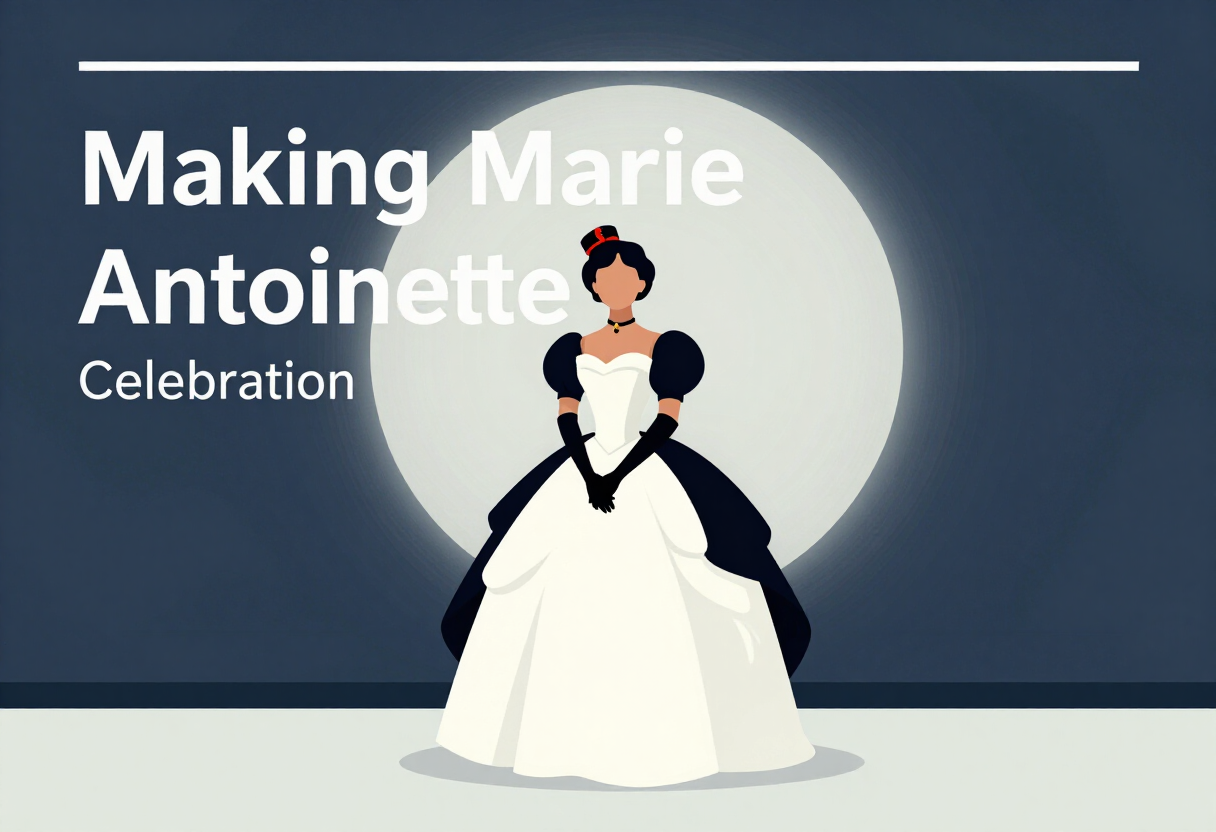
"I enjoyed it, but I'm never doing this again." Sofia Coppola says those words near the end of "Making Marie Antoinette," a feature documentary about the making of her 2006 film "Marie Antoinette," shot by her late mother, Eleanor Coppola. The film played the Spotlight section of the New York Film Festival and reaches Mubi on Oct. 23.
The fly-on-the-wall documentary draws on 80 hours of footage Eleanor shot during production on location at the Palace of Versailles. It captures a young filmmaker coming into her own, along with ample hijinks from stars Kirsten Dunst and Jason Schwartzman, who plays King Louis XVI and is also Sofia's cousin. "Marie Antoinette" opened in 2006 to mixed reviews and modest box office returns; it is now regarded as a cult classic.
At the film's post-premiere Q&A at NYFF, Sofia said the Coppola family gathered at their home in Napa Valley when they decided to revisit Eleanor's footage for the first time. The experience brought back a rush of memories. "It's embarrassing for me," Sofia said. "When I'm in the trailer complaining that I don't want to talk to my mom and being not nice… but it's important to show all the sides, and I'm crabby sometimes!"
Eleanor died in 2024 at 87. She was "always frustrated that the footage was never put together [into a film]," so Sofia, with editor Aaron Matthews, made her vision a reality. Eleanor had envisioned an observational film in the vein of Frederick Wiseman. Diane Lane, a longtime Coppola family collaborator, narrates, reading Eleanor's contemporaneous diary entries from twenty years ago. "There wasn't much drama, so how do you make it not boring?" Sofia asked during the Q&A.
There was some drama. The footage shows Sofia and her team overwhelmed by the number of extras and by how long hair, makeup and costuming took — the hair especially. The documentary also celebrates costume designer Milena Canonero, who created more than 70 original dresses for Dunst's Marie Antoinette alone and won the Academy Award for Best Costume Design.
The most compelling scenes concern Sofia butting heads with her cinematographer, Lance Acord, who wanted more shots from the perspective of King Louis XVI rather than centering Marie Antoinette's point of view. Sofia, then 34, pushes back and holds to her vision. "It's hard to believe twenty years ago that the female point-of-view was so unusual," she said at the Q&A. "Now I'm more comfortable at being assertive at what I want… I was still trying to find my way of being assertive on set about what I wanted."
The film offers lighter moments too: Schwartzman playing the harpsichord and cracking jokes to a tiny dog; Dunst giving it her all with a smile; Asia Argento, who played the icy Madame du Berry, throwing her shoulder into Dunst way too hard during a confrontation scene; and Thomas Mars, lead singer of Phoenix and Coppola's then-boyfriend, being introduced to Eleanor for the first time. Sofia and Mars are now married with two children.
Mostly, though, the documentary bears witness to Sofia executing her vision with precision and grace — a love letter from mother to daughter, and vice versa. "I get stressed watching it and just seeing how none of us were prepared for a period film and how long the costume changes would take," Sofia admitted at the Q&A. She added: "I felt so lucky that [my mother] gave this to me, and to have this tribute to her and being with her again." Audiences can judge for themselves when the film lands on Mubi this month, two decades after the production it documents.
Source: Variety Film
More from Elena Vasquez
Show full bio
Senior reporter covering media and advertising at Arts & Voices.
222 articles