Stephen Kovacevich, Pianist of Contained Fire, Dies at 86
Stephen Kovacevich, acclaimed for his Beethoven and a five-decade career of contained intensity, died in London on Oct. 27 at 86, his agent Claire Paphitis confirmed.
Programme
- Stephen Kovacevich died on Oct. 27 in London at 86; his agent Claire Paphitis confirmed the death.
- He re-recorded Beethoven's complete piano sonatas over eight years and made his London debut at Wigmore Hall in 1961.
- He was appointed principal guest conductor of the Zagreb Philharmonic in 1993.
- Martha Argerich likened his playing to 'embers': contained but blazing.
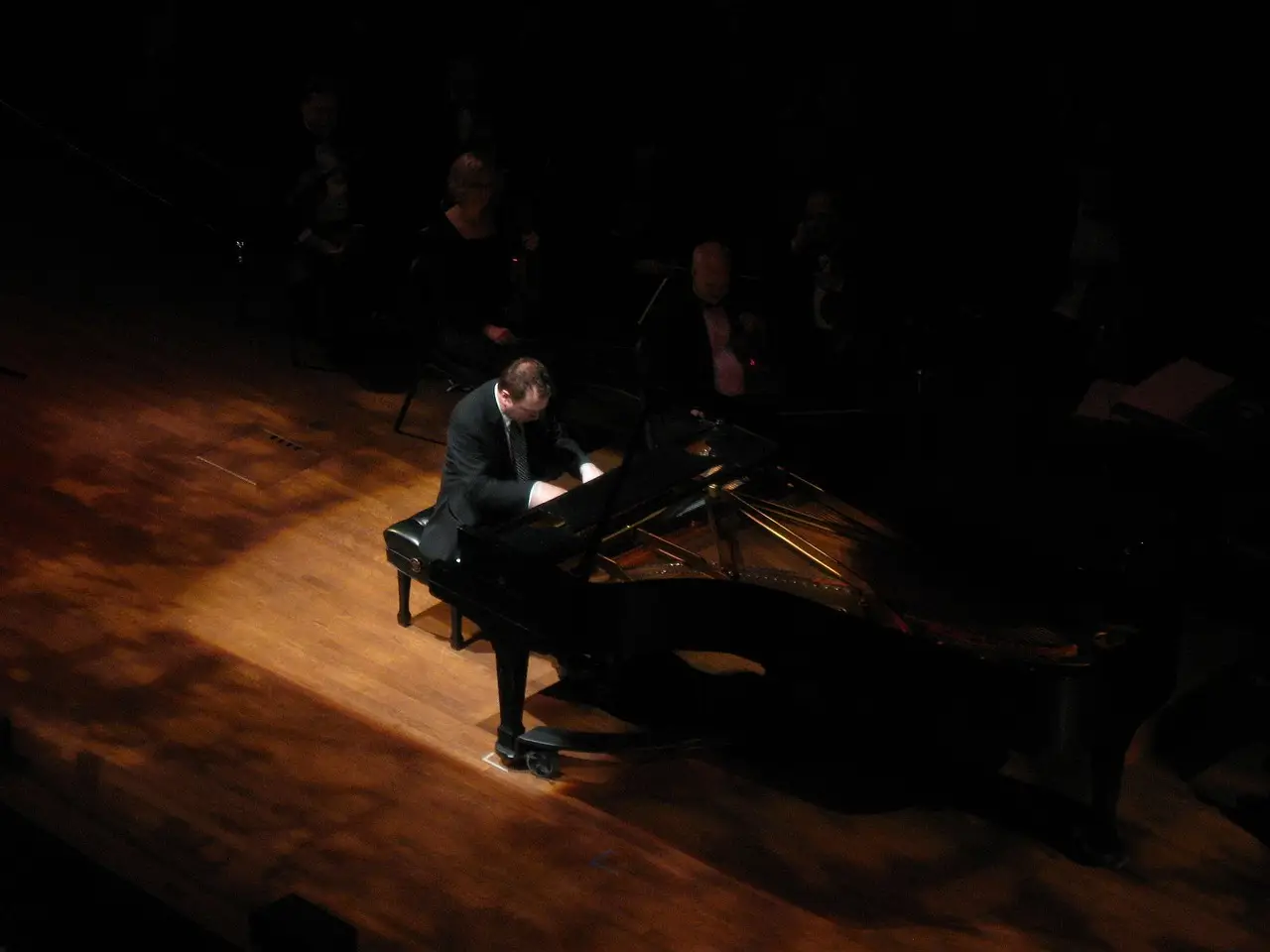
Stephen Kovacevich, the American-born British pianist admired for five decades of quietly intense playing, died on Oct. 27 in a London hospital. He was 86. His agent, Claire Paphitis, confirmed the death.
Over his career he performed under three names. He rose to prominence in the 1960s as Stephen Bishop, his stepfather's surname, then used Bishop-Kovacevich for a decade before dropping Bishop entirely in the early 1990s. The hyphen, he joked to the British publication Ham & High, also kept away fans of the pop singer-songwriter Stephen Bishop, who "would turn up at hotels where I was staying and be reduced to tears when they discovered it was me, not him."
How a Berkeley prodigy found his sound
Born Stephen Nicholas Kovacevich in Los Angeles on Oct. 17, 1940, to Nicholas Kovacevich, a Yugoslav-born aircraft design engineer, and Loretta Zuban, he grew up in Berkeley. He could identify notes at 3. At 11 he made his professional debut in San Francisco; at 14, the San Francisco Call-Bulletin reported he played Ravel's Concerto in G with the San Francisco Symphony and Arthur Fiedler "with consummate authority."
He studied with Lev Shorr, a Russian émigré who also taught Leon Fleisher. After a year at the University of California, Berkeley, he turned down Juilliard and moved to London in 1959 to study with the pianist Myra Hess (a leading Beethoven interpreter who championed a soft style with a full tonal range). She shaped his core repertoire: Beethoven, Mozart, Schubert and Brahms.
"In my 20s, I became obsessed with late Beethoven," he told The Guardian in 2001. "The fury of the 'Hammerklavier' Sonata's fugue and the radiance of Opus 109 are not available only in 'earthly' terms. Angels and devils have to be around to produce this kind of luminosity and darkness."
What does his recorded legacy amount to?
It rests above all on Beethoven. He recorded some sonatas early, then re-recorded the complete cycle over eight years, alongside Brahms's concertos and solo music, Bartok's three concertos, and a concerto written for him in 1968 by the British composer Richard Rodney Bennett. He especially valued his partnership with conductor Colin Davis, sharing, he said, deep seriousness and a mischievous humor.
Martha Argerich, his partner in the 1970s and mother of his daughter Stéphanie, likened his playing to "embers": "It's very contained, very internal, but it blazes." He also recorded Beethoven's cello sonatas with Jacqueline du Pré, with whom he had a long affair and a friendship that lasted until her death from multiple sclerosis in 1987 at 42. Earlier, he had duetted on Scandinavian television with Vladimir Ashkenazy and played under André Previn with the Houston Symphony.
In the 1980s he added conducting, becoming principal guest conductor of the Zagreb Philharmonic in 1993, two years after Croatia — the land of his paternal ancestors — declared independence. Conducting, he said, eased the stage fright that had shadowed him since childhood. "I became too aware of the nerves of my mother, stepfather and teacher," he told The Guardian in 2001.
In 2008, Ivan Hewett of The Daily Telegraph called him "a resolute defender of the musical high ground, and someone who keeps returning to the great works and finding something new in them." His London debut came at Wigmore Hall in 1961 with Beethoven's Diabelli Variations — a piece he later faulted as "too pious" but kept at the center of his repertoire for decades.
He had two sons, Matt and Francis Bishop, from his 1960s marriage to the novelist and psychotherapist Bernardine Wall, and a son, Milan, from a 1980s relationship with the artist Basia Janowska.
Kovacevich said he felt most at home in Europe: "It's Europe that produced Beethoven and Sibelius and Rachmaninoff, and that's what means most to me." His complete Beethoven cycle and the concerto recordings with Colin Davis remain the benchmarks by which the next generation of pianists will measure him.
Original: youtube.com
More from Grace Kim
Show full bio
Correspondent covering technology and product news in arts in the broadest sense at Arts & Voices.
1,412 articles