Strike-Shadowed 'Merry Widow' Revival in Nice Turns the House Into the Show
A strike-hit 'Merry Widow' survived one night only at the Opéra de Nice: Benoît Bénichou turned the opera house into Pontevedro's embassy after the original sets were destroyed.
Programme
- Two of three 'Merry Widow' performances (Nov 11-12, 2025 run dates of Nov 11, 12, 13) were cancelled after an artists' strike vote at the Opéra de Nice.
- Benoît Bénichou's production premiered in December 2021; the original sets were destroyed before this revival.
- Bénichou kept the original German names — Pontevedro and Hanna Glawari — in a French libretto dating from under four years after the 1905 premiere.
- Faustine de Monès (Valencienne) and tenor Paul Germanaz (Camille) drew the strongest individual notices.
Two of the three scheduled performances of Lehár's "The Merry Widow" at the Opéra de Nice Côte d'Azur were cancelled by an artists' strike, and the survivor — on Friday, November 13 — opened with musicians pleading from the stage for the municipal administration to negotiate.
The strike vote, taken two weeks earlier by the Opéra de Nice's artists, had threatened the November 11, 12 and 13 performances. The first two went dark. Hours before the third, its fate was still uncertain. Then, in an unplanned prelude, members of the orchestra and chorus explained their precarious finances from the stage. One singer told of a chorus colleague facing eviction because his modest salary could not cover his rent.
That intervention carried weight in an operetta whose plot turns on money, privilege, and a small state's shaky fortunes.
How do you revive a production with no sets?
Director Benoît Bénichou first staged this "Merry Widow" in Nice in December 2021, between two Covid lockdowns. When the house called him back at short notice this year, the original sets had been destroyed and there was no time to build replacements. His solution: turn the opera house itself into the dilapidated embassy of Pontevedro, the fictional principality of the plot.
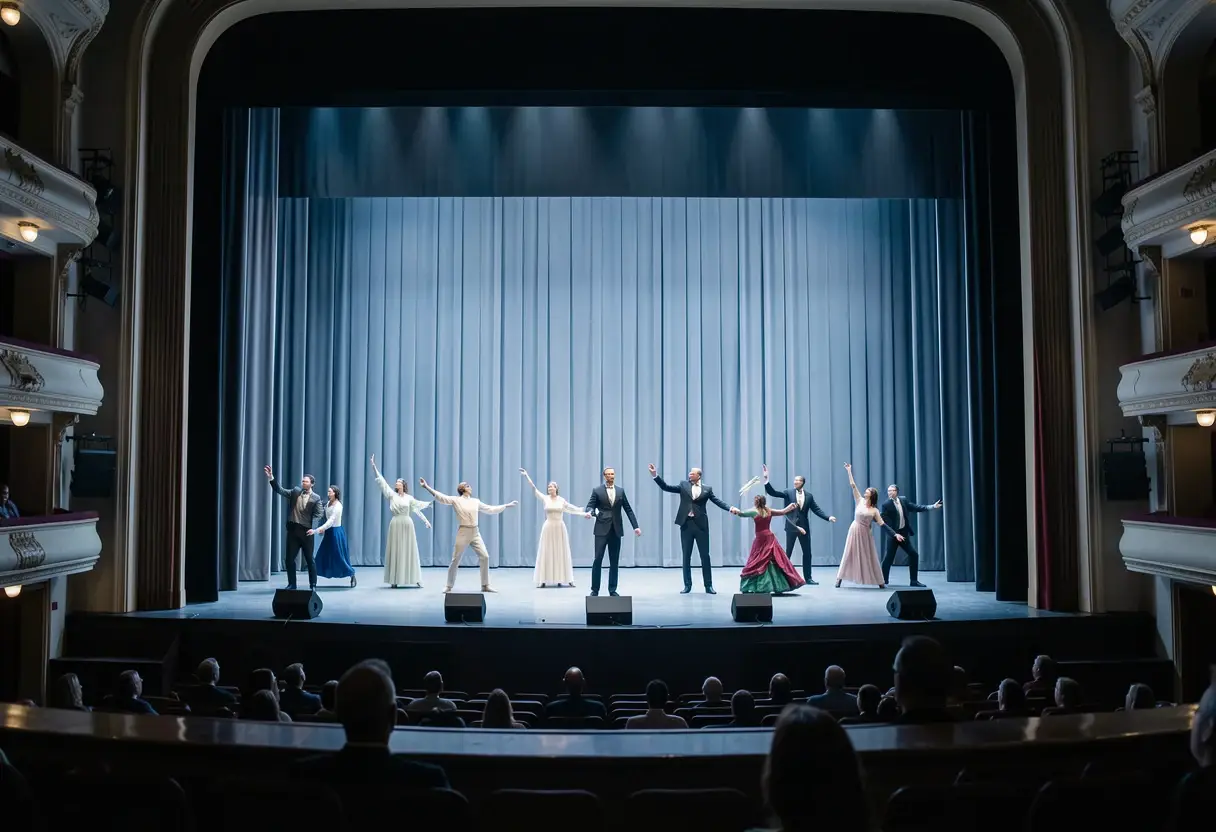
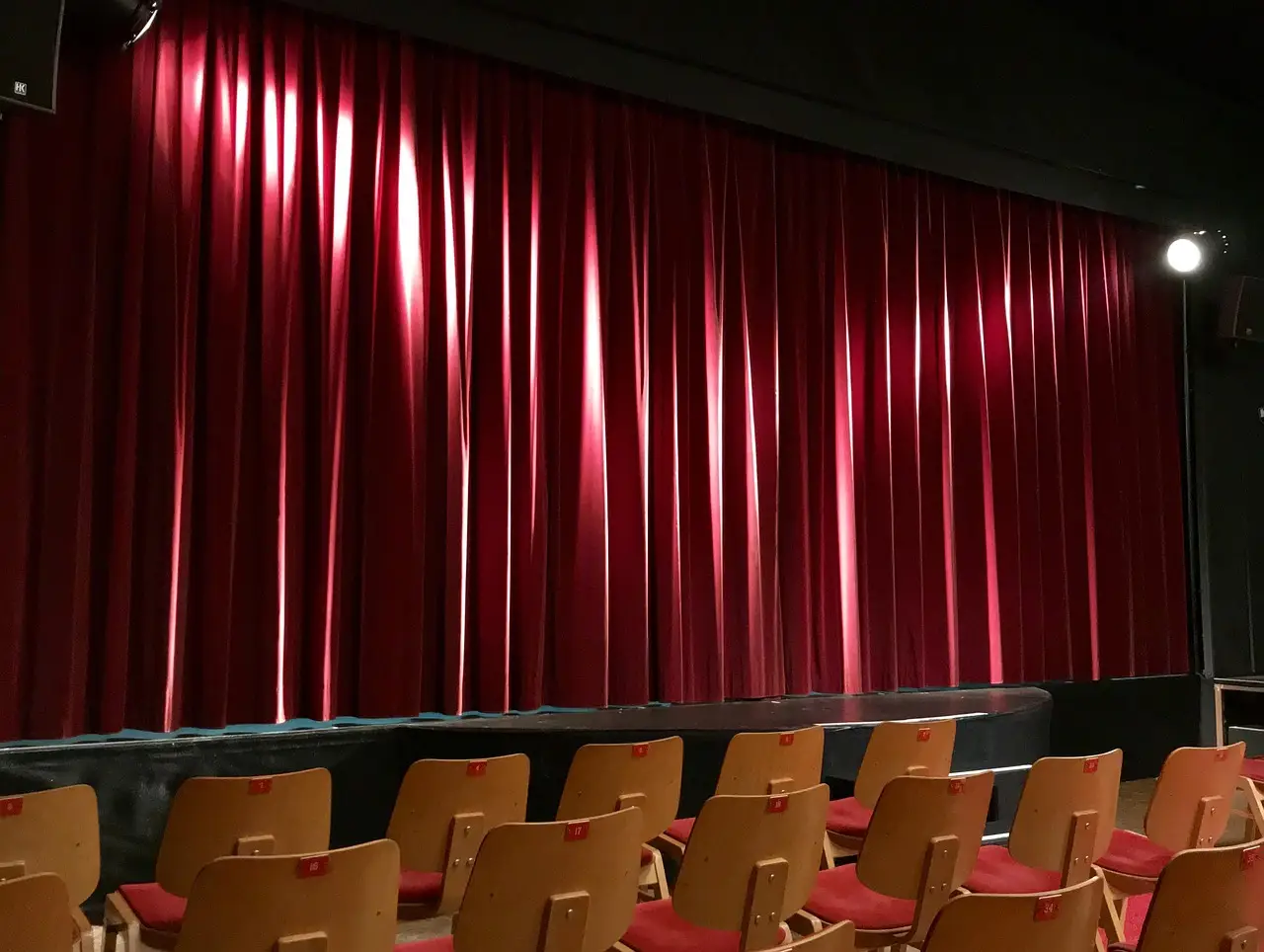
Video projections of Wall Street crashes from 1929 to 2008 filled the curtain as the audience arrived. Baron Mirko Zeta — Philippe Ermellier, in a genuinely comic performance — mingled with spectators, who were treated as embassy guests. One box near the stage became a laundry room, washing machine included. Spotlights swept the auditorium throughout, which reinforced the concept but repeatedly blinded the audience.
What did the modernized text change?
Less than four years after the 1905 premiere, a French translation of Victor Léon and Leo Stein's German libretto appeared. Bénichou found it dated and adapted it, keeping the original names: Pontevedro stayed Pontevedro rather than Marsovie, and the widow remained Hanna Glawari rather than Missia Palmieri.
He also tailored dialogue to his cast. Semyon Antakov's pronounced Russian accent as Count Danilo inspired new lines granting the character dual Russian and Pontevedran citizenship. Perrine Madoeuf's Hanna, reimagined as a returning Hollywood starlet, was sung with brio; her American-accent imitation was convincing. But the constant switching among French, Russian and English grew tiresome, forcing dependence on surtitles for a French-texted operetta before a French-speaking audience. Lines also dropped out whenever singers moved upstage.
The central pairing suffered most. A superficial socialite and a young macho Danilo made little of the mature couple's shared past that gives the story its pull. Antakov's resonant timbre still registered, especially in the Act Two drunken scene; Bénichou's Act Three Maxim's scene — an alcohol-induced erotic dream with Grisettes waving neon lights resembling Star Wars light sabers — remained too murky to read.
Faustine de Monès as Valencienne combined fine vocal projection with a sparkling stage presence. Young tenor Paul Germanaz, as Camille, showed real promise in his light upper register, notably the Act Two romance "Hors de la tige un bourgeon vert."
Nicolas André drew generous waves of sound from the Orchestre Philharmonique de Nice, but the enthusiasm often buried the singers downstage — whether from the podium or the pit-stage balance, the result was unfortunate.
The verdict: an uneven evening. Reality supplied the sharpest drama — a fictional bankrupt principality scrimping to save its fortune while its real artists pleaded for a sustainable future left no one indifferent.
Original: operabase.com
More from Grace Kim
Show full bio
Correspondent covering technology and product news in arts in the broadest sense at Arts & Voices.
1,633 articles