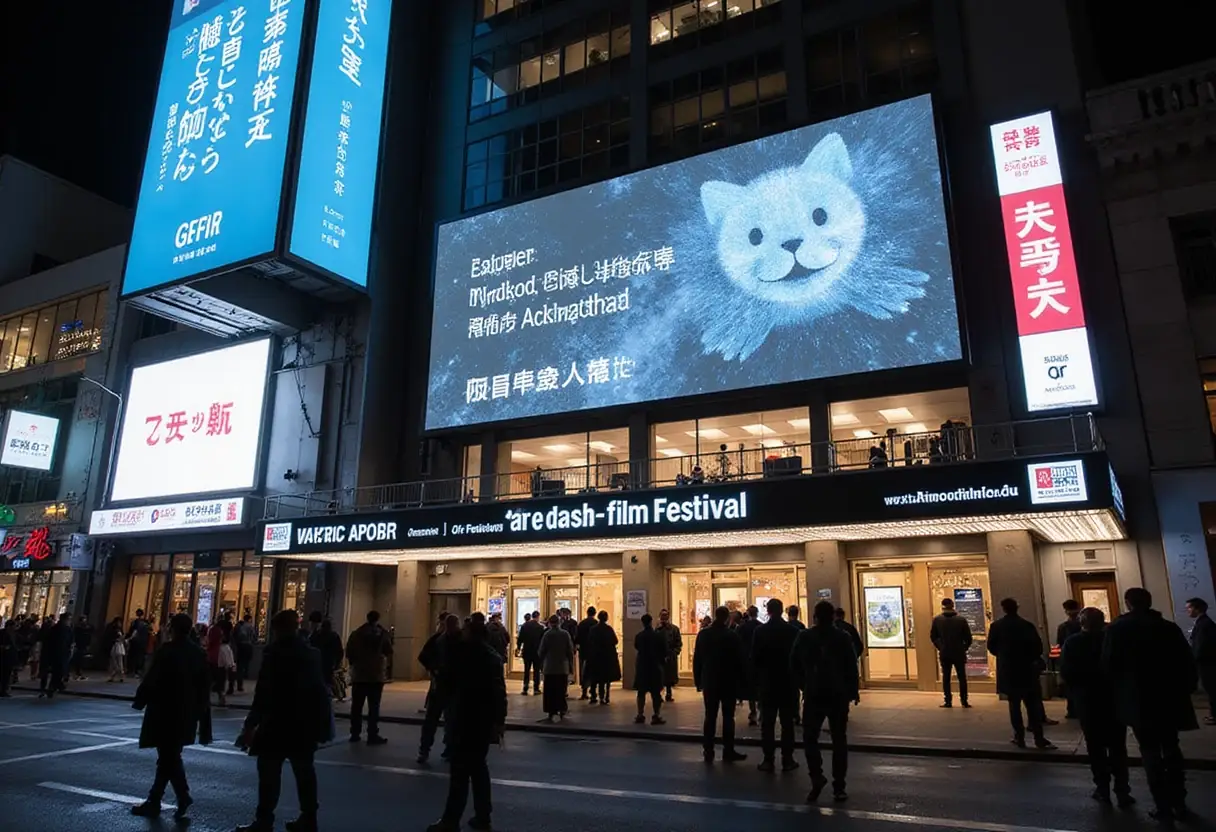
Takahisa Zeze on Sukiyaki, Death and a Life Between Pink Film and Mainstream
Takahisa Zeze's Tokyo festival opener Sukiyaki sold out its November 11 Japan Society premiere. The director discusses death, pink film and the mainstream trade-off.

Programme
- Sukiyaki opened the 39th Tokyo International Film Festival and reaches Japanese theaters on December 25.
- The film's November 11 New York premiere at Japan Society has already sold out.
- Director Takahisa Zeze releases roughly one film per year; his next, All That Exists, opens February 5 in Japan.
- Sukiyaki runs 155 minutes and profiles the three men behind Kyu Sakamoto's 1961 Billboard chart-topper.
- Zeze began in 1990s pink film, was named one of the 'Four Heavenly Kings of Pink,' and moved mainstream with Kokkuri.
Takahisa Zeze's Sukiyaki, the 155-minute opening film of the 39th Tokyo International Film Festival, has already sold out its New York premiere at Japan Society on November 11. The biopic reconstructs the story of the three men behind Kyu Sakamoto's 1961 Billboard-topping song "Ue o Muite Arukō," and it opens theatrically in Japan on December 25.
In an interview at the festival, where he also gave a masterclass, Zeze spoke about the film's themes, his path through Japan's pink film industry, and why his movies rarely travel west. The director, once labeled one of the "Four Heavenly Kings of Pink," now releases roughly one film per year — as festival-goers leaving his masterclass discovered via a flyer for his next feature, All That Exists, starring Hidetoshi Nishijima and Suzu Hirose, due in Japanese theaters February 5.
Why did Zeze make a film about Sukiyaki?
The director said his interest began with the central figure's late-life struggle. "In the later years, he suffered depression and also from diabetes, but even when he was suffering from those things, still he worked on creating music," Zeze said. He cited Hachidai Nakamura's book Born on This Planet as a touchstone. "I think he was interested in forever, or the far future, or the far planet, and I think that feeling he had for our future is very close to the purity of the music he created, and I wanted to connect that theme with life and death through this film."
Zeze framed the film's sincerity as deliberate. Through the actors, he said, "I wanted them to express how people can overcome the scary feeling of death."
What political threads run through the film?
Sukiyaki includes a man who died in the Holocaust as a spiritual guide and depicts the cultural segregation of Black musicians in Harlem. Zeze said the political dimension was inseparable from the music's history. "Back in the 1960s, Black people were suppressed, and there was immense difficulty with their music," he said. "Even when we are talking about Japanese people creating music in Japan, it's always connected thinking about that particular era."
Zeze does not speak fluent English, but he directed English-speaking actors in these scenes. "Even when I don't understand the language itself, I still know if this actor is expressing the full emotions," he said. "There isn't much difference between Japanese actors and English-speaking actors."
How did pink film shape his career?
Zeze began as a writer and assistant director in Japan's pornographic pink film industry in the 1990s — he worked as assistant director on several films by Hisayasu Satō, whose work is now receiving lavish American box-set releases. His transition to mainstream work came when Japanese cinema boomed at overseas festivals, alongside directors like Takeshi Kitano, Hirokazu Kore-eda and Kiyoshi Kurosawa. A Rotterdam Film Festival invitation led to an offer to direct the commercial horror film Kokkuri, his first "normal" film.
The move had a cost. Pink films offered "more freedom to do whatever I liked," he said, while mainstream work meant "more restrictions and I had to fit into certain systems. It was kind of a trade-off." Pink film alone could not sustain him financially, given low budgets and low earnings. "Just recently, I found how my way could work well within the controlled, mainstream environment," he said.
Why don't his films travel abroad?
Zeze attributed his limited American presence to the domestic orientation of the commercial Japanese industry. Directors like Kurosawa and Kore-eda "have this author aspect of themselves upfront," he said, which explains their international reach. His own focus was on "what interesting movies I could make that will relate to the audience" at home.
He noted current Japanese market trends: films for teenagers based on light novels, and horror — partly because "it can be made with low budgets."
Asked about the pink film revival in the United States, including Japan Society's coming retrospective, Zeze said: "I'm actually very happy to hear about the revival of pink films in the U.S. Satō-san would love to hear about this revival of pink films in the U.S. as well, so I will tell him about this."
With Sukiyaki opening December 25 and All That Exists following on February 5, Zeze gives American audiences two chances in three months to test his claim that mainstream constraints can still hold a director's sensibility.
Original: youtube.com
More from Elena Vasquez
Show full bio
Senior reporter covering technology and product news in arts in the broadest sense at Arts & Voices.
1,013 articles