Tokyo Film Festival Opens With ‘Sukiyaki’ and a Peace Appeal
The 39th Tokyo International Film Festival opened with “Sukiyaki,” while Japan set a JPY20 trillion target for overseas content sales and promoted film as a bridge between cultures and values.

Programme
- The 39th Tokyo International Film Festival opened on Monday at Hulic Hall.
- The festival received 1,892 submissions from 112 countries and regions.
- Japan targets JPY20 trillion in overseas content sales by 2033.
- Overseas sales of Japanese content have reached about JPY6.1 trillion.
- The fiscal 2027 budget request seeks about JPY250 billion for content-industry growth investment.
Marcus Bennett
The Japanese government set a JPY20 trillion ($133 billion) goal for overseas sales of Japanese content by 2033 as the 39th Tokyo International Film Festival opened on Monday.
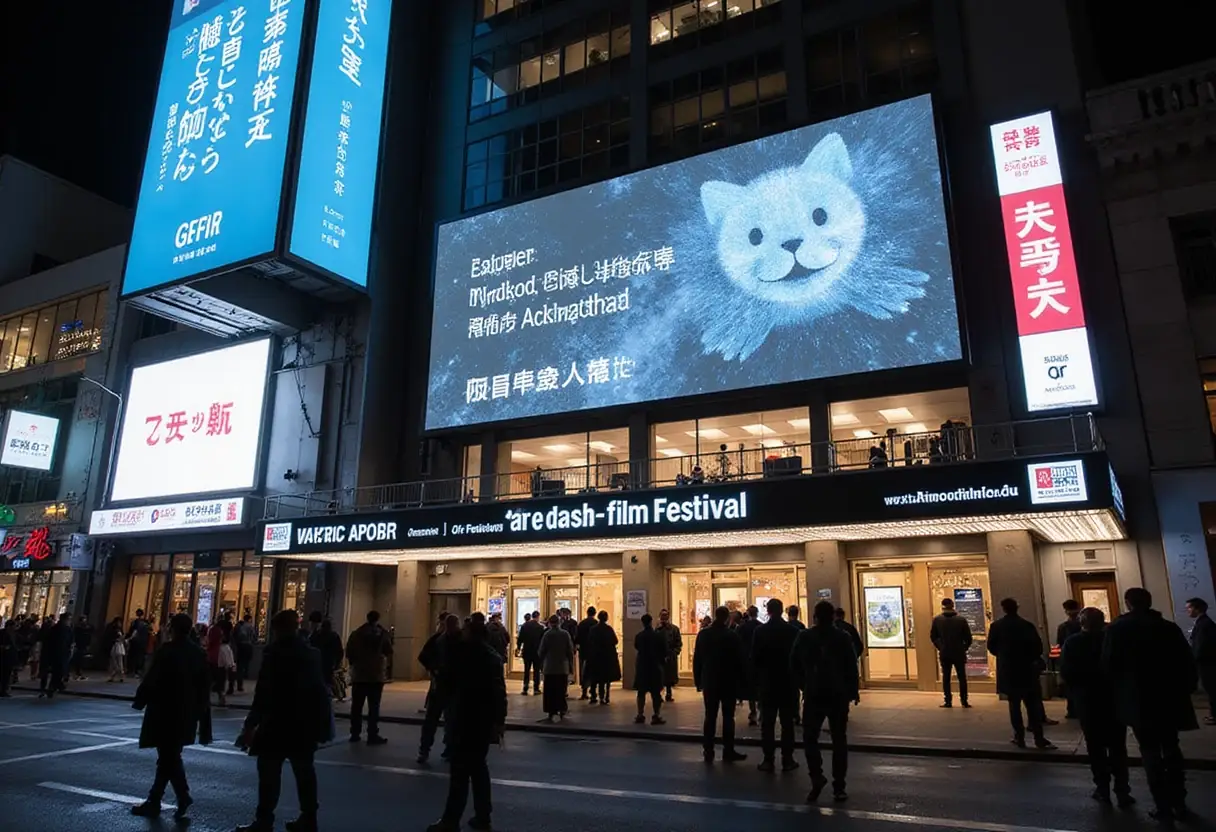
Rain soaked the red carpet at Hulic Hall, where the government restated its cultural-export ambition. The festival reported 1,892 film submissions from 112 countries and regions. Its opening film, “Sukiyaki,” recounts how the title tune was written and topped the U.S. Billboard chart in 1963.
The ceremony joined a historical musical drama with a policy announcement on cultural exports and a red-carpet roster of filmmakers, actors and Academy representatives in Tokyo.
Peace, music and memory
Director Zeze Takahisa took the stage with Okada Junichi, who plays composer Nakamura Hachidai; Matsuzaka Tori, who plays lyricist Ei Rokusuke; and Seino Nana, who plays Nakamura Junko.
Zeze said the film takes place in the years after the war, as Japan entered rapid economic growth. Its founding idea, he said, was the war itself and how the characters came to understand peace. “Through this film, I hope this festival, too, can become a festival of peace,” he said.
Matsuzaka said filming began in April last year and the film took a little over a year to reach audiences. “It isn’t just about enjoying the music. It’s a film where you can feel the live energy, as if you were actually in the venue,” he said.
Seino said she watched her co-stars’ stage performances from the audience seats during filming. “Seeing everyone’s souls colliding, going beyond their roles, really moved me,” she said.
What does the 2033 target change for producers?
Japanese Prime Minister Takaichi Sanae, appearing by video, said her cabinet had designated content, including film, a strategic priority under the Japan growth strategy. The government plans to accelerate public-private domestic investment, support Japanese film production and attract foreign location shoots to meet the 2033 target.
“Film has the power to connect people’s hearts across countries and regions, and to deepen understanding of diverse cultures and values,” Takaichi said.
Economy, Trade and Industry Minister Akazawa Ryosei said overseas sales of Japanese content had reached about JPY6.1 trillion ($40.7 billion). The government had sought roughly JPY250 billion ($1.67 billion) across ministries in its fiscal 2027 budget request for content-industry growth investment.
Akazawa cited the fifth “Kingdom” film, which made the franchise the first series in film history with five consecutive installments passing JPY5 billion ($33 million) at the box office. Its cumulative gross exceeded JPY30 billion ($200 million).
For producers, the announced target makes public support for Japanese film production and government efforts to draw foreign location shoots two concrete policy levers, although the announcement sets out no allocation details for either.
A festival in the rain
Festival director Hisamatsu Takeo, approaching 50 years in the film business, thanked guests for attending in bad weather before declaring the festival open. “There are so many kinds of film in the world, each with its own appeal and its own way of being enjoyed,” Hisamatsu said.
“Nothing would make me happier than sharing the appeal of such diverse and varied cinema with all of you and enjoying it together,” he said.
Competition jury president Rolf de Heer recalled seeing an Ozu film more than 50 years ago. “I still remember one shot, so perfect. And Oshima, and of course Kurosawa. ‘Dersu Uzala’ is in my brain,” de Heer said.
“So we as the jury are very privileged to be able to work in the country of those masters.” The competition jury also includes actor Watanabe Makiko, DI colorist Yov Moor and producers Oh Jungwan and Alex Lo.
Actor and singer Nakajima Kento, the TIFF Navigator, said the wet carpet carried a sense of occasion. “It was raining today, but I felt it was a blessing of rain that would help the future of film flourish even more,” he said.
Among the arrivals were director Milcho Manchevski and the cast of “Sister Brother Manhole Cover,” including Sara Klimoska on her third Tokyo visit. Director Qiu Jiongjiong led the cast of “Fuxi: Four Tales of Feasting,” while Indonesian auteur Garin Nugroho brought the “Red Before Dawn” team.
Judy Ongg represented “Sunshine Women’s Choir,” a gala selection billed by TIFF as Taiwan’s No. 1 hit. Ongg won best actress at the seventh Taiwan Film Critics Society Awards. She was nominated for best supporting actress at the 28th Taipei Film Awards and in the same category at the upcoming 63rd Golden Horse Awards.
Academy CEO Bill Kramer, president Lynette Howell Taylor and chief membership, impact and industry officer Meredith Shea attended TIFF’s Academy in Tokyo program, the Academy’s first international festival engagement. “This is the first time the Academy of Motion Picture Arts and Sciences has participated in an international film festival. To be part of such a major platform as the Tokyo International Film Festival makes this especially meaningful, and we feel honored to be here,” Kramer said.
The festival’s Centerpiece film, “Godzilla Minus Zero,” follows the Oscar visual-effects winner “Godzilla Minus One.” It opens worldwide next month, including in Japan, Asia and North America, extending the festival’s international reach beyond its Tokyo opening.
Source: Variety Film
More from Marcus Bennett
Show full bio
Staff writer covering people, launches and day-to-day practice in arts in the broadest sense at Arts & Voices.
880 articles