'The Blind Ferryman' Director Refuses Western Sympathy Narratives
Iraqi-Swiss director Ali Toffan Al-Fatlawi premiered 'The Blind Ferryman' in Cairo, refusing pity-driven portraits of Iraq and shooting his underwater finale in Mexico for $15,000.
Programme
- "The Blind Ferryman" world-premiered at the 47th Cairo International Film Festival.
- The project secured roughly $2.5 million in financing in 2022 after development since 2015.
- The underwater finale cost $15,000 in a Mexican cenote instead of an estimated $100,000–$150,000 water tank.
- Principal photography ran 45 days in Iraq's southern marshlands.
- Al-Fatlawi shot the film in 4:3 with frames split 50% between landscape and water reflection.
Iraqi-Swiss filmmaker Ali Toffan Al-Fatlawi premiered his fiction feature debut, "The Blind Ferryman," at the 47th Cairo International Film Festival, and he arrived with a refusal: no poverty, no pity, no image of Iraq built for Western comfort.
"I don't want to do a movie which shows that we are poor people, asking for sympathy," Al-Fatlawi told Variety. "I'm really very careful not to make a movie which makes the West feel good about their life."
The film grew out of a thought that struck him in 2006, during Iraq's civil war. Living in Switzerland, watching the violence from abroad, he thought of his two blind aunts and wished blindness might spare his countrymen from what they were doing to one another. That thought became a film about seeing, believing and trusting our own perceptions.
"I think we lost the ability to think with our feelings," Al-Fatlawi said. "Or, as we say in Arabic, 'Seeing things with our heart.'"
What is the film actually about?
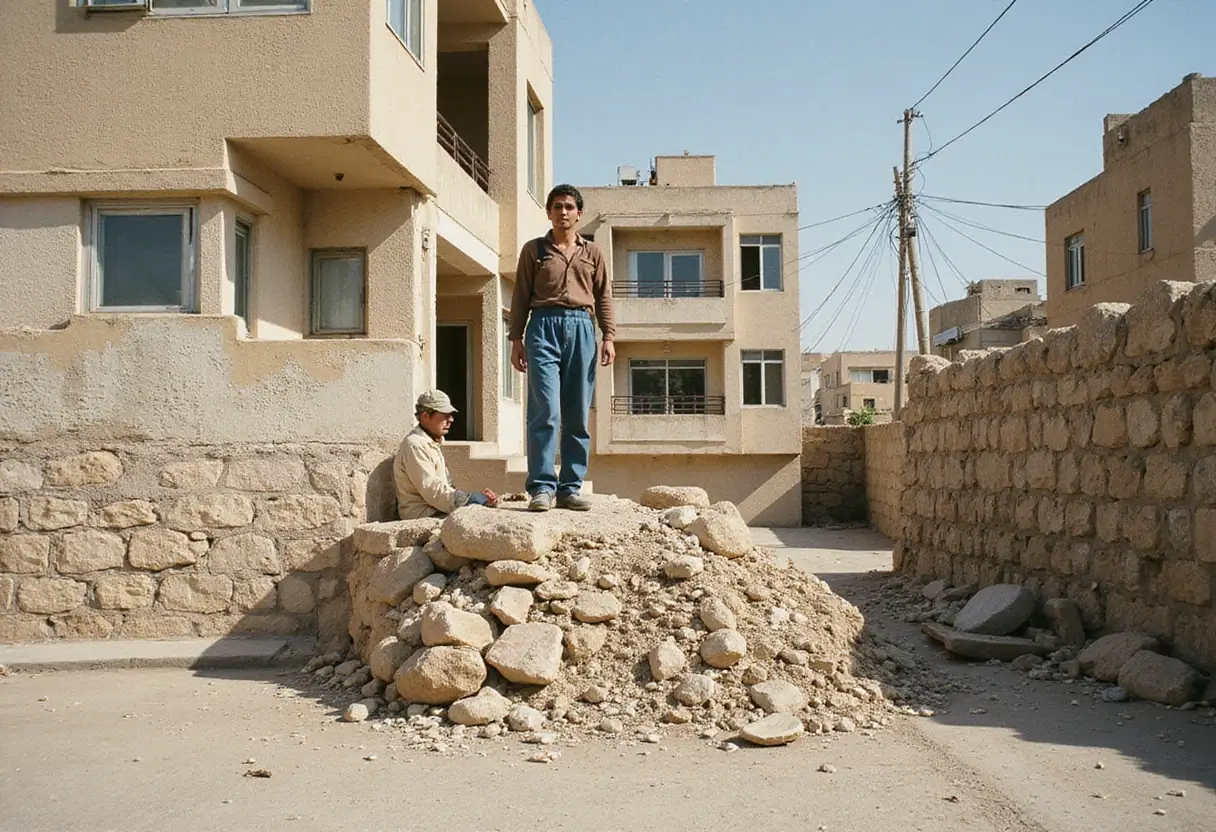
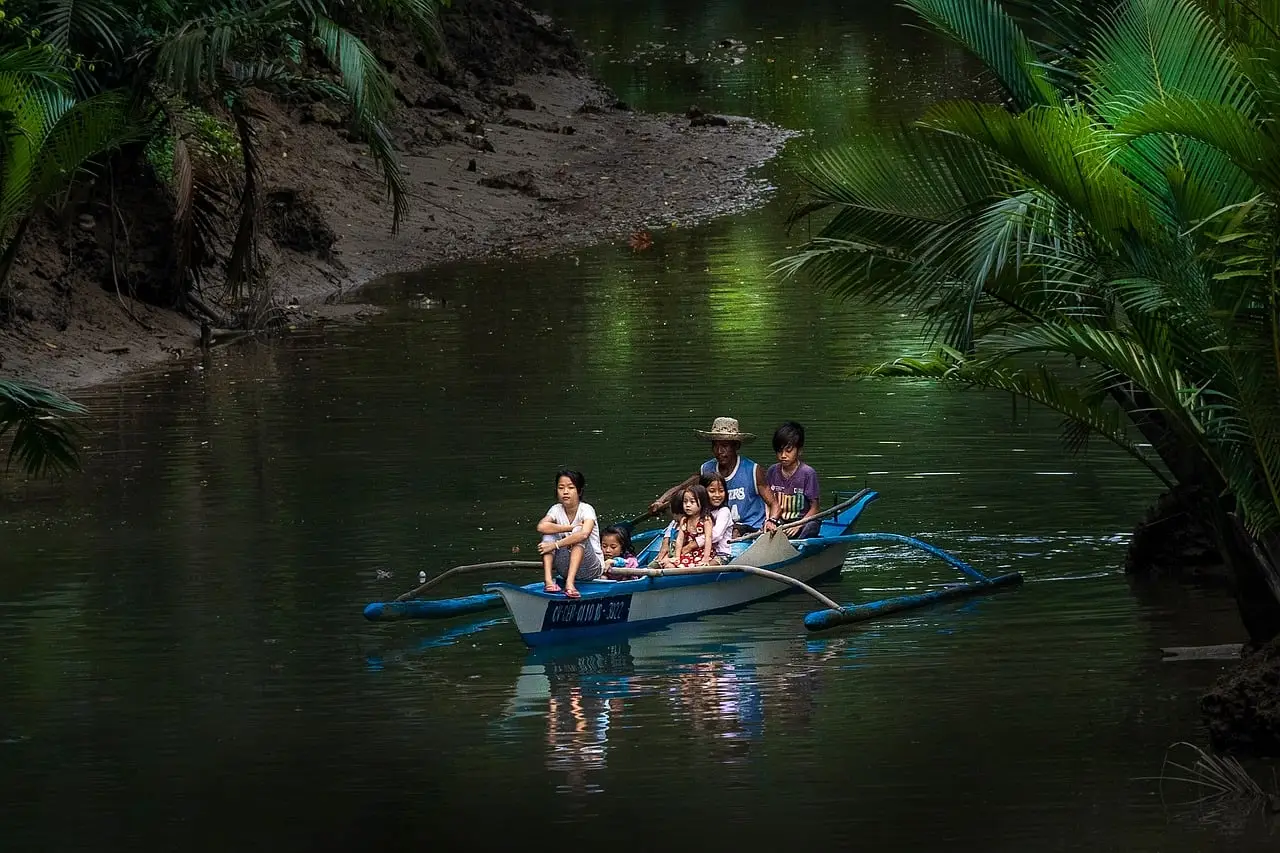
Set in Iraq's southern marshlands, the story follows Ayoub (Ahmed Moneka), a blind boatman who falls in love with Genya (Sam Rahmani), a woman no one else can see. His community mocks him. Ayoub defends a love only he believes in.
"When you love someone, why do you need the agreement of other people?" Al-Fatlawi asked. "It's your love, it's your own decision."
Genya draws on his father's stories of a mythical woman appearing to men in the marshes, on Sumerian mythology and the "Epic of Gilgamesh." Al-Fatlawi was drawn to the female deities of ancient Mesopotamia and how they gave way to the male image of God in contemporary religion.
The casting works against expectation. Ayoub is a Black Iraqi. The threatening outsider from the city is a white, blue-eyed man in religious clothing — a deliberate inversion of who looks like a hero and who looks like a villain on screen.
How does a painter write a screenplay?
Al-Fatlawi, a longtime painter and performance artist who moved into filmmaking, built the script through images. "I paint and then I write, I paint and then I write. That's my way to write," he said.
He and his cinematographer chose a 4:3 aspect ratio to pull characters closer together, and composed wide shots split exactly between land and its reflection in the water. "I told him, I want really in the middle, 50%," Al-Fatlawi recalled.
He told Moneka to keep his eyes open and fixed throughout, rejecting conventional portrayals of blindness. "I don't want people to feel sorry for you. I want you to be strong. You see more than everybody who has eyes."
Rahmani played Genya as half real, half imaginary. "I had to portray the whole spectrum without losing credibility as either," she told Variety. "Sometimes I went against my instinct, but that's why I give so much credit to Ali as the creator of this whole world."
Raised in Jordan and Canada, never having lived in Iraq, she spent nearly four months in the marshlands speaking Iraqi Arabic in everyday life. "It was such a surreal and, I don't know, special feeling full of relief," she said. "Not having to mask all the time and code switch. I could just be myself." She called the shoot "healing."
What does $2.5 million buy?
Development began in 2015, with backing from the Doha Film Institute, El Gouna and Red Sea film festivals, and a slot in Cannes' L'Atelier program in 2022. That year the project secured roughly $2.5 million in financing.
After a 45-day shoot in Iraq, one sequence remained: an underwater scene envisioned years earlier. A water tank was estimated at $100,000 to $150,000. Instead, Al-Fatlawi found a cenote near Playa del Carmen, Mexico, whose submerged vegetation matched a painting he had made in 2021. Two underwater photographers who had never shot a feature completed the scene for $15,000.
In Cairo, audiences keep finding meanings the director never intended. "They add things which make the movie even richer," he said. "They have the doors open. They can enter from everywhere."
Source: Variety Film
More from Tom Whitfield
Show full bio
Market editor covering people, launches and day-to-day practice in arts in the broadest sense at Arts & Voices.
1,719 articles