The Lüneburg Variation: Sebastian Koch and Toni Servillo Star
Sebastian Koch and Toni Servillo lead The Lüneburg Variation, Gabriele Salvatores’ chess-world noir now filming in Trieste and Rome across a planned nine-week shoot.
Programme
- Nine weeks of principal photography are planned across Trieste and Rome.
- Paolo Maurensig’s novel has been translated into 25 languages.
- Five actors form the announced main cast: Sebastian Koch, Toni Servillo, Damian Hardung, Thomas Prenn and Eduardo Scarpetta.
- Salvatores describes a chess duel lasting more than 40 years.
- Seven additional producers join Raffaella Leone and Andrea Leone.
By Grace Kim
Sebastian Koch and Toni Servillo are set to star in The Lüneburg Variation, a chess-world noir (a dark crime story) that Gabriele Salvatores has begun shooting in Trieste. The production plans nine weeks of principal photography (the main shoot) across Trieste and Rome.
Koch starred in the Oscar-winning German film The Lives of Others. Servillo played the protagonist of Italy’s Oscar winner The Great Beauty. Salvatores, who won an Oscar for Mediterraneo, directs the adaptation.
Paolo Maurensig’s eponymous novel (the book sharing the film’s title) has been translated into 25 languages. It opens with the suicide of Dieter Frisch, a wealthy Munich businessman, near Vienna, then shifts into flashbacks about a revenge plot organized through chess.
In a statement, Salvatores described the project:
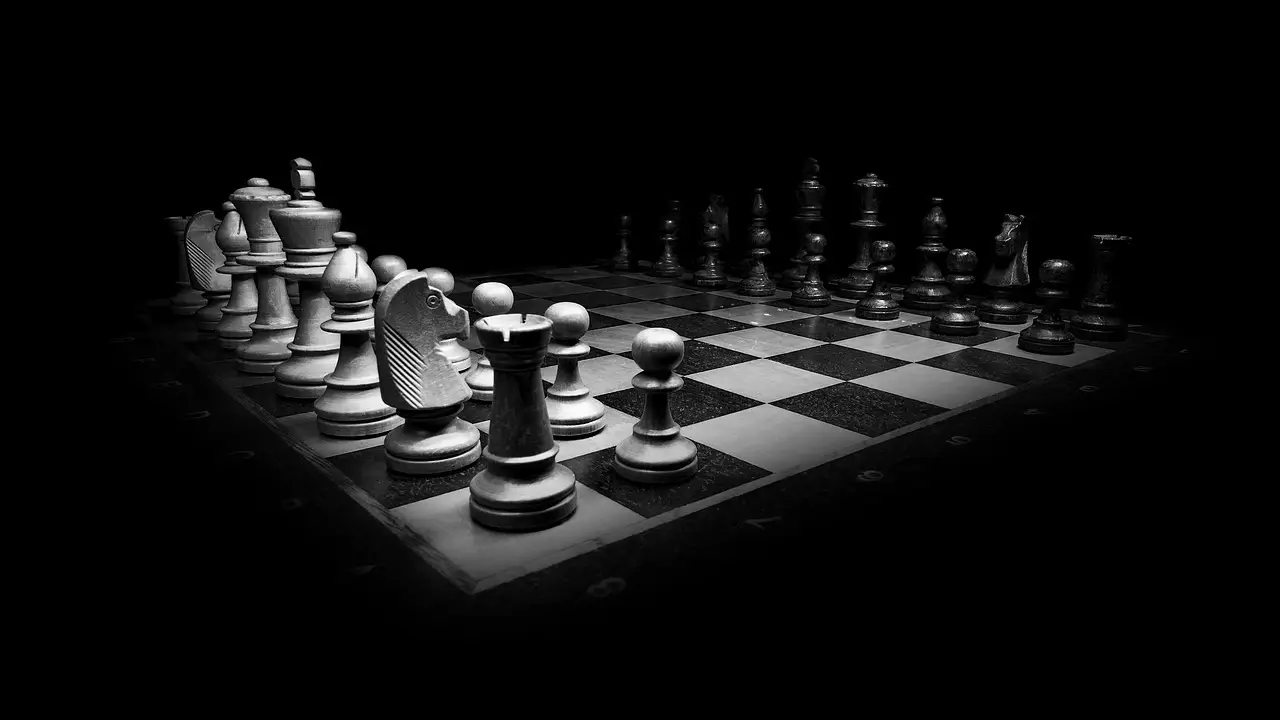
“It is the story of a duel that lasts more than 40 years, fought by two adversaries on the battlefield of a chessboard. Chess! The most violent sport in existence and, perhaps, the least cinematic. It’s a great challenge, and one I was happy to take on,”
He promised to explore the following:
“the violent, magical, esoteric and mysterious dimension of chess, that is, instead, truly cinematic!”
He tied that idea to the novel:
“Maurensig envisioned a film of half-light; darkness and fire. Compelling and cruel. I hope I can deliver just that…,”
What does the chess setting change for audiences?
Chess supplies the conflict, the duration and the visual motif. Maurensig’s opening makes a death trigger a decades-long revenge story, while Salvatores frames the adversaries as people fighting “on the battlefield of a chessboard.”
The test is whether a game he calls “perhaps the least cinematic” can carry that violence without explanatory scenes doing the work. His stated answer is visual: expose chess’s “violent, magical, esoteric and mysterious dimension,” then make it “truly cinematic.”
The adaptation must preserve the book’s cruelty without reducing chess to decoration. The more-than-40-year duel supplies its temporal scale, while the book’s half-light, darkness and fire offer a visual rule.
The announced main cast also includes Damian Hardung (Maxton Hall) and Thomas Prenn, who is from South Tyrol and starred in Terrence Malick’s A Hidden Life. It also includes Eduardo Scarpetta of Itay (My Brilliant Friend).
- Production: Raffaella Leone and Andrea Leone serve as lead producers through Lotus Production, a Leone Film Group company, with RAI Cinema. The film is also in association with Vice Pictures and Italy’s Indiana and MDE.
- Additional producers: Francesco Melzi d’Eril, Leonardo Maria Del Vecchio, Riccardo Volpato, Marco Cohen, Benedetto Habib, Fabrizio Donvito and Daniel Campos Pavoncelli.
- Regional support: The Friuli Venezia Giulia Film Commission supports the film.
- Distribution: RAI Cinema’s 01 Distribution will distribute the film in Italy, while RAI Cinema International Distribution handles international sales.
- Creative team: Diego Indraccolo is director of photography (the cinematographer); Rita Rabassini is production designer; Patrizia Chericoni is costume designer; and Federico De Robertis is composer.
Raffaella Leone framed the partnership in a statement:
“We are very happy to be working with Gabriele Salvatores, a filmmaker and director we have always loved for the mastery with which he takes you by the hand and transports you into his world, making you fall in love with cinema all over again — real cinema, great cinema with a capital C,”
That language emphasizes immersion and the director’s power to place viewers inside his world. Here, the claim becomes concrete in Salvatores’s own formulation: chess must become cinema through its violent, mysterious and esoteric qualities.
The nine-week shoot must reconcile two demands: preserve Maurensig’s cruel reversals and make chess visually forceful enough to sustain a more-than-40-year duel. For viewers, the result will show whether Salvatores can make chess what he calls “truly cinematic.”
Source: Variety Film
More from Grace Kim
Show full bio
Correspondent covering technology and product news in arts in the broadest sense at Arts & Voices.
822 articles