Netflix’s “La Regenta” adaptation began production Oct. 23
Netflix began production Oct. 23 on its contemporary “La Regenta,” starring Ester Expósito and written by Mar Coll, Anna R. Costa and Diego Vega for 2027.

Programme
- Production began Oct. 23 on Netflix’s contemporary adaptation of “La Regenta.”
- The project is positioned as one of Spain’s biggest films of 2027.
- Clarín published the nearly 700-page novel over 1884–85.
- Ester Expósito fronts a cast that includes Oriol Pla, Vito Sanz and Borja Luna.
- Mar Coll, whose “Salve María” won a 2024 Locarno Special Mention, wrote with Anna R. Costa and Diego Vega.
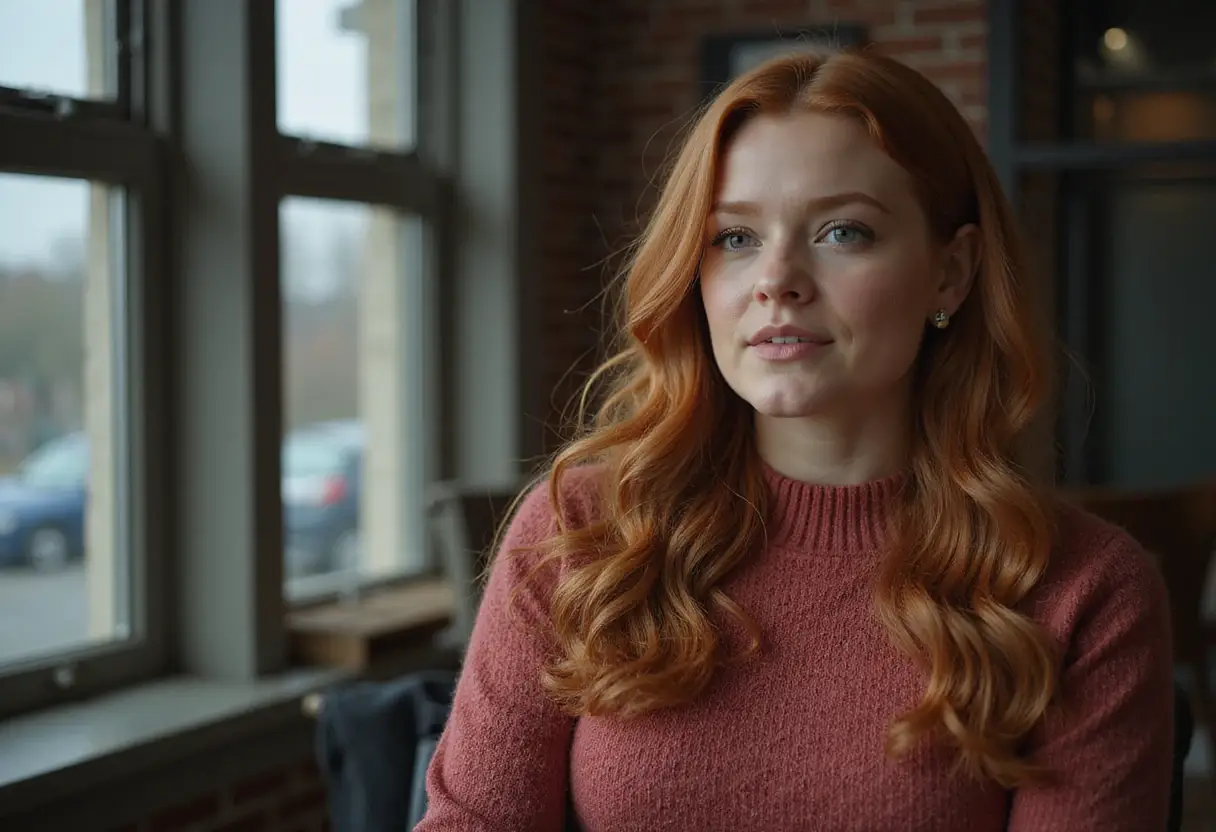
Netflix began production on Oct. 23 on a contemporary adaptation of Clarín’s “La Regenta,” with “Elite” star Ester Expósito fronting the cast. Mar Coll, whose “Salve María” won a 2024 Locarno Special Mention, joins the writing team.
The company revealed the project on Friday, when nothing had been known about the movie. Netflix positioned “La Regenta” as one of Spain’s biggest films of 2027.
Clarín published the nearly 700-page novel over 1884–85. Barnes described the once-lambasted novel as a Spanish masterpiece, second only to “The Quixote.” This week, he called it “one of the great novels of the 19th century, alongside ‘Madame Bovary’ and ‘Anna Karenina.’”
The story follows Ana Ozores, a young, beautiful woman married to Victor Quintanar, a man twice her age and former magistrate of Vetusta, a sleepy, stifling provincial city where Netflix says “everything is known and everything is judged.” Ana seeks meaning in a loveless life.
Fermín de Pas, her sensual confessor at La Vetusta cathedral, exerts predatorial lust, while local Don Juan Álvaro Mejías offers his attentions. Their pursuit turns Ana’s search for meaning into the novel’s central struggle.
Netflix’s synopsis frames the conflict: “What begins as a private crisis becomes a silent struggle between desire, faith and social power, where Ana’s every move is watched, judged and used by those around her.” The nearly 700-page original combines a searing portrait of backward, hypocritical and vulgar provincial Spain with an examination of toxic masculine egotism and the psychology and contradictions of Ana and Fermín.
What changes with a female perspective?
Netflix announced that its version would reinterpret the classic from a “fresh female perspective.” That instruction shifts attention toward Ana’s inner life while retaining the social pressures that make her crisis possible.
Coll said: “Clarín’s novel is so rich that dozens of different adaptations can be made from it, like those that came before ours or those that will follow it.” She framed that choice in two statements. “I have tried to approach the material, humbly, from a radically personal perspective, as I always do,” she added.
Coll then defined the focus: “I have made my own what has moved me most in the novel, and what explores the loneliness and heartbreak of this regent’s wife, who tirelessly longs to give meaning to her life.” Her account continues: “A luminous character inhabits a universe poised to prey on her.”
Coll added: “A woman whose sensitivity and stubborn search constitute, in themselves, a form of resistance.” In practice, the film’s stated mechanism is a shift in viewpoint: Ana’s sensitivity becomes opposition within a society organized to watch, judge and constrain her.
Cast and roles
Expósito fronts the announced ensemble, which also includes the actors playing the men around Ana and the women in their orbit. The roles connect the new film to established Spanish and international work.
- Oriol Pla as Magistral Fermín de Pas. The International Emmy Award winner previously appeared in “I, Addict” and “The Day After Tomorrow.”
- Vito Sanz as Victor Quintanar, previously seen in “Billionaires’ Bunker.”
- Borja Luna as Álvaro Mesía, with credits including “Breathless” and “No Traces.”
- Clara Ingold as Petra (“Iron Reign”).
- Carlos González as Frígilis (“La Bola Negra”).
- Ana Torrent as Doña Paula (“Thesis”).
- Itsaso Arana as Visitación (“The Other Way Around”).
- Gonzalo de Castro as Ripamilán (“The Inmortal”).
Coll shares the screenplay with Anna R. Costa, who co-wrote the series “Madrid Arde.” The third writer is Barcelona-based Diego Vega, whom Variety identifies as one of Peru’s top auteurs, with “October” and “My Lucky Day” listed among his works.
Coll’s method and track record
Variety calls Coll a founding mother of the newest Catalan cinema and a cultured dissident, like Clarín before her. Across a 20-year career, she has questioned Catalan upper-middle-class hypocrisy and emotional paralysis in the Goya winner “Three Days With the Family,” paternal narcissism and comic patriarchy in the series “Matar al Padre,” and the superiority of Scandinavian social models in “This Is Not Sweden.”
Her latest film, “Salve María,” won a Locarno Special Mention in 2024. It took a deliberately dissenting view of maternity and asked what remains taboo: whether all women are cut out for motherhood.
Zamora and Netflix’s literary strategy
Producer María Zamora made the film through Elastica Films, whose credits include “Alcarràs” and “Romería.” Zamora also produced the 2023 San Sebastián Golden Shell winner “The Rye Horn” and the Cannes Directors’ Fortnight winner “Creatura.”
Zamora received Spain’s National Cinematography Award for championing a new generation of Spanish auteurs, often women. Her backing helped bring their films into international film circles and domestic Spanish distribution.
The project extends Netflix’s investment in revered literary properties in the Spanish-speaking world. It follows the Colombian adaptation of Gabriel García Márquez’s “One Hundred Years of Solitude” and the Argentine “The Eternaut”; both became Netflix Global Top 10 non-English hits and signature shows for the U.S. streamer.
The 2027 film will test whether Netflix can turn literary prestige into broad Spanish-language reach. Coll’s stated method sets the more exact measure: preserve the novel’s social machinery while making Ana’s loneliness and resistance drive the screen narrative.
Source: Variety Film
More from Grace Kim
Show full bio
Correspondent covering technology and product news in arts in the broadest sense at Arts & Voices.
785 articles