Theaster Gates Buys America's Last Porcelain China Factory
Theaster Gates bought Pickard China, America's last porcelain fine china factory, in September. Twelve employees, tarps over the roof, White House orders pending — and a plan to make labor profitable.
Programme
- Theaster Gates became owner and president of Pickard China in September; purchase price undisclosed.
- Pickard, 130 years old, is the last operational porcelain fine china factory in the US, with 12 employees.
- Pickard has produced official White House china since Laura Bush commissioned it in 2008.
- Gates bought Stony Island Bank for $1 in 2013 and spent $14m converting The Land School, opened last year.
- Two line painters brought from Wedgwood over 25 years ago gild china for Air Force One and the White House.
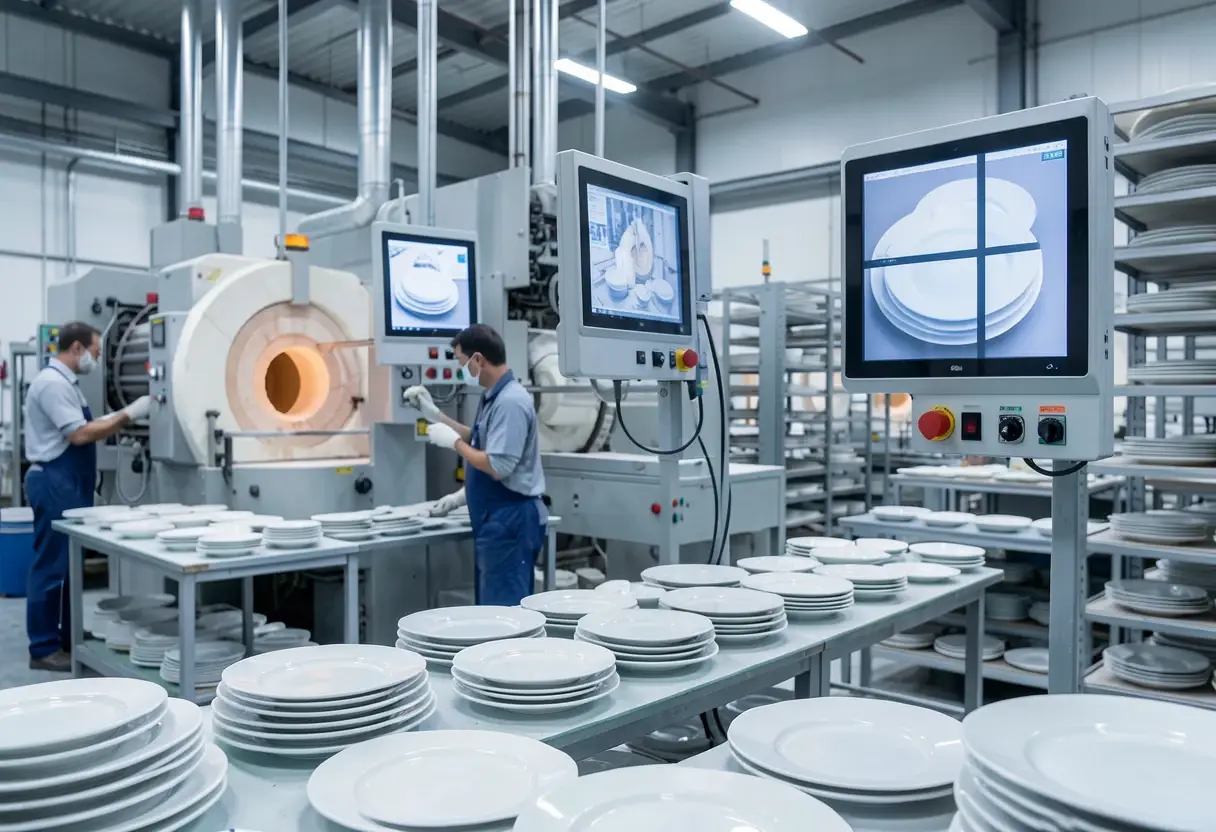
Theaster Gates became owner and president of Pickard China in September — the last operational porcelain fine china factory in the United States, a 60,000 sq ft brick building in Antioch, Illinois, 50 miles north of Chicago, staffed by 12 remaining employees.
The factory, founded 130 years ago, is in visible decline. Decommissioned machines the size of school buses sit under dust and slip splatter. Blue and green tarps strung from the rafters funnel leaking water into commercial garbage cans. Some rooms have stayed locked for decades to contain toxic mold. Most of the lights no longer work. Thousands of unfinished plates, cups, pitchers and bowls sit stacked on old wooden shelves.
Pickard still fills standing orders from the White House — it has produced official White House china since Laura Bush commissioned it in 2008 — as well as Williams Sonoma, US embassies, private golf clubs and, in the source's words, anxious brides-to-be.
"It feels like I was slowly building the muscle and aptitude to be ready for a project like Pickard," says Gates, the Chicago artist known for buying abandoned buildings on the South Side and converting them into cultural spaces. "It's like I've been preparing for a decathlon for 20 years."
What does Gates bring to this?
His track record is concrete. In 2013 he bought the 113-year-old Stony Island Bank from the city of Chicago for $1 and turned it into a cultural center housing a cinema screening Black films, DJ Frankie Knuckles's vinyl collection, the full archive of Ebony and Jet magazines and a tea salon. Last year he opened The Land School, a 40,000 sq ft former parochial school converted at a cost of $14m into a center for art, music and community programs.
Pickard is different in kind. His earlier projects ran through his nonprofit, the Rebuild Foundation. This is the first time Gates has taken over a failing business and aims to make it profitable — amid slumping American manufacturing and mounting automation. Gates, a former urban planner and University of Chicago professor, frames the purchase in those terms.
"AI is just the newest face to what has felt, for me, a very consistent ambition of a certain kind of business practice," he says. "So, on one level, this is a civil fight to demand that humans are necessary to creative and manufacturing acts."
He bought the company for an undisclosed sum from Andy Pickard Morgan, a fourth-generation family member who had run it since 2006 and was quietly preparing to sell or shut it. The deal began with a cold call from Gates about a Prada homewares project.
His first act as owner was not repairing the roof or the kilns. "The first thing I wanted to do was really work on the mental health of my staff, to show my humanity and my willingness to make the investments that were necessary," Gates says.
What changes for the workers?
Two line painters, brought over from Wedgwood in Stoke-on-Trent more than 25 years ago, paint the gold circles on china bound for Air Force One and the White House dining room. Gates plans drawing workshops where employees can work freely rather than only execute.
"If they can move between skilled artisan to free independent thinking artist back to skilled artisan, can we grow what's able to happen on a plate?" he says.
He promises a gorgeous building and a humming artisanal business within a year — a promise he has kept before, though never against a 130-year-old company with a tarped roof and a dozen employees. In his framing, the stakes exceed the china: "The plates and cups and bowls — that's just the byproduct of trying to offer our humanity back. Not only does it feel like art, it feels like the biggest conceptual project I've ever done."
Source: theguardian.com
More from Tom Whitfield
Show full bio
Market editor covering people, launches and day-to-day practice in arts in the broadest sense at Arts & Voices.
1,741 articles