Tiffany & Co. Extends Jean Schlumberger Enamel Line with Rings and Watches
Tiffany & Co. is expanding its Enamel by Tiffany line this fall with new rings and watches, and will preserve Jean Schlumberger's archives with the Musée des Arts Décoratifs in Paris.
Programme
- Schlumberger's first paillonné piece, the Croisillon bracelet, debuted at Tiffany in 1962.
- Tiffany is expanding Enamel by Tiffany this fall with rings and watches.
- Tiffany announced a collaboration with the Musée des Arts Décoratifs in Paris to preserve Schlumberger's archives.
- Bunny Mellon's Schlumberger collection is held at the Virginia Museum of Fine Arts.
- Tiffany employs some of the only remaining artisans skilled in paillonné enamel.
Jean Schlumberger's Croisillon bracelet, the first paillonné enamel piece he made for Tiffany & Co., debuted in 1962 — and this fall the house is expanding the line that grew out of it with new rings and watches under its Enamel by Tiffany collection.
Tiffany announced the expansion alongside a second development: a collaboration with the Musée des Arts Décoratifs in Paris to preserve Schlumberger's archives. Both moves signal that the house intends to keep the technique in production rather than treat it as heritage display.
What is paillonné enamel?
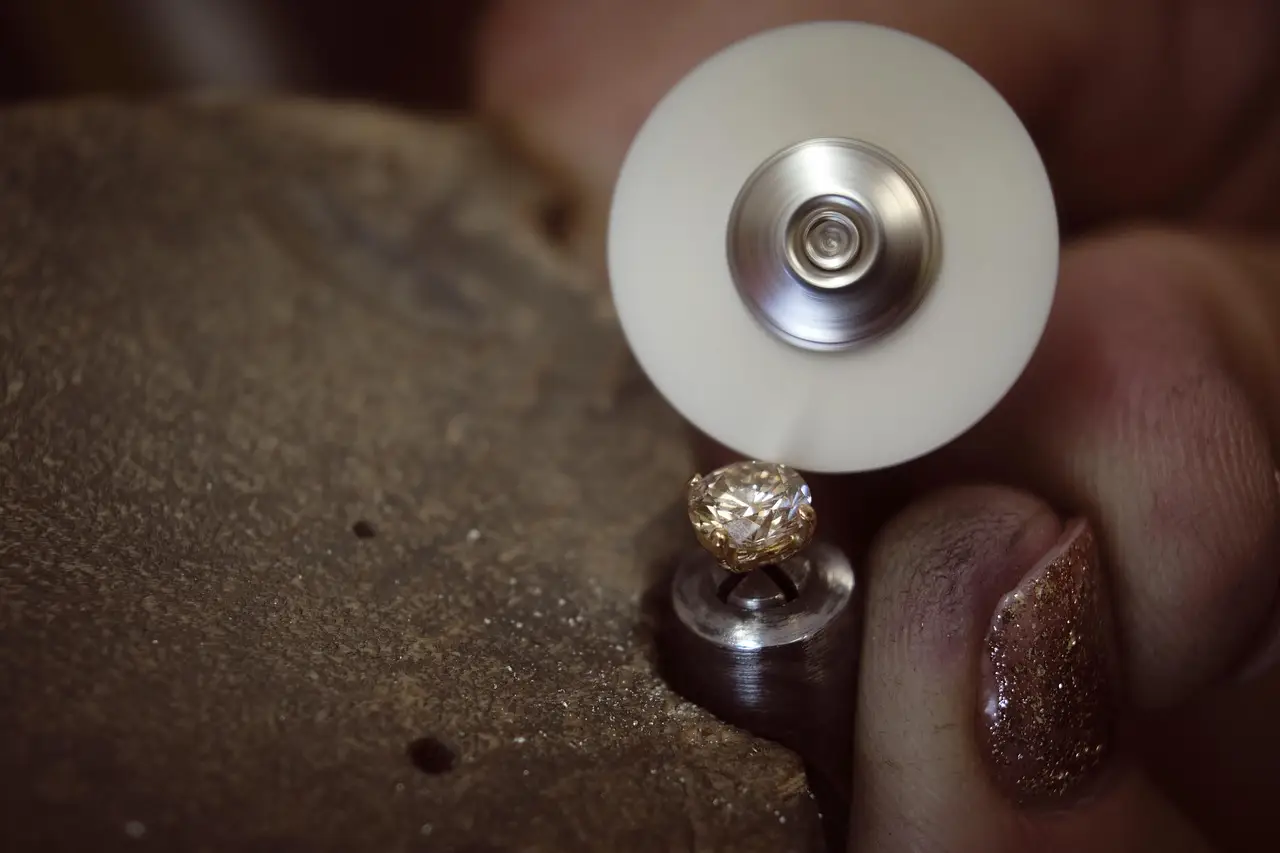
The process layers translucent colored enamel over delicate gold or silver leaf, requiring a series of kiln firings. Tiffany employs some of the only remaining artisans skilled in the technique, according to the company. That scarcity is the quiet stakes of the story: if the atelier stops producing, the craft itself thins out.
Schlumberger's route to the technique was unconventional. He had no gemologist's training. He started in the 1930s with costume jewelry — clips, buttons and other accessories for Elsa Schiaparelli's couture collections.
"The way he came to jewelry was unpretentious: simple coats of paint on metallic works that looked shiny and lacquered," says Sylvain Cordier, the Paul Mellon curator and head of the department of European art at the Virginia Museum of Fine Arts. "I'm convinced that starting with costume jewelry very much informed a taste for bold colors."
How a first lady made the bracelet famous
At Tiffany in the 1960s, Schlumberger translated that vivid sensibility into the more sophisticated paillonné form. Philanthropist Bunny Mellon, a Schlumberger devotee, introduced her friend Jackie Kennedy to the Croisillon style. The first lady wore it so often that it became known as the "Jackie bangle." Schlumberger also applied the enameling to earrings and to decorative objects prized by collectors like Mellon, whose Schlumberger collection is now held at the Virginia Museum of Fine Arts.
The museum connection is not incidental. Cordier speaks for the institution holding Mellon's collection, and he frames the designer's appeal in terms that curators rarely use for luxury goods: freshness, six decades on.
"When you look at the Schlumberger pieces, there's this sort of abstract effect," he says. "I think it's very modern."
What does the expansion change?
For buyers, it extends a limited pool of paillonné objects — previously centered on bracelets, earrings and decorative pieces — into rings and watches. For the technique, it means continued work for the artisans Tiffany says are among the last skilled in it. For the archives, the Paris partnership with the Musée des Arts Décoratifs promises conservation of Schlumberger's working records; the announcement did not specify what materials the archives contain or when preservation work begins, so the detail's substance remains to be seen.
What is verifiable now: a 1962 debut, a Jackie Kennedy provenance, a museum-held collection and a fall release. The rest — the archive's contents, the new pieces' designs — Tiffany has yet to show.
Original: tiffany.com
More from Tom Whitfield
Show full bio
Market editor covering people, launches and day-to-day practice in arts in the broadest sense at Arts & Voices.
1,757 articles