Tracey Emin, Tove Jansson and Canaletto shape the art week
Tracey Emin, Tove Jansson and Canaletto anchor a Guardian art roundup spanning the £437m Museum of London, Moomins, Nazi-era murders and tiny paintings.
Programme
- Smithfields market became the Museum of London’s new home after a 10-year, £437m transformation.
- Tove Jansson and Her Families runs at the Quentin Blake Centre for Illustration until 9 May.
- Sarah Ketelaars’s The 544 honours 544 psychiatric patients murdered in Latvia in 1941 and runs until 6 March.
- A Smaller Scale at Carl Freedman Gallery runs until 10 January.
- Canaletto painted London: Interior of the Rotunda at Ranelagh in 1754.
A 10-year, £437m transformation has made Smithfields market the new home for the Museum of London, The Guardian reports.
The publication’s architecture critic called the building “glorious cathedral-like” and entered “a world of jewels, axes, DJs and dog races.” The combination has the proportions of a cathedral and the programme of a race day. The critic was astonished.
Which shows put intimate art beside difficult histories?
The Guardian’s exhibition of the week is Tove Jansson and Her Families at the Quentin Blake Centre for Illustration, London, until 9 May. It celebrates the Finnish artist and illustrator who created the Moomins. The roundup presents the timing as Christmas fun starting early.
The Guardian highlights The 544 at the Bethlem Museum of the Mind, Beckenham, until 6 March. Artist Sarah Ketelaars pays homage to 544 psychiatric patients murdered by Nazi Germany in Latvia in 1941.
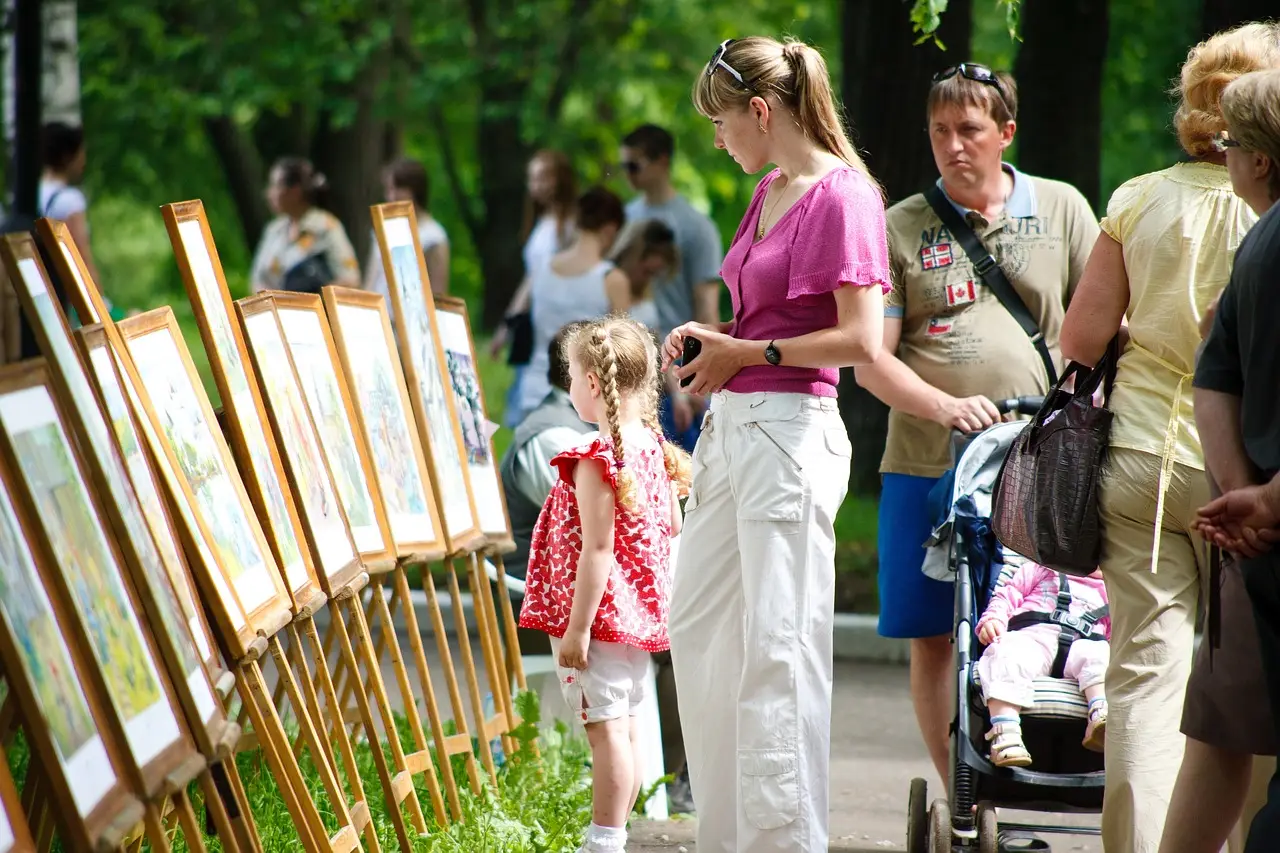
At Carl Freedman Gallery in Margate, A Smaller Scale runs until 10 January. It gathers teeny little paintings by Tracey Emin, Sophie von Hellermann, Laura Footes and other leading lights of the Margate avant-garde (artists working beyond established conventions).
What does Mukazhanova build from felt?
The Guardian also lists Gulnur Mukazhanova at the Whitworth Art Gallery, Manchester, until 16 May. Her immersive environment (a room-scale installation) is made of felt and evokes traditional nomadic life in central Asia.
At the Hunterian, Glasgow, Duncan Shanks runs until 2 May. The roundup says its notebooks and sketches take viewers deep into the Scottish landscape artist’s work.
What else did the art world learn?
The Guardian’s “What we learned” section gathers seven further dispatches:
- Live data from a Spanish farm directs sound and light for Philippe Parreno’s Sydney show.
- Marc Chagall’s lifelong passion for the circus animates a new exhibition.
- The Guardian’s verdict on a Nan Goldin retrospective (a career-spanning survey): she is as great an American artist as Warhol.
- Theaster Gates explains why he bought a 60,0000 sq ft Chicago porcelain factory.
- Ron Athey, creator of the famously extreme live art (performance-based work), explains why being naked is not enough.
- Feminist artists consider why collage (cut-and-paste image making) is a fitting response to patriarchy.
What does Canaletto preserve at Ranelagh?
The Guardian’s masterpiece of the week is London: Interior of the Rotunda at Ranelagh by Canaletto, 1754, at the National Gallery, London. It calls the work a masterpiece of perspective painting and a magically preserved image of one of London’s vanished wonders. Canaletto was better known for his views of Venice.
The rotunda gave 18th-century revellers at Ranelagh Gardens, Chelsea, somewhere to promenade when it was raining or cold outside. The Guardian says Canaletto captured flirtations, gossip, games and fashionable posing beneath the structure in the mid-1750s.
The roundup calls Ranelagh a high-class, consciously sophisticated urban haunt. Diners had tables in privately located arched alcoves, and a full orchestra played. The building combined classical grace with gilded ornament in the richly decorated rococo style (an ornate form of classical decoration).
The effect is very European, according to The Guardian. It reads the rotunda as a grand architectural expression of the rational, science-inspired era known as the Enlightenment (the 18th-century intellectual movement). The roundup rejects the idea that Canaletto distorted London. Instead, the painting reminds viewers that the British capital was seen as the Enlightenment’s leading city, where science, coffee shops, commerce and comparatively free speech and satire drew the envy of continental visitors.
Handel might have supplied the orchestra’s repertoire. He worked in London, and The Guardian links his Water Music and Music for the Royal Fireworks to the lifestyle shown here.
The first hard deadline is A Smaller Scale’s 10 January close. The 6 March, 2 May, 9 May and 16 May dates then provide a month-by-month route through difficult histories, Moomins, felt and 1754 London.
Source: theguardian.com
More from Daniel Okafor
Show full bio
News editor covering companies, deals and strategy in arts in the broadest sense at Arts & Voices.
1,740 articles