Translator Emma Ramadan Traces Her Father's Escape from Lebanon's Hills
Emma Ramadan's essay "My Father Is a Hill" in AGNI 104 retraces her father's 1975 flight from Mechref and their return fifty years later to the abandoned family home.
Programme
- Emma Ramadan's essay "My Father Is a Hill" appears in AGNI 104, which also includes the Proximity portfolio of writing and art by women of color.
- Her father fled Mechref, Lebanon, in 1975 and returned for the first time in summer 2025 — fifty years later.
- The Mechref community's founder was killed along with more than twenty family members, staff and bodyguards during the Civil War.
- The family technically still owns the Mechref house, protected by a postwar squatters' law, but the father refused to pursue reclaiming it.
Emma Ramadan's essay "My Father Is a Hill" appears in the latest issue of AGNI, the Boston-based literary journal, alongside Proximity: An AGNI Portfolio of Writing and Art by Women of Color. The piece reconstructs a single, startling journey: her father's return in the summer of 2025 to his childhood home in Mechref, southern Lebanon — the first time he had been back since fleeing in 1975, fifty years earlier.
Ramadan, a literary translator, grew up in the hills of Laguna, Southern California, far from the coastline the region is known for. Her parents, after twenty-five years in the United States, planned a return to France. Her mother wanted one thing: a small apartment within walking distance of town. Instead, the family settled in a house high in the hills of Vence, a ten-minute drive down winding curves to buy a baguette.
"My mother never walks anywhere," Ramadan writes.
Why does the essay's title call a father a hill?
The essay's central image binds geography to inheritance. Ramadan's father grew up in Mechref, outside Beirut — a word meaning "elevated," "overlooking," a lookout point or place of shelter and refuge. His Lebanese Muslim family were among the first fifty households in a largely expatriate Christian community, "New Mechref," founded on a vision of a self-sufficient utopia with buried electrical lines.
When Lebanon's Civil War began, the community collapsed. U.S. and U.K. citizens were evacuated in a convoy of fifty cars. Ramadan's twenty-year-old father drove his mother down the hills in a red Fiat, through checkpoint after checkpoint, to the airport and exile — a two-day escape. Soon after, the community's founder was gunned down along with more than twenty family members, staff and bodyguards.
Her father's refusal to share this past shapes the essay's argument. "My father does not want to show me the way… He does not understand why I would want to climb back up to the summit of his past," Ramadan writes. "He does not understand that my future waits there."
What did the family find after fifty years?
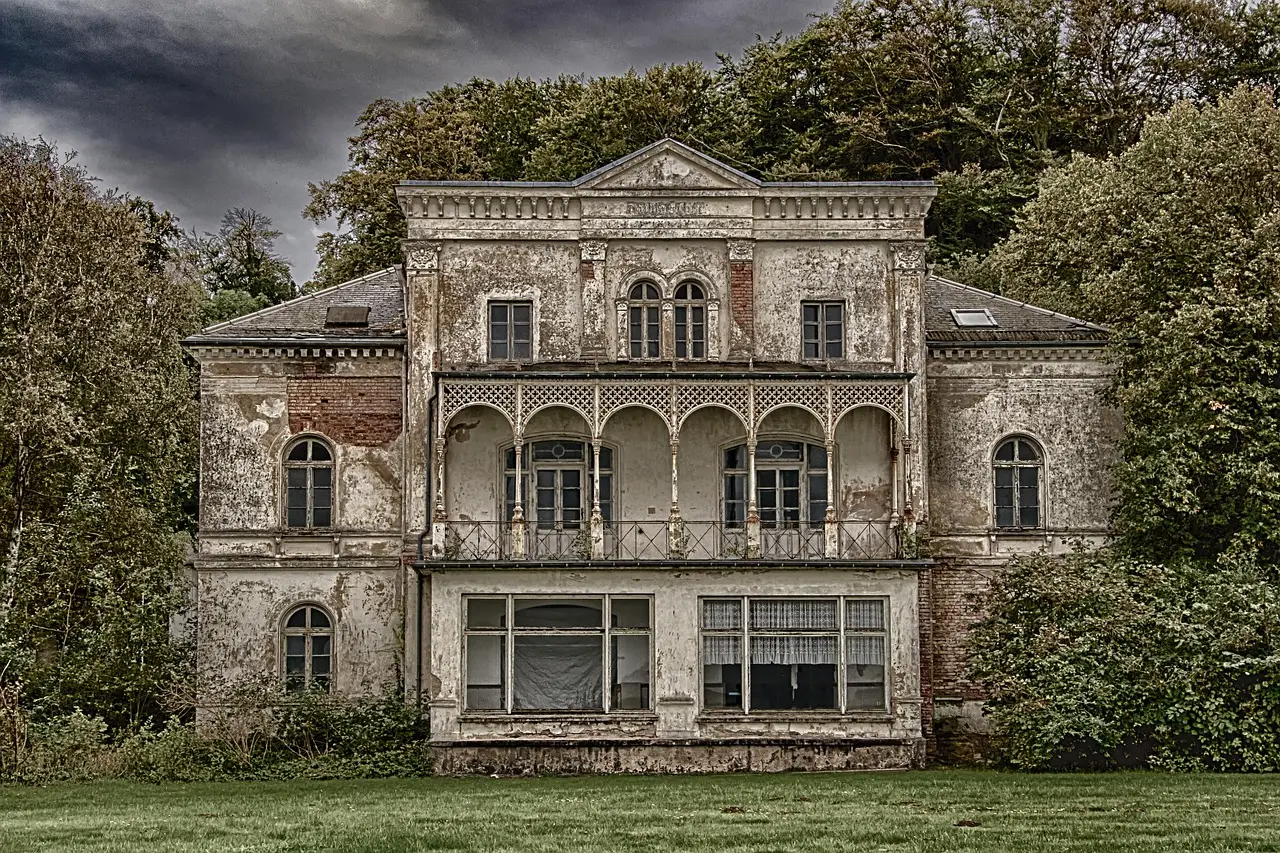
At the top of the hill in 2025, her father found his house unerringly. The pool was drained. The gate was rusted. The gardenias were gone. Half the houses nearby stood dilapidated and overgrown. Technically the family still owns the property — a postwar law protects squatters in abandoned homes — but her father dismissed her mother's suggestion to reclaim it with a wave of his hand.
The visit itself carried risk. Ramadan had traveled to Lebanon to see the Roman cemetery in Tyre, described at the start of a book she had translated. Her parents and partner opposed the drive, fearful of Israeli bombings nearby. While the family was in the south, Israel bombed the north, in an area they had visited the day before.
How does language figure in the story?
Ramadan's father never taught her Arabic. She frames the loss through phonetics: Arabic has two letters corresponding to the English h, including the pharyngeal Ḥaa, with no English equivalent, that opens the word for love, ḥubb. "That Ḥaa is a hill I may never hike up," she writes. "It is one of the obstacles standing between me and me."
She anchors the essay in Lauren Alwan's "The Matter of Setting," published in the Lebanon-based journal Rusted Radishes, which distinguishes static, recallable settings from places inevitably "changed by time, by disaster, by the change that takes place inside us." Alwan's Syrian grandfather, Ramadan notes, retired in Altadena, California, in a house reminiscent of the Damascus courtyard home he left behind.
Ramadan's Lebanese grandparents did the same — ending their lives in a Southern California house with the same Pacific view as the balcony her father kept in Mechref. The essay's turn comes as the car descends and her partner whispers: "Don't you see? It's the same hill."
"Over and over and over my father has found this house, this hill, these winding roads of Lebanon, in America, in France," Ramadan writes. "Every day he relives his youth."
"My Father Is a Hill" is available in AGNI 104, whose current issue also features the Proximity portfolio — a collection that places Ramadan's meditation on inheritance, exile and unlearned language among work by other women of color.
Original: agnionline.bu.edu
More from Elena Vasquez
Show full bio
Senior reporter covering technology and product news in arts in the broadest sense at Arts & Voices.
1,465 articles