Trump's 250-Foot Triumphal Arch Faces Final Federal Review
Trump's 250-foot arch at Memorial Circle could be approved by the federal planning commission as courts weigh lawsuits from D.C. and Virginia attorneys general.
Programme
- Trump's planned triumphal arch would rise 250 feet at Memorial Circle between the Lincoln Memorial and Arlington National Cemetery.
- The National Capital Planning Commission began its final review on Thursday, two days after Republicans lost the Senate and House.
- D.C. and Virginia attorneys general filed a joint court brief on Wednesday calling it a "lawless project."
- The Arlington County Board sued last month, naming the National Park Service as a defendant over flight-path and public-safety risks.
- The administration claims authorization from century-old congressional plans, though those plans called for a pair of columns.
President Donald Trump's planned 250-foot triumphal arch in Washington, D.C., could win federal approval as soon as Thursday, clearing the way for construction to begin immediately.
The Trump-allied National Capital Planning Commission began reviewing plans for the arch on Thursday afternoon, Washington media reported. The timing was stark: the meeting came just two days after Republicans lost control of both the Senate and the House of Representatives in midterm elections. The commission is expected to approve the plans after lengthy public testimony. A federal judge could still block the project, an outcome some on Capitol Hill are hoping for.
Opponents have already turned to the courts. "The Court should not allow this lawless project to evade scrutiny," D.C. Attorney General Brian Schwalb and Virginia Attorney General Jay Jones wrote in a joint court filing on Wednesday, as reported by the Washington Post.
Where would the arch stand, and what would it look like?
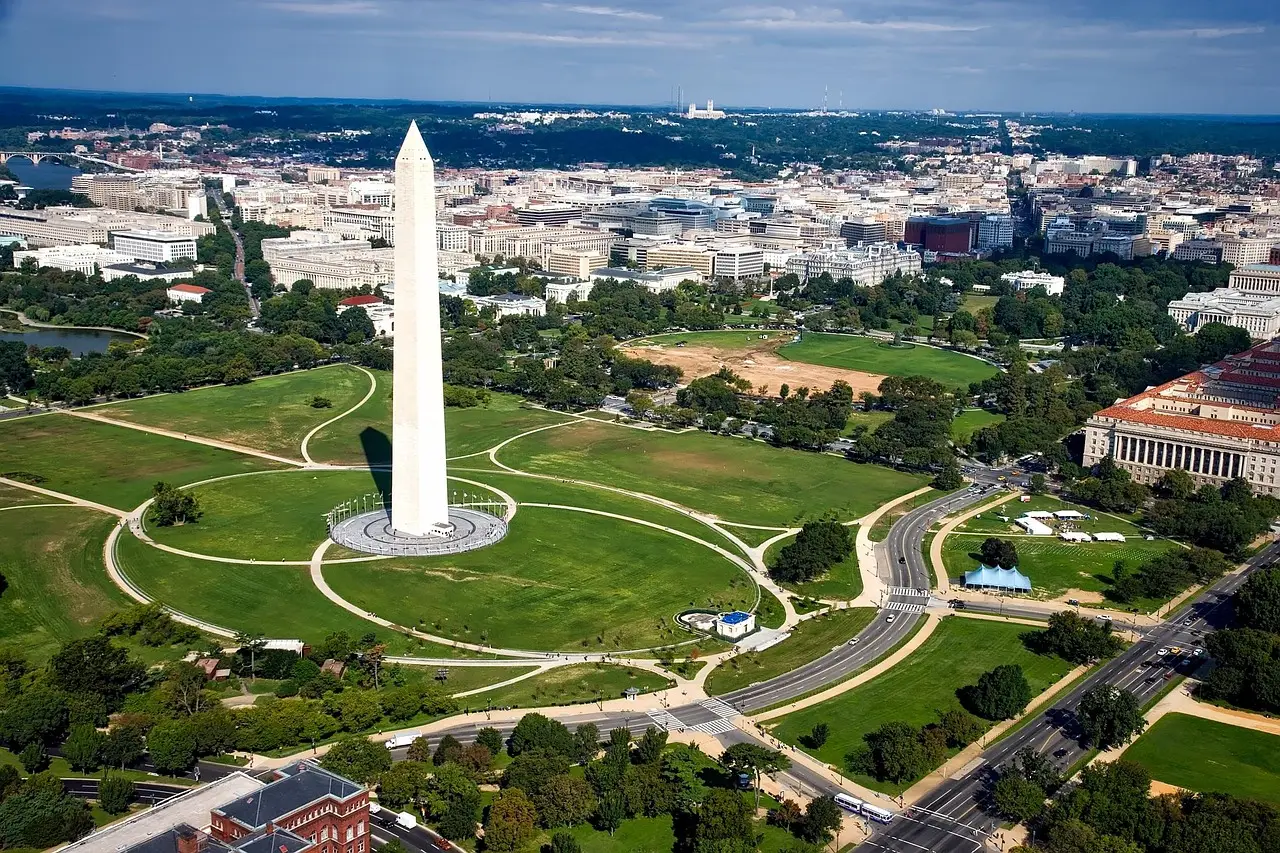
The structure would rise at Memorial Circle, between the Lincoln Memorial and Arlington National Cemetery. Critics say its 250-foot height would cast shadows over the surrounding memorial landscape at various times of day. In recent weeks, the president has reimagined the project as a "military complex" complete with a sniper's nest.
Trump first announced plans for the arch more than a year ago, presenting it as a tribute to the nation's 250th anniversary. A project of this magnitude would traditionally require congressional approval, which the president has not sought. D.C. lawmakers, historic preservationists, and veterans' groups argue the project has been illegally advanced and threatens the site's solemn character.
What does the dispute turn on legally?
The Trump administration maintains that century-old plans approved by Congress — intended to commemorate the nation's reunification after the Civil War — authorize the arch. Critics counter that those lawmakers' plans called for a pair of columns, not a triumphal arch. The president has likened his design to France's Arc de Triomphe, "but better, more beautiful actually, much more beautiful."
In a lawsuit filed last month, the Arlington County Board argued that the arch would "directly obstruct the line of sight between the Lincoln Memorial and Arlington National Cemetery that was deliberately created to symbolize the nation's post-Civil War reunification."
The suit, which names the National Park Service as a defendant, accuses the administration of failing to consider the arch's potential risks to regional flight paths and its impact on emergency services.
"Using the Arch to store large stockpiles of ammunition and as a staging point for drones and snipers, so close to commuters and tourists, will dramatically worsen these public-safety harms and the risk of accidents," the lawsuit warns.
What was said at Thursday's review?
Mark Paoletta, a White House official appointed commission chairman in August, said the empty space at Memorial Circle "dishonors our veterans and leaves a key monumental gateway to Arlington that Congress authorized uncompleted." He called it a "national disgrace" that such a landmark was not already standing, and praised the president's "historic vision."
The commission's expected approval sets up a direct collision between executive action and the federal courts. With opposition now backed by two state attorneys general, a county board, and a newly Democratic Congress, the arch's fate may rest less with planners than with a judge's order.
Original: art-media-group.slack.com
More from Marcus Bennett
Show full bio
Staff writer covering people, launches and day-to-day practice in arts in the broadest sense at Arts & Voices.
1,042 articles