Trump's Culture War Meets a Hostile Congress in January
Trump's push to remake the Kennedy Center and Smithsonian has fallen short. In January, a Democrat-led Congress gains subpoenas, hearings and the power of the purse.
Programme
- Democrats take control of Congress in January, gaining subpoena power and oversight of roughly $1 billion in Smithsonian funding and $45 million for the Kennedy Center.
- A court removed Trump's name from the Kennedy Center in June; an October poll found 80 percent of respondents oppose his push to restore it.
- Trump fired Kennedy Center trustees en masse in early 2025 under the 1958 founding law and made himself chairman.
- Six of the Smithsonian's nine citizen regents' terms expired in the past eight months with no replacements named.
- Kim Sajet resigned as National Portrait Gallery director after Trump's attempted firing; artist Amy Sherald canceled her planned show.
By Daniel Okafor
In January, President Trump's campaign to remake Washington's cultural institutions collides with a Democrat-led Congress, and the early evidence suggests neither side plans to be polite about it. The White House effort has already fallen short of its goals. Now the subpoenas begin.
The score so far is mixed. Trump tried to fire the National Portrait Gallery's director and stamp out what he calls "improper ideology" at the Smithsonian. He installed himself as chairman of the John F. Kennedy Center for the Performing Arts after firing trustees en masse in early 2025. He is pushing a two-year closure of the center's main building for a $250 million renovation. Public protests, boycotts, legal battles and judicial injunctions followed.
What changes when Democrats take Congress?
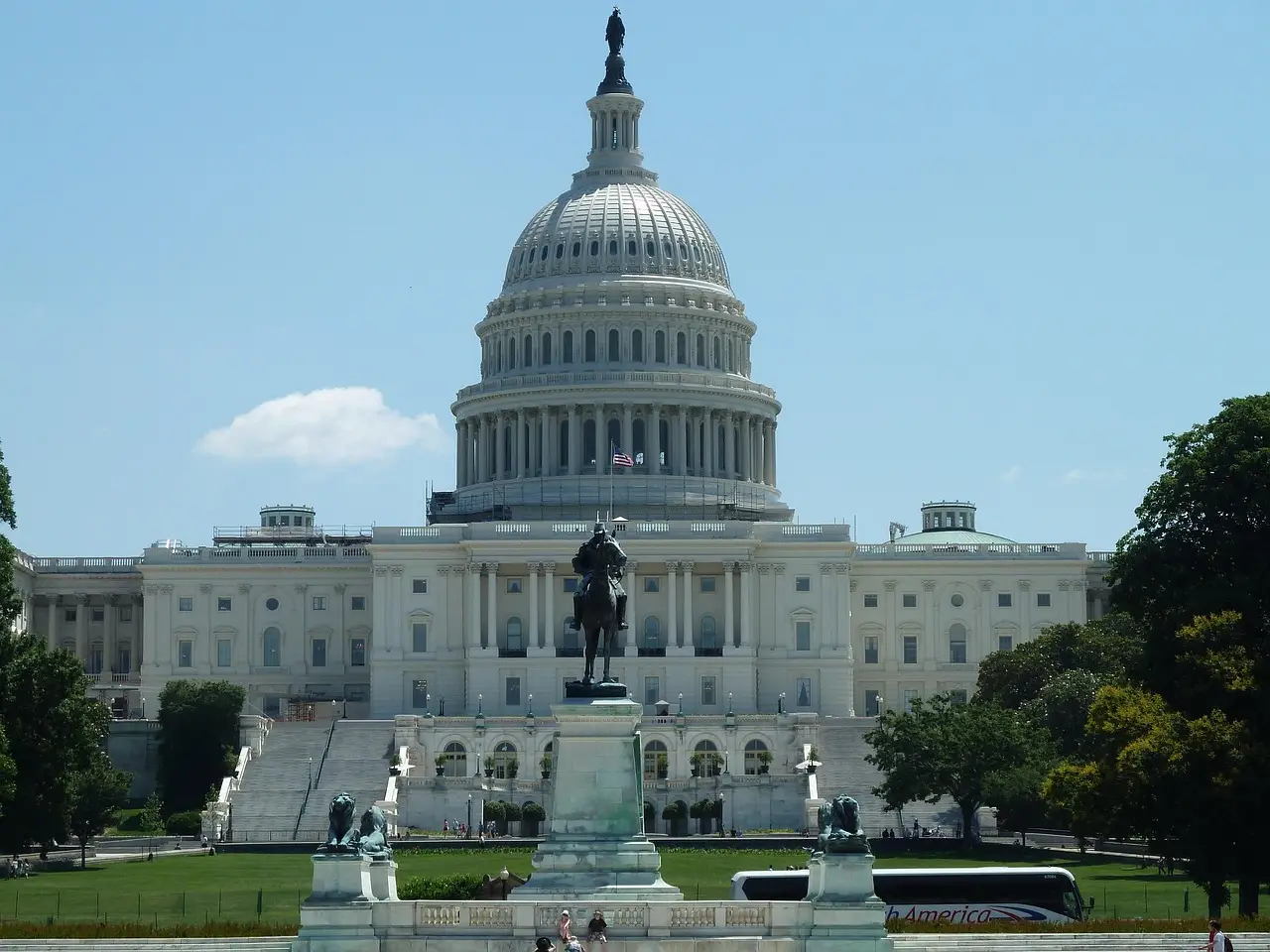
Plenty. Democrats will control cultural funding, oversight panels and appointments to the Smithsonian's Board of Regents, where nine of 17 seats belong to citizen trustees appointed by lawmakers.
"Democrats in Congress are not going to roll over on this," said Robert White, a Democrat elected as the District of Columbia's nonvoting House delegate.
The Republican-led House held two hearings this year amplifying White House criticism of how the Smithsonian depicts American history. One ranking Democrat called them a "political witch hunt." Few expect an encore.
Representative Chellie Pingree of Maine, the top Democrat on the House appropriations subcommittee overseeing Kennedy Center funding, said officials have stonewalled her on key details. Now, she said, "there's no running and hiding." She plans a hearing on the center's finances and construction plans.
Two Democrats have led the resistance so far: Representative Joyce Beatty of Ohio, who is suing the center over Trump's agenda, and Senator Sheldon Whitehouse of Rhode Island, who has run a yearlong investigation into its affairs. Come January, they can subpoena documents and testimony from the center's Trump-appointed managers.
Can Congress rewrite the Kennedy Center's rules?
In theory, yes. The 1958 law that created the institution — originally the National Cultural Center — lets the president pick board members, which is how Trump fired the trustees wholesale. Some Democrats want legislation trimming that authority.
"Congress created the governing structure of the Kennedy Center, and Congress could change the governing structure of the Kennedy Center," said Michael Kaiser, who ran the venue for more than a decade.
Trump's veto makes passage unlikely. But Democrats gain leverage over spending bills that allocate roughly $1 billion for the Smithsonian and about $45 million annually to run the Kennedy Center, a federal building. Pingree's summary is blunt: "We have the power of the purse." She said Democrats could block demolition of the center without congressional approval, or withhold funding if Trump's name returns to the building.
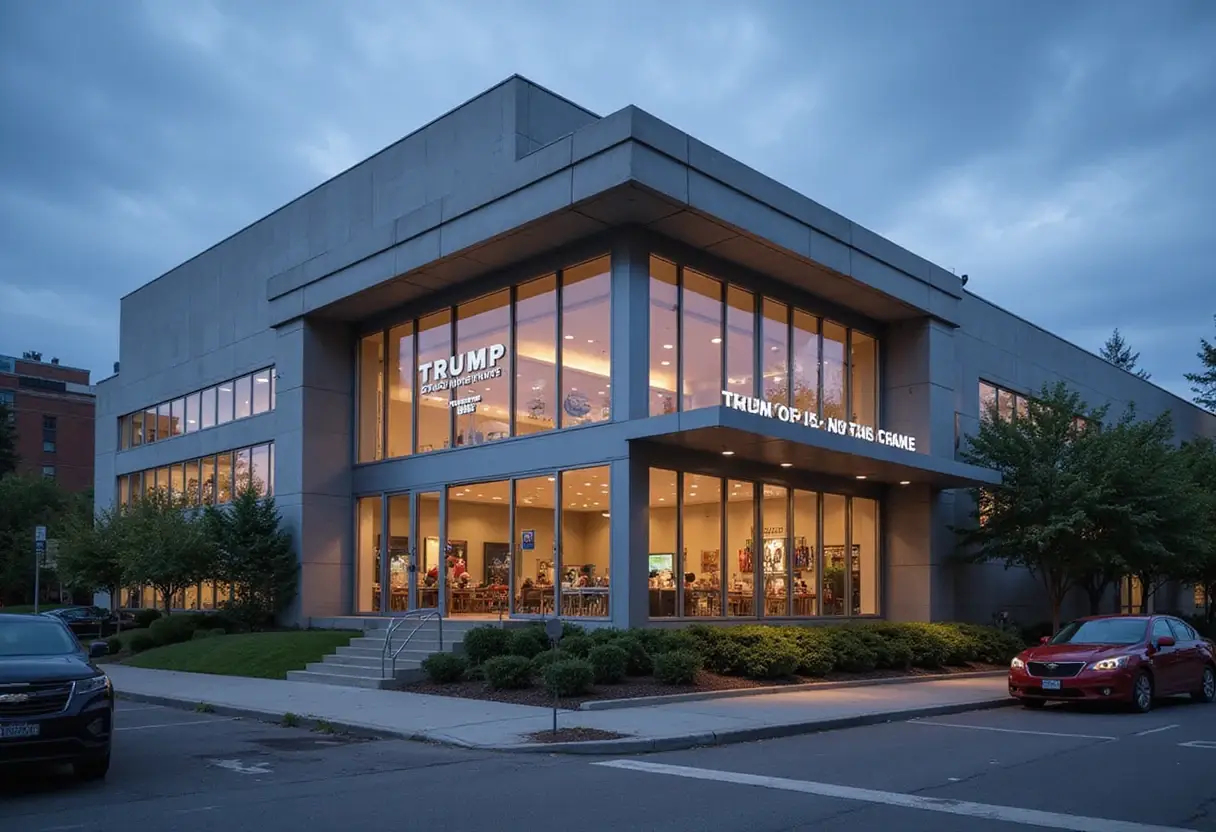
The name is the sore point. Workers added it to the facade last December after a board vote; a court ordered it removed in June. Trump has argued the credit is deserved because he secured $257 million from Congress for the overhaul. In September he issued an ultimatum: restore the name or he cancels the renovation of what he calls a "dilapidated" building. A mid-October ABC News/Washington Post/Ipsos poll found 80 percent of respondents consider the push inappropriate.
"I think the president picked inopportune times to focus on his vanity projects," said Jason Roe, a Republican strategist in Michigan. "And I think that just underscored the frustration of the electorate."
What happens at the Smithsonian?
Six citizen regents' terms have expired in the past eight months, and the board, quite unusually, has forwarded no replacement names to Congress. Three people familiar with the process said the bipartisan board's nominees seemed unlikely to survive a Republican-led chamber. That calculus flips in January, though Trump retains veto power over replacements.
Trump has left marks despite lacking formal power. His failed bid to fire the National Portrait Gallery's director over alleged partisan bias led director Kim Sajet to resign. Artist Amy Sherald canceled her planned National Portrait Gallery show, convinced the institution was preparing to censor it; Smithsonian officials denied it. Last week Trump called the history museum a "battleground" in a "campaign to undermine our founding principles and diminish our Nation's extraordinary achievements."
Much remains undone. Smithsonian Secretary Lonnie G. Bunch III, a focus of White House criticism, steps down at year's end — he says simply because it was time. The White House ordered $84,000 in signage warning against "inaccurate information" outside the history museum; months later, the signs don't exist. The administration has threatened to withhold congressionally allocated funds from the Smithsonian's roughly $1.8 billion budget but hasn't. Trump proposed a 12 percent cut for fiscal 2026; even the Republican-led Congress declined.
A White House spokesman said the president remains focused on "improving the nation's capital" and "enacting his common-sense, America First agenda."
Mike Gonzalez, a senior fellow at the Heritage Foundation, predicts Trump won't quit. "More than any other previous conservative leader, Trump has understood the urgency of taking back the cultural ground that we lost to the left," Gonzalez said. "I very much doubt that Trump is going to give up on the fight."
Democratic strategist Howard Wolfson sees a possible off-ramp: "You can imagine a scenario in which Trump rediscovers his deal-making roots... and decides to ratchet down some of the most contentious fights." Roe isn't counting on it. "He might not lead with it in the same way that he has before," he said, "but I would struggle to see him abandoning it."
With hearings, subpoenas and spending bills all changing hands, the culture war's next chapter will be fought with gavels rather than executive orders.
Source: NYT Arts
More from Daniel Okafor
Show full bio
News editor covering companies, deals and strategy in arts in the broadest sense at Arts & Voices.
1,463 articles