Truong Tran Has Cut 10,000 Butterflies From White Male Bodies
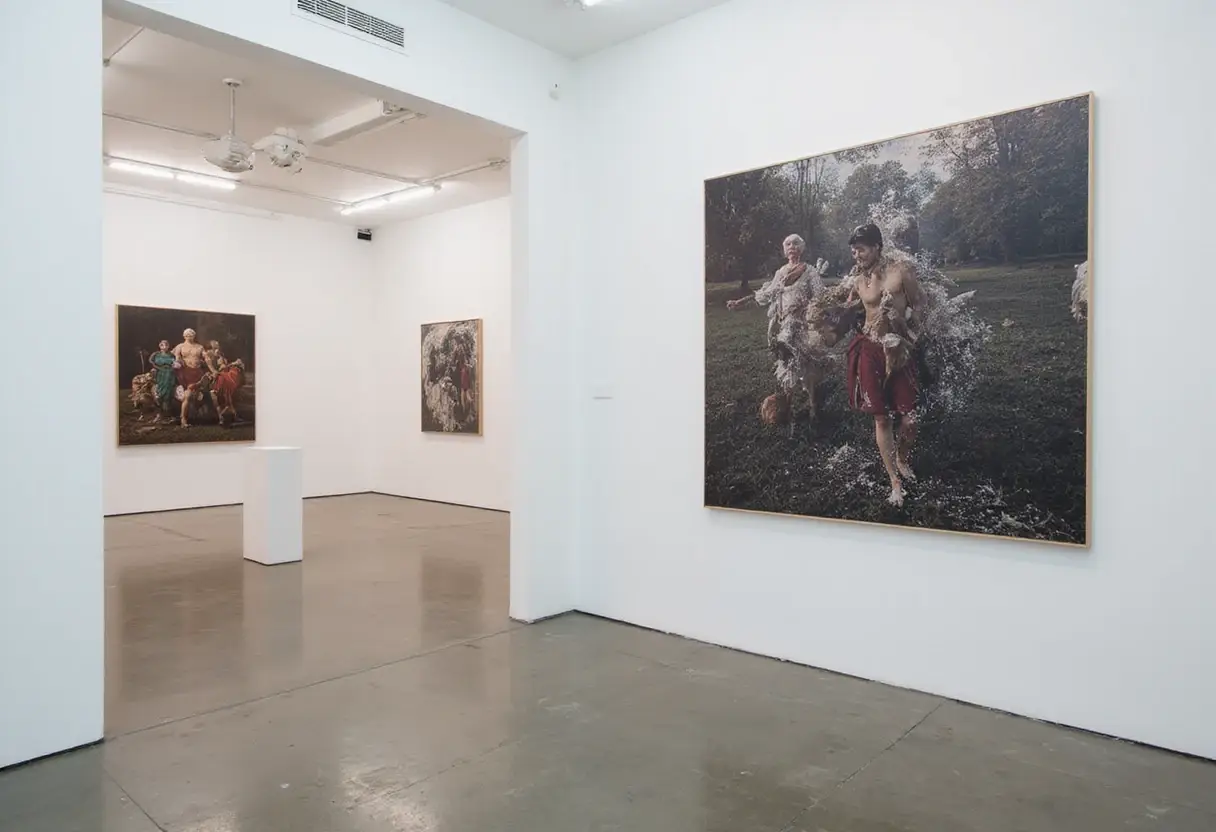
Truong Tran has cut over 10,000 butterflies from images of naked white men — a decade-long protest against Damien Hirst's installation that killed 9,000 butterflies.

Programme
- Truong Tran has cut more than 10,000 butterflies from images of naked white men over a decade.
- The practice began as protest against Damien Hirst's 'In and Out of Love,' which killed 9,000 butterflies.
- The text is an excerpt from 'How to Exi(s)t: A Poet's Memoir,' City Lights Books, copyright 2026.
- Tran refuses to cut images of Black and Brown men: 'We are fragmented enough.'
The poet and artist Truong Tran has cut more than 10,000 butterflies from images of naked white men over the past decade. He discloses the practice, and its origins in protest, in an excerpt from his forthcoming book How to Exi(s)t: A Poet's Memoir, published by City Lights Books and copyrighted 2026.
The count is a response to a specific work: Damien Hirst's 1991 installation "In and Out of Love," which resulted in the death of 9,000 butterflies. Tran writes that he began cutting as protest, "matching the killing of 9,000 lives with a corresponding number of male genitals and anuses, all in an effort to say, 'What a dick. What an asshole.'"
He adds: "It seemed appropriate at the time. It seems appropriate even now."
From anger to meditation
The practice changed over ten years. "What began as a protest evolved into a practice of meditation," Tran writes. The gesture of cutting moved "from anger to mindfulness to mourning for all that was lost in that claiming of art." He surpassed Hirst's 9,000 dead butterflies and stopped counting after 10,000. The cutting, he writes, continues — "still this loss that won't stop cutting."
Tran now uses the butterflies as material for his own art, with two stated purposes:
- To amplify the consciousness of queer identity — "It's just the male body; it's just two men having sex."
- To confront whiteness, which he describes as "a pervasive presence," "a conditioned desire," and "an infestation."
The question he keeps being asked
Tran has faced repeated challenges, often from white men, about why he cuts only from images of white men. His written answers are volatile by his own admission. "Desire is complicated and fraught with shame. Anger is deep and, thus far, endless. Resentment is a lifetime of endured experiences," he writes. Each spoken answer, he says, mixes "indignation, defense, agitation, and defiance."
He recounts one exchange in detail. Asked by a white man why he restricts himself to white bodies, Tran answered: "It has to do with cutting. I refused to cut into the images of Black and Brown men." Pressed on why, he said: "Because I won't fragment their images for art's sake, in the act of cutting. We are fragmented enough."
Asked whether he was comfortable cutting into white men's images, and with the violence implied, he answered "Yes" both times.
What Tran wishes he had said
The excerpt is framed as a second attempt at an answer he failed to give in the moment. "I am writing this now because I did not say. I was not quick enough at that moment in my own head," he writes.
His fuller reply: the violence of his scissors is, at best, metaphorical. "This violence at best is metaphorical violence. It's art. What is a metaphor when in reality?" He then poses the question he considers non-metaphorical: "What of the actual violence endured by Black and Brown bodies? This question is not art. It lacks the luxury of metaphors."
Truong Tran is the author of How to Exi(s)t: A Poet's Memoir, reprinted with the permission of City Lights Books. The excerpt marks the first of what he calls "many attempts" to write the story of this practice in full — a signal that the memoir itself continues the conversation the scissors began.
Original: bookshop.org
More from Tom Whitfield
Show full bio
Market editor covering people, launches and day-to-day practice in arts in the broadest sense at Arts & Voices.
699 articles