Unknown Canaletto Drawing, Held by One Family for 200 Years, Goes to Auction
A previously unknown Canaletto capriccio, held by one family for two centuries, sells at Mallams Oxford on October 21 with a $53,000–$79,000 estimate.
Programme
- A previously unknown Canaletto drawing carries an estimate of $53,000–$79,000 at Mallams Oxford on October 21.
- Canaletto specialist Charles Beddington dated the work to 1746–1755, during the artist's years in England.
- The drawing stayed with descendants of Charles Burney for about 200 years.
- Canaletto's auction record is around $44 million, set at Christie's London in July 2025.
- His record for a capriccio is $3.3 million, set at Christie's London in 1994.
A previously unknown Canaletto drawing estimated at $53,000 to $79,000 will sell at Mallams auction house in Oxford on October 21, after roughly two centuries in the hands of a single family. The work surfaced from the descendants of Charles Burney, the English composer and music historian, who probably acquired it in the late 18th century.
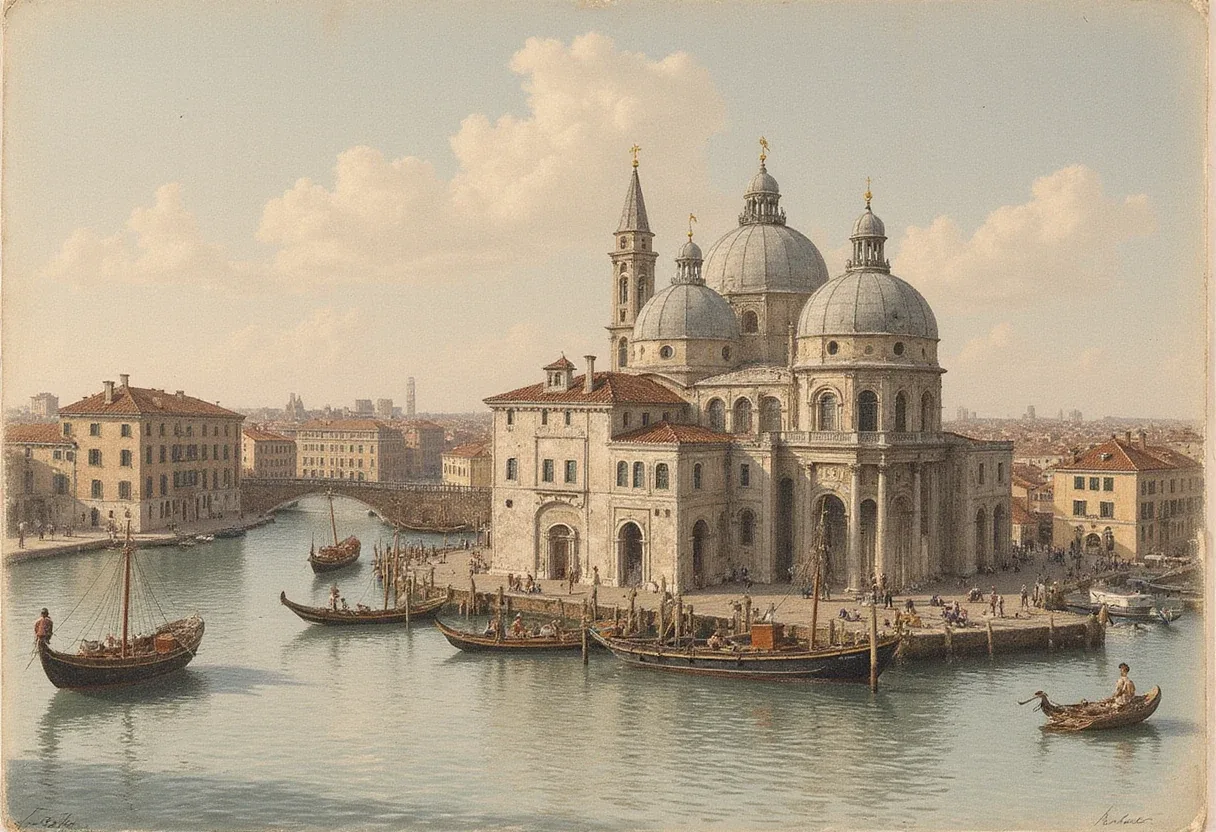
The pen-and-ink sheet is a capriccio — a fanciful architectural scene. It shows a ruined Renaissance arcade, with vines and trees invading the crumbling stonework. A ramshackle wooden bridge looks held together as much by rope as by anything else. A boatman maneuvers his skiff out from under an archway. Broken wheels and dilapidated fences scatter the shore.
Canaletto specialist Charles Beddington authenticated the drawing. He dates it to between 1746 and 1755, the years the Venetian artist spent working in England.
What does the find change for collectors?
The estimate sits far below Canaletto's painting prices, and it offers a rare entry point into the artist's market at a moment of record results. The drawing may have served as a preparatory study, shown to a prospective patron before Canaletto completed a related painting. That painting last appeared at Christie's in London in 1995, selling for £380,000, then $577,000, according to Artnet News.
An inscription on the back suggests the artist may originally have given the drawing away as a gift.
Unlike the meticulously observed views of Venice and London that made Canaletto famous, his capricci combined real and imaginary architecture to create scenes that never existed. He began experimenting with the genre in the late 1730s. It gave him considerably more freedom to invent architectural settings, mixing classical ruins, waterways, and figures into elaborate imaginary landscapes.
Art historian John Rolfe told Artnet News that these works display Canaletto's powers of observation as well as his imagination. He cited three possible drivers behind the artist's turn to the genre:
- a growing fascination with ruins
- declining tourism in Venice during the European wars
- his early experience working with his father, a theatrical set designer
How strong is the Canaletto market?
Recent results suggest robust demand. In July 2025, Venice, the Return of the Bucintoro on Ascension Day sold for around $44 million at Christie's London, setting an auction record for the artist. Another painting depicting the same Venetian ceremony fetched $30.5 million in February 2026.
His auction record for a capriccio stands at $3.3 million, achieved at Christie's London in 1994.
Against those benchmarks, the Oxford drawing carries a modest estimate. For collectors, October 21 offers a rare chance to buy a newly surfaced work by one of Venice's most celebrated painters — and to see whether fresh-to-market provenance, untouched since Burney's day, pushes the price past expectation.
Original: mallams.co.uk
More from Marcus Bennett
Show full bio
Staff writer covering people, launches and day-to-day practice in arts in the broadest sense at Arts & Voices.
555 articles