Unknown Odilon Redon Wall Sketches Found at French Abbey
Unknown Odilon Redon wall sketches emerged at Abbaye de Fontfroide when his 1911 murals were removed for the Fondation Louis Vuitton's Gustave Fayet exhibition in Paris.
Programme
- Unknown Redon wall sketches were found in 2026 when the 1911 murals left Fontfroide for the first time.
- The Fondation Louis Vuitton exhibition gathers around 250 of the 750 works Gustave Fayet once owned.
- Fayet bought Fontfroide for 49,925 francs in January 1908.
- The wall figures measure only 30–35 centimeters; the sketches are dated to Redon's March 1910 stay.
- The loan required special authorization from France's Ministry of Culture; the panels are classified as a historical monument.
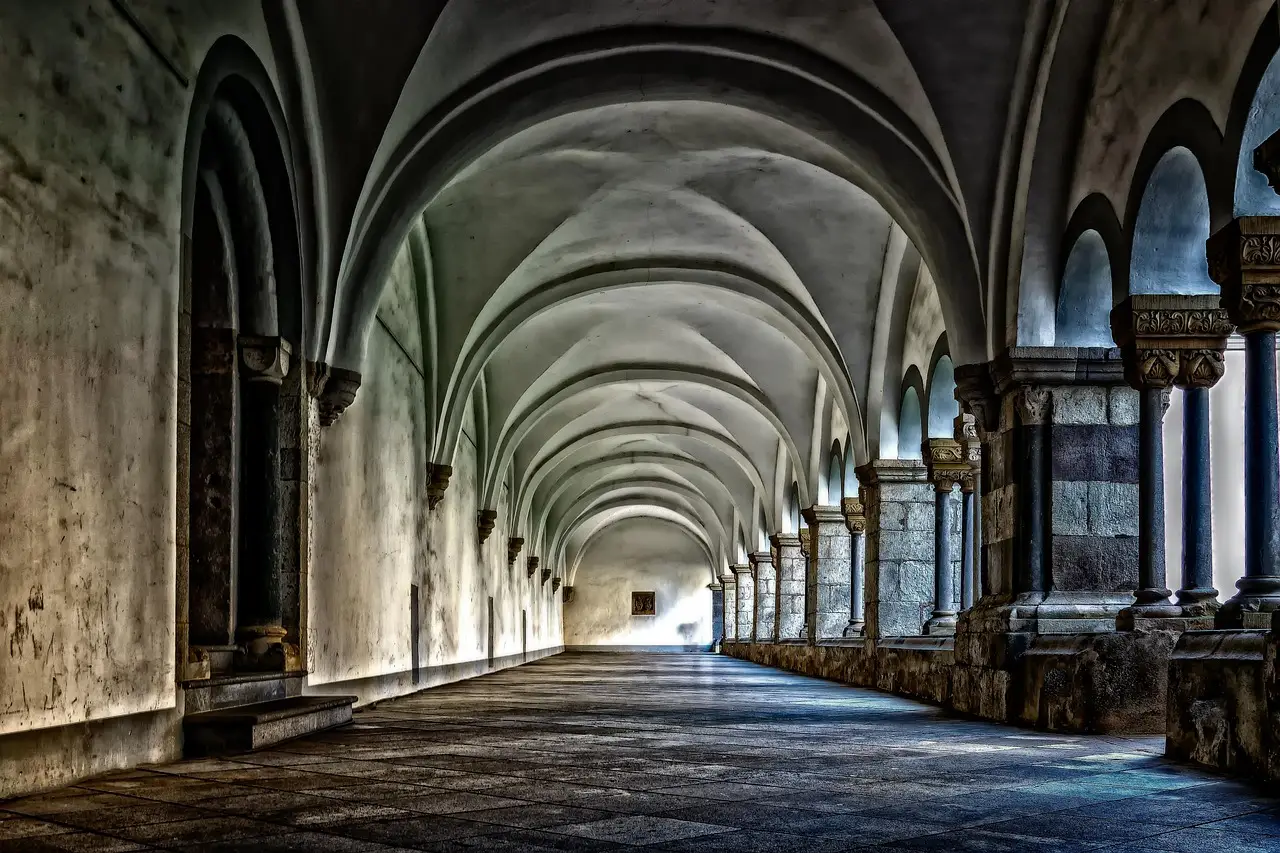
Previously unknown wall sketches by Odilon Redon surfaced this year at the Abbaye de Fontfroide, an 11th-century former monastery in the South of France. Conservators found them when Redon's three murals — La Jour (Day), La Nuit (Night) and Le Silence (Silence) — were removed from the abbey library for the first time since their installation in 1911, to be loaned to a high-profile exhibition in Paris.
"It was a great surprise—nobody imagined the existence of these sketches," Alexandre d'Andoque de Sériège, the abbey's director, told ARTnews. "It amuses just to imagine Redon painting them on the wall."
The murals were commissioned by Gustave Fayet, one of the turn of the century's great French collectors, now little-known. The Fondation Louis Vuitton in Paris is currently restoring his reputation with "Gustave Fayet, Collector-Designer: Icons of Modern Art," which has gathered around 250 of the 750 works that once passed through his hands.
Why did the sketches stay hidden for a century?
Neither Fayet nor Redon ever mentioned the drawings in correspondence with each other or with the French avant-garde. They may have been an initial test for a fresco, but d'Andoque de Sériège — who is also Fayet's grandson — doubts it.
"A fresco in the library would have required Redon to stay very long in Fontfroide. It's also physically a very hard job," he said. "So, I think it's really just a painting for fun."
The sketches do not resemble the finished panels, which Redon began in his Paris studio. "The figures are more colorful [on the wall] than the figures in panels. The shape is typical Redon, but not the choice of colors," the director said. "The two female figures—Madeleine and Simone [his wife and daughter]—are very tall, very important in the panels, but in the sketches on the walls they are rather small, only 30–35 centimeters high."
Researchers date the sketches to Redon's 10-day stay in March 1910, when the library's restoration was complete. "We guess—we are 99 percent sure—that it is during that stay that Redon made the sketches we discovered when we removed the panels," d'Andoque de Sériège said. Redon had first visited in October 1908, when he noticed the statues of Diana and Apollo Fayet had placed near the entrance — a detail that shaped the design of La Jour.
Who was Gustave Fayet?
Fayet met Redon in 1900, bought his first work by the artist in 1901 and eventually owned some 300. He began collecting in 1899, the year he took over the family business and purchased 41 works from fellow Béziers winemaker Armand Carbol. His friendship with Redon changed his own painting, from Barbizon-style Realism to Impressionism and then, as the director put it, "a sort of emotional painting, and I think that's why he bought so many paintings from Redon and the Nabis."
Fayet bought Fontfroide in January 1908 for 49,925 francs at auction, after being outbid once and then offering 10 percent more. The 1901 Law of Associations had suppressed religious orders and seized their properties, and many historic religious sites were being bought for their masonry. Fayet, whose family vineyard at Domaine de Vedilhan lies about 12 miles northeast, wanted to save the abbey and, as d'Andoque de Sériège writes in an essay coauthored with art historian Pierre Pinchon, turn it into "a vibrant, creative place, imbued with a fully Symbolist philosophy."
What does the discovery change?
The Fontfroide panels are the only Redon decorative panels in France still in situ. "The two decorative panels are a testament to the whole career of Redon," the director said. "La Nuit is an echo of the 'Noirs' period of Redon, and Le Jour echoes the second period… with all the flowers, the bouquets, and the use of color."
The installation was classified a historical monument a few years ago, and the Ministry of Culture granted special authorization for the loan. "It is the first and only time we will do that," d'Andoque de Sériège said, adding that after the five-month Paris run, Fontfroide itself will remain the main testament to Fayet — and that the abbey must now say far more about the man who saved it.
Source: ARTnews
More from Marcus Bennett
Show full bio
Staff writer covering people, launches and day-to-day practice in arts in the broadest sense at Arts & Voices.
776 articles