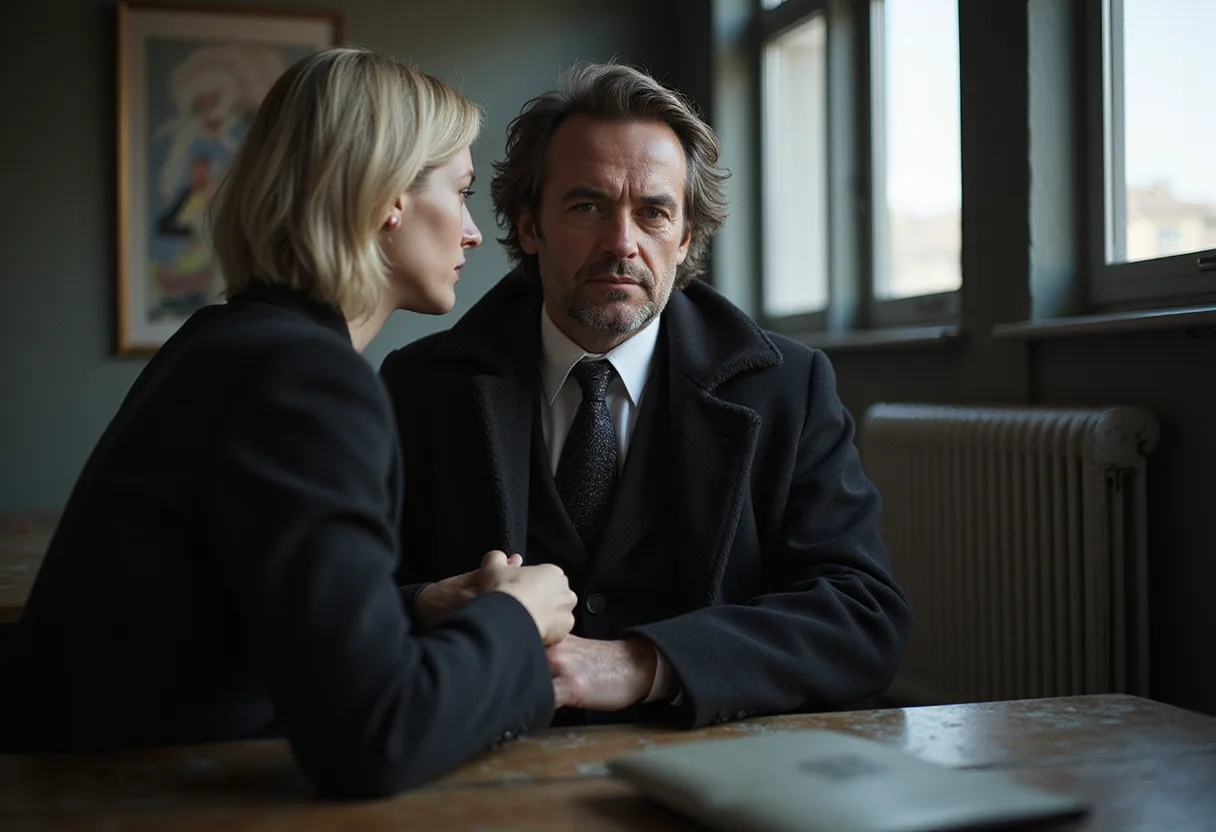
'Victorian Psycho' Review: A Deranged Governess Skewers the Patriarchy
The NYT names 'Victorian Psycho' a Critic's Pick: Zachary Wigon's 1h42m horror thriller about governess Winifred Notty spills blood while skewering Victorian patriarchy.

Programme
- The New York Times named 'Victorian Psycho' a Critic's Pick; it runs 1 hour 42 minutes and is rated R.
- Zachary Wigon directs from Virginia Feito's adaptation of her own 2025 novel.
- The story is set in 1858 at Ensor House, with Maika Monroe as governess Winifred Notty.
- Jason Isaacs, Ruth Wilson and Thomasin McKenzie co-star; the film ends in what the critic calls an 'explosively bloody' finale.
- Feito's debut novel 'Mrs. March' was published in 2021.
The New York Times has named Victorian Psycho a Critic's Pick. Zachary Wigon's psychological horror thriller runs 1 hour 42 minutes, carries an R rating, and opened in theaters with a verdict from critic Alissa Wilkinson: "a deliciously deranged, hilariously sinister thriller about a woman whose marbles rolled away a long time ago."
Who is the 'psycho' of the title?
Winifred Notty, played by Maika Monroe, introduces herself to the audience as the sanest person she has ever met — head cocked eerily over her shoulder. Wilkinson's rule of thumb: anyone who claims that title is almost certainly "off their rocker." The film sets 1858 as its date. Miss Notty arrives at Ensor House to govern two wealthy children, Drusilla (Evie Templeton) and Andrew (Jacobi Jupe).
Their parents, Mr. and Mrs. Pounds (Jason Isaacs and Ruth Wilson), seem nice enough. Mr. Pounds reads as lecherous; Mrs. Pounds reads as tightly wound. The new governess has just come off a string of appointments in which the children in her care "came to tragic ends." A human ear may — or may not — lurk under her bed.
The film plays coy throughout about what is real and what lives in Miss Notty's head.
What does the source material bring?
Virginia Feito wrote the screenplay, adapting her own 2025 novel. Wilkinson credits Feito with excelling at "unapologetically repugnant protagonists," citing her 2021 debut Mrs. March as astounding in that regard. Winifred Notty is not built to be loved. Just as sympathy builds, Wilkinson writes, "she does something that is, well, insane."
The action stays claustrophobically inside Ensor House. Production designer Jeremy Reed shapes it into a "twisty, vulgar, overly ornate home" — the kind status-conscious Victorians built to reassure themselves of their social standing. Cinematographer Nico Aguilar renders it dark and spooky by night, when Miss Notty keeps running into Miss Lamb (Thomasin McKenzie), the children's nurse.
How does the film indict Victorian patriarchy?
Wilkinson finds a social fable "sewn into its seams" about the place of women. Mrs. Pounds grows instantly jealous, afraid her beauty is fading and panicked about losing her place in the world. The children receive unequal treatment: Andrew is coddled and prepared for boarding school, while his father dismisses Drusilla's education because, as he puts it, she "is at an age where she risks her fertility by overeducation" — despite Drusilla being older and clearly cleverer than her brother.
Miss Notty clocks the disparity immediately. Out loud, she instructs the children that "the rules of society must ever be maintained." In voice-over, she tells the audience: "this is how societies fall: entire fortunes inherited by preposterously stupid firstborn sons."
Those wry asides place the viewer inside her head. Monroe, a psychological-horror regular from It Follows and Longlegs, has the high-cheekboned, angular face the role demands — innocent and prim one moment, uncannily stretched the next.
What is the verdict?
Wilkinson describes the ending as "explosively bloody" and self-evidently hurtling toward it from the start. Along the way, the film pokes fun at patriarchal norms — "the bad behavior we may excuse in men, but never women" — that outlived the 19th century.
The MPAA rating cites plenty of blood, disturbing images and a subtle mention of child sexual abuse. Winifred Notty may not be the sanest person she claims to have met, Wilkinson concludes, but "in a world that so often feels mad, you can hardly blame her for thinking so."
Source: NYT Arts
More from Elena Vasquez
Show full bio
Senior reporter covering technology and product news in arts in the broadest sense at Arts & Voices.
1,275 articles