Walter Hill Revisits 'The Getaway' at Academy Museum
Walter Hill told a packed Academy Museum screening how Steve McQueen's sympathy mandate, Peter Bogdanovich's exit and Sam Peckinpah's staging shaped 'The Getaway' — and launched his directing career.
Programme
- Walter Hill adapted Jim Thompson's novel 'The Getaway' for Steve McQueen and Sam Peckinpah in 1972, with only one prior screen credit, 'Hickey & Boggs'.
- Peter Bogdanovich was the project's original director before clashes with McQueen led to Peckinpah's hiring.
- Hill lost an argument with Peckinpah over a scene where Ali MacGraw's character considers killing McQueen's character.
- The film's success led producer Larry Gordon to offer Hill his directing debut, 'Hard Times', at Columbia.
- Hill, now in his 80s, has had four graphic novels published in France and last directed 'Dead for a Dollar'.
Walter Hill, the screenwriter behind 1972's 'The Getaway', told a packed Academy Museum of Motion Pictures audience on Wednesday night how the Steve McQueen–Sam Peckinpah crime classic nearly collapsed under competing egos before it became a hit — and launched his own directing career.
The screening was part of the museum's 'Branch Selects' series, in which the Academy's branches program films that exemplify their crafts. The writers branch chose 'The Getaway'. Academy Governor and screenwriter Larry Karaszewski, who moderated the discussion, has been a devotee since childhood — he carried the film's newspaper ads in his wallet at age 10.
Karaszewski argued that Hill transformed American screenwriting itself. To make the point, he projected pages from Robert Bolt's 'Doctor Zhivago' screenplay beside Hill's 'Hard Times'.
'Walter, right off the bat, changed the art of screenwriting,' Karaszewski said. 'I really feel that Walter Hill did that in screenwriting, but it wasn't a technical advancement. It was a literary advancement. He changed what a page should look like as a screenplay and what it could feel like to read it.'
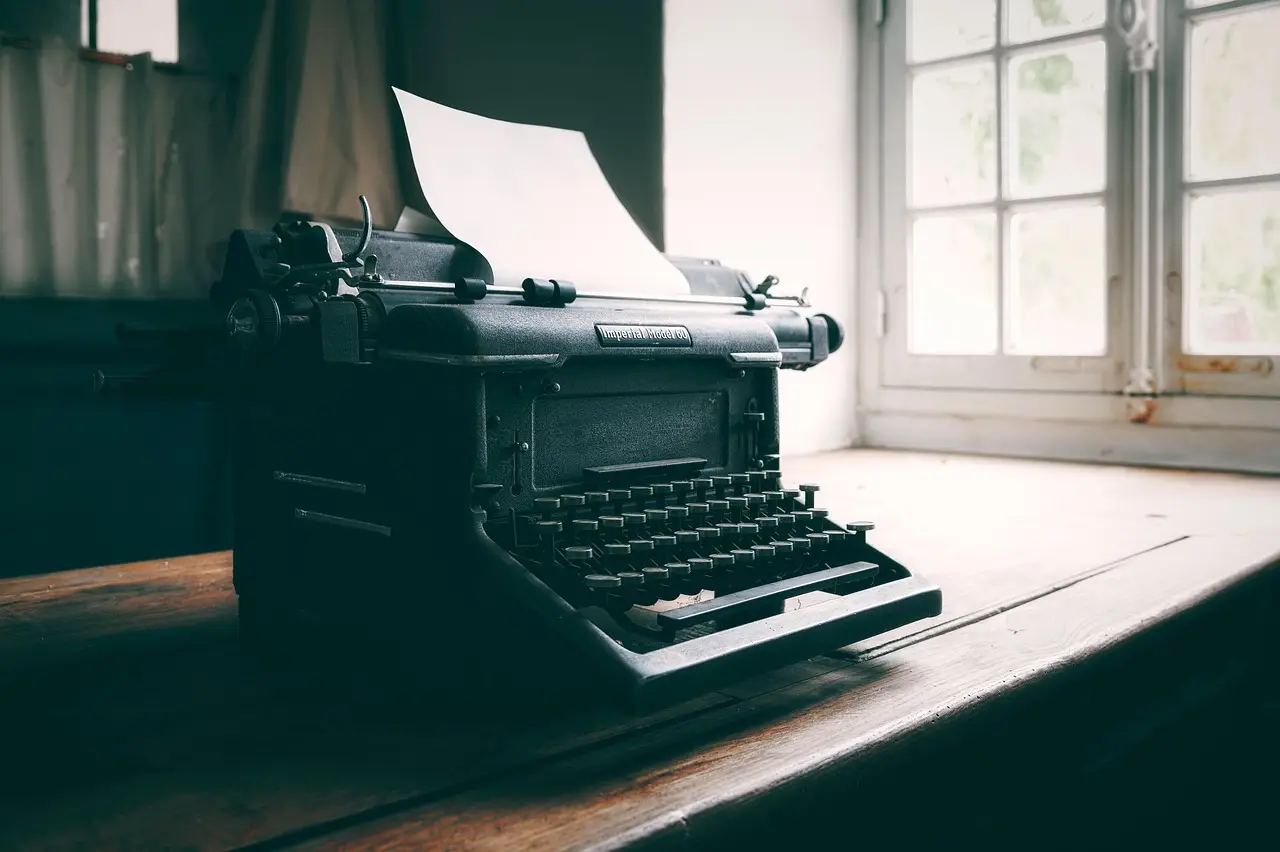
Bolt's script, Karaszewski said, amounts to 'monoliths' of dense prose and camera directions. 'Walter Hill taught screenwriters that you can strip all that away... Walter's scripts are made out of short sentences and white space. He looked at the placement of each line as part of the storytelling. He turned the carriage return into an art form.'
What happened behind the scenes?
Hill, then 30 with one produced credit ('Hickey & Boggs'), said adaptation proved harder than original writing. 'I think it's much harder to adapt than it is to write an original, which is the reverse of the normal theory,' he said, citing the producer's, studio's and actor's competing 'political currents'.
McQueen imposed one condition: 'He wanted to play a reasonably sympathetic outlaw,' Hill said. 'That was not in the Thompson sensibility. So we already had a disparity, but the producer wanted to keep Steve happy.'
The film began as an assignment for Peter Bogdanovich, then white-hot off 'The Last Picture Show' and 'What's Up, Doc?'. Bogdanovich clashed with McQueen and was let go. 'I couldn't imagine two more diverse sensibilities than Steve and Peter,' Hill said, adding that his own disagreements with Bogdanovich over tone went nowhere: 'I was nobody. I had one screen credit. And these were big players.'
Ali MacGraw, fresh off 'Love Story', joined at the urging of her husband, Paramount chief Robert Evans. Hill trod lightly on the aftermath — MacGraw leaving Evans for McQueen. 'When the material was optioned and I was hired, Bob saw the movie as a fabulous idea for Steve and Ali. It didn't work out so well for him.'
Peckinpah, whom McQueen knew from 'Junior Bonner', took over. Hill called him 'one of the great directors with a very unique sensibility' — while conceding they disagreed on plenty.
Their sharpest fight concerned a scene from Jim Thompson's novel in which MacGraw's character considers killing McQueen's before shooting his nemesis. Hill argued the moment no longer tracked once the couple's relationship had softened. 'This is the screenwriter's dilemma: you either talk the director into your point of view, or you make the change that he wants — or somebody else will. Those are your choices.'
Hill lost. He still praised the result. 'He staged it beautifully. He shot it beautifully. It's got one of Steve's best performances. And the movie turned out to be his greatest hit.'
What did the success change for Hill?
Producer Larry Gordon's low-budget deal at Columbia gave young writers a chance to direct — on the theory, as Hill quoted him, that 'at least we'll get a good script. Most of the directors I'm working with aren't any good anyway.' Gordon handed Hill 'Hard Times', his 1975 directing debut and the first of many collaborations. The success of 'The Getaway' also meant Hill no longer had to write for other directors, though Peckinpah kept calling: 'Write me another one.'
Now in his 80s, Hill continues to write and direct; his last film was the Western 'Dead for a Dollar'. Four of his graphic novels have been published in France — the American one, he joked, was 'the least good of them' — with another promised. 'You've got to keep your hand in somehow.'
Source: indiewire.com
More from Tom Whitfield
Show full bio
Market editor covering people, launches and day-to-day practice in arts in the broadest sense at Arts & Voices.
1,719 articles