White House Draft Order Could Strip Arts Nonprofits' Tax Breaks
A draft White House order could instantly strip arts nonprofits' tax exemptions, as the Phoenix Symphony suspends its season and UK music hits a record £8.4bn.
Programme
- Section 501(p) would suspend a nonprofit's tax exemption immediately upon a presidential terrorism designation.
- Phoenix Symphony CEO Peter Kjome asked the city in July to forgive $533,500 in rent and fees; the city said it had lost $1.5 million on symphony events.
- UK music earned a record £8.4 billion last year; working musicians' income rose 0.2% while top artists' rose 14%.
- Eleven EU countries now back copyright protections against AI training, up from eight in May.
- Reading Museum's October attendance rose 74% amid a 180,000-person online queue for the Bayeux Tapestry at the British Museum.
By Daniel Okafor
The White House is weighing an order that would let the president label nonprofits as supporters of terrorism — a designation that, under Section 501(p) of the tax code, suspends a group's tax exemption immediately. No proof required. That last part isn't editorializing; it's the mechanism.
Patrick Fisher, who runs the Greater Pittsburgh Arts Council, told Hyperallergic the damage "does not depend on the designation being justified or proven." In other words, an arts organization could bleed out financially while litigating its innocence. Suspicion, in this scheme, works faster than due process.
What happens to a symphony that can't pay rent?
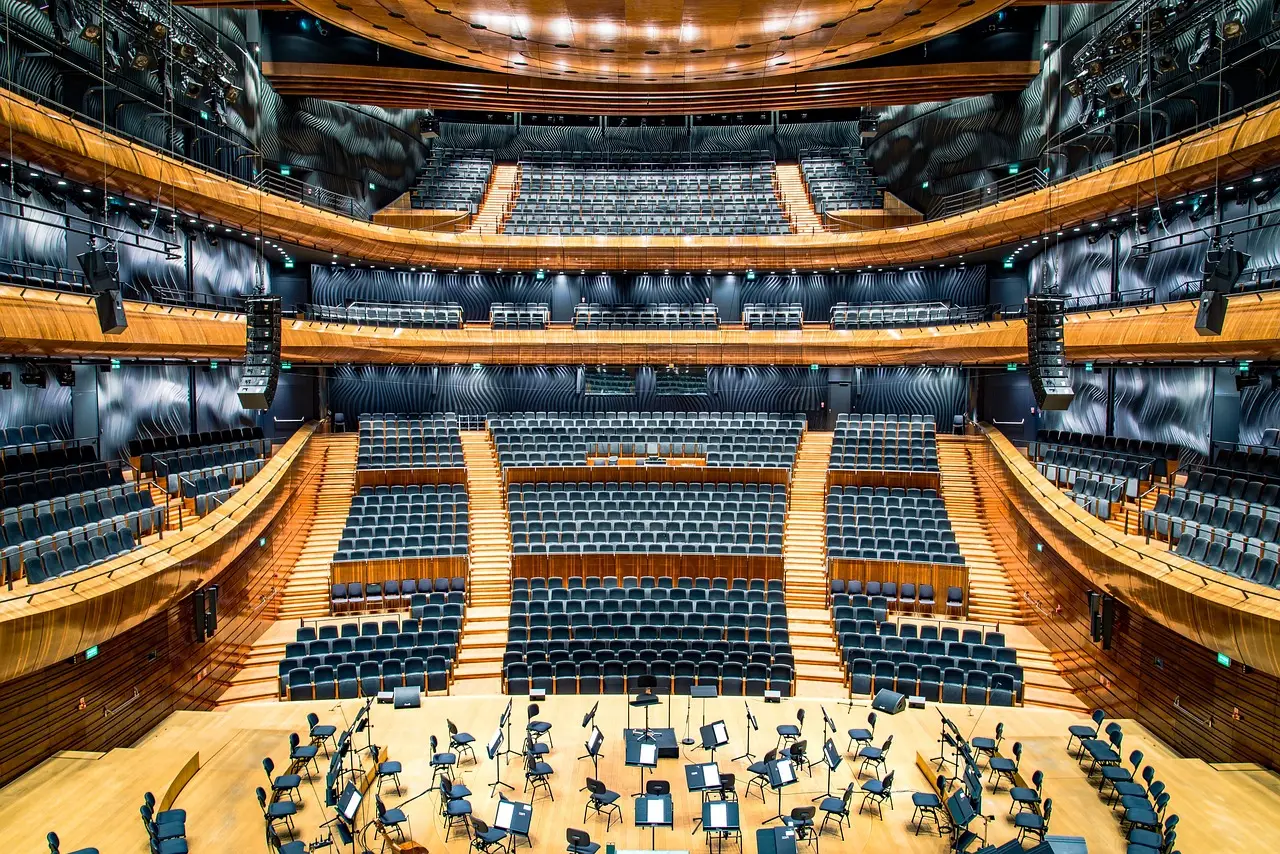
The Phoenix Symphony offers a working case study in arts-sector fragility. The orchestra suspended its season in October over unpaid bills.
Emails obtained and reported by The Arizona Republic show the sequence plainly. In July, CEO Peter Kjome asked the city to forgive $533,500 in hall rent and fees. The city's response: it had already lost $1.5 million on symphony events. A half-million-dollar forgiveness request meeting an eight-figure-times-fraction deficit is less a negotiation than an accounting of exhaustion.
If a mid-size American orchestra can't cover venue costs, the threat of instant exemption-stripping lands on already unsteady ground.
Is the money in music actually reaching musicians?
British music earned a record £8.4 billion last year, driven by stadium tours. The Guardian reports the breakdown, and the breakdown is the story.
- Top and mid-level artists' earnings rose 14%.
- Income reported by working musicians rose 0.2%.
Read that second figure again. Fourteen percent for the upper tier; a fifth of a percent for the workforce. The record number describes an industry; the 0.2% describes the people in it.
Has AI music already gone mainstream?
Yes, in the most literal sense available. A song made with Suno, the AI music-generation app, hit No. 1 on Melon, South Korea's biggest streaming chart, according to Chosun Daily. A generated track topping a major national chart is a first-of-its-kind commercial fact, not a prediction.
Europe's regulators have noticed. Eleven EU countries are now asking Brussels for a law shielding copyrighted work from AI training, up from eight in May, Euronews reports. The coalition grew by nearly half in six months — roughly the pace you'd expect once generated songs start charting.
Can a Victorian copy outdraw expectations?
Reading Museum, west of London, owns a full-size replica of the Bayeux Tapestry, made in 1885, and it's free to visit. Meanwhile, 180,000 people have queued online for the original at the British Museum.
The result: Reading's October attendance rose 74%, per Museums Journal. Call it the Bayeux bounce. When the original is scarce, a 141-year-old copy will do — and then some.
What ties these stories together?
Money is concentrating at the top of the arts economy while the operating base — working musicians, regional orchestras, mid-size nonprofits — runs flat or underwater. Add a potential presidential designation power with no proof threshold, and the sector's margin for error shrinks further. The Reading Museum's 74% suggests audiences still show up. Whether the institutional finances hold long enough to greet them is this season's open question.
Source: artsjournal.com
More from Daniel Okafor
Show full bio
News editor covering companies, deals and strategy in arts in the broadest sense at Arts & Voices.
1,510 articles