'White Tiger Column': A War Film Without War Opens IDFA
Directors Bryan Dickie, Robert Mentov and Dwight Jantzi spent 45 days filming young People's Defense Force recruits in Myanmar for "White Tiger Column," opening this year's IDFA.
Programme
- "White Tiger Column" opens the International Documentary Film Festival Amsterdam this year.
- Directors Bryan Dickie, Robert Mentov and Dwight Jantzi filmed for 45 days in Myanmar, returning two years after Dickie's first 2021 trip.
- The film follows young People's Defense Force recruits and deliberately shows no explicit violence.
- Dickie built ties in Myanmar over 15 years as a photojournalist.
- The film is produced by Tom Edgerton for Lightwood Green with Nocte Films and Rugio!
By Elena Vasquez
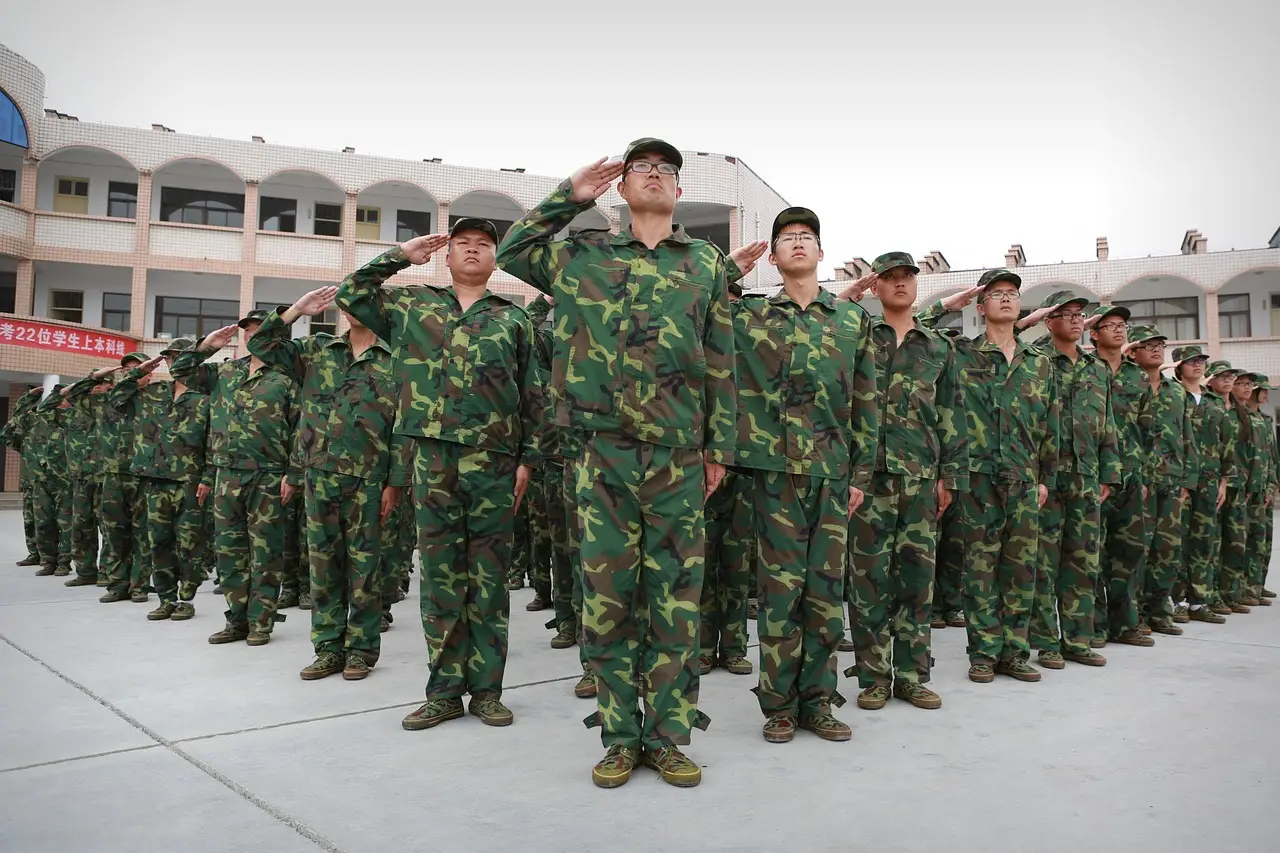
"White Tiger Column," a documentary shot over 45 days inside Myanmar's armed resistance, opens the International Documentary Film Festival Amsterdam this year. Directors Bryan Dickie, Robert Mentov and Dwight Jantzi captured the training regime of young People's Defense Force recruits preparing to leave for the front.
The project began in 2021, ten months after Myanmar's military overthrew the democratically elected government in a coup. Canadian photojournalist Dickie heard of a rare opening to access the country and acted swiftly. That trip inspired him to enlist long-time collaborators Mentov and Jantzi. The trio returned two years later and spent six weeks on the ground.
What did the filmmakers capture?
For 45 days, the three directors followed trainees and commanders as they readied to join the war. Through an observational lens, the film reflects a stark dichotomy: young kids who scroll TikTok and sing along to Taylor Swift and Justin Bieber, set against the harsh reality of armed combat.
Dickie told Variety he built "deep ties" with locals over 15 years of covering the region as a photojournalist. His close relationship with the Burmese diaspora in Canada deepened his grasp of the country's geopolitics. "I've also embedded with multiple different ethnic armed organizations over the years, so through all of that I built up a bit of a track record going into these areas," he said.
Jantzi described the working method: "Upon landing on the ground and shooting alongside each other, we were just working very closely, day by day, developing our shot list and working through our potential narrative arcs."
The team wanted more trips but the situation forbade it. "The reality is that the situation changes so much week by week that you can't even really plan your characters six months ahead," Jantzi noted. "We got extremely lucky with timing and kept trying to extend our trip, and things kept changing and becoming a bit more contentious in the region."
How did they approach the filming?
The directors worked closely with the diaspora and Burmese filmmakers on the ground. "Essentially, we were just dropped into this jungle," Mentov said. "We were trying to understand it, but it was very similar to how the recruits were: dropped into the jungle and trying to understand it all. Cinematically, we really just wanted to film these conversations at a distance and give space for them as opposed to trying to drive a narrative in more of a traditional documentary style."
The film forgoes talking heads and extensive voice-over. It favors long lenses and a locked-off tripod, letting the camera linger on mundane activities made poignant by context. The directors made a "conscious" decision to avoid explicit violence. "We talked a lot about wanting to make a war film that didn't show war," Dickie said.
He explained the reasoning: "With this documentary, we tried to switch our approach where instead of trying to explain or go into the hard details of Myanmar's history and culture, what we did was focus on the universal, human themes like sovereignty, freedom and missing home."
Why does the film speak to a global moment?
"White Tiger Column" opens IDFA weeks after Brazil re-elected Lula following historic demonstrations started by students at the Fluminense Federal University, and after Serbia's Aleksandar Vučić was overthrown by a student-led protest movement in snap parliamentary elections. Young voters were also decisive in the recent U.S. midterms, with the second-highest youth turnout in a midterm in 30 years.
"Revolution is on the lips of a lot of people," Dickie said. Jantzi added: "We just hope this can be a portrait of what revolution could look like around the world. If democracy were to fall, would we have the courage and the power to fight? Over the years, there's been this conversation about Gen Z and Gen Alpha not having what older generations had, but I think this picture of these kids leaving it all behind—video games, comfort—to fight for the future of their country is so beautiful."
Dickie struck a harder note: "The Spring Revolution in Myanmar is a very pure grassroots revolution and quite anarchic," but also "a bit of a Catch-22." He continued: "I talk to these guys weekly; they are still in the jungle fighting. People are still dying in the mud. They are still being bombed from the sky. When talking about revolution, you can get caught up in the theory of it and the flowery language, but at the end of the day, this is war."
Tom Edgerton produces for Lightwood Green, in co-production with Nocte Films and Rugio! As the war continues, the film's Amsterdam premiere gives Myanmar's young fighters their widest platform yet.
Source: Variety Film
More from Elena Vasquez
Show full bio
Senior reporter covering technology and product news in arts in the broadest sense at Arts & Voices.
1,311 articles