Dance
Dance Competitions Confront the Math of Judging Art
From Amplified's 300-point system to YAGP's school-style grades, dance competitions are refining rubrics—and coaches say the critiques matter more than the numbers.
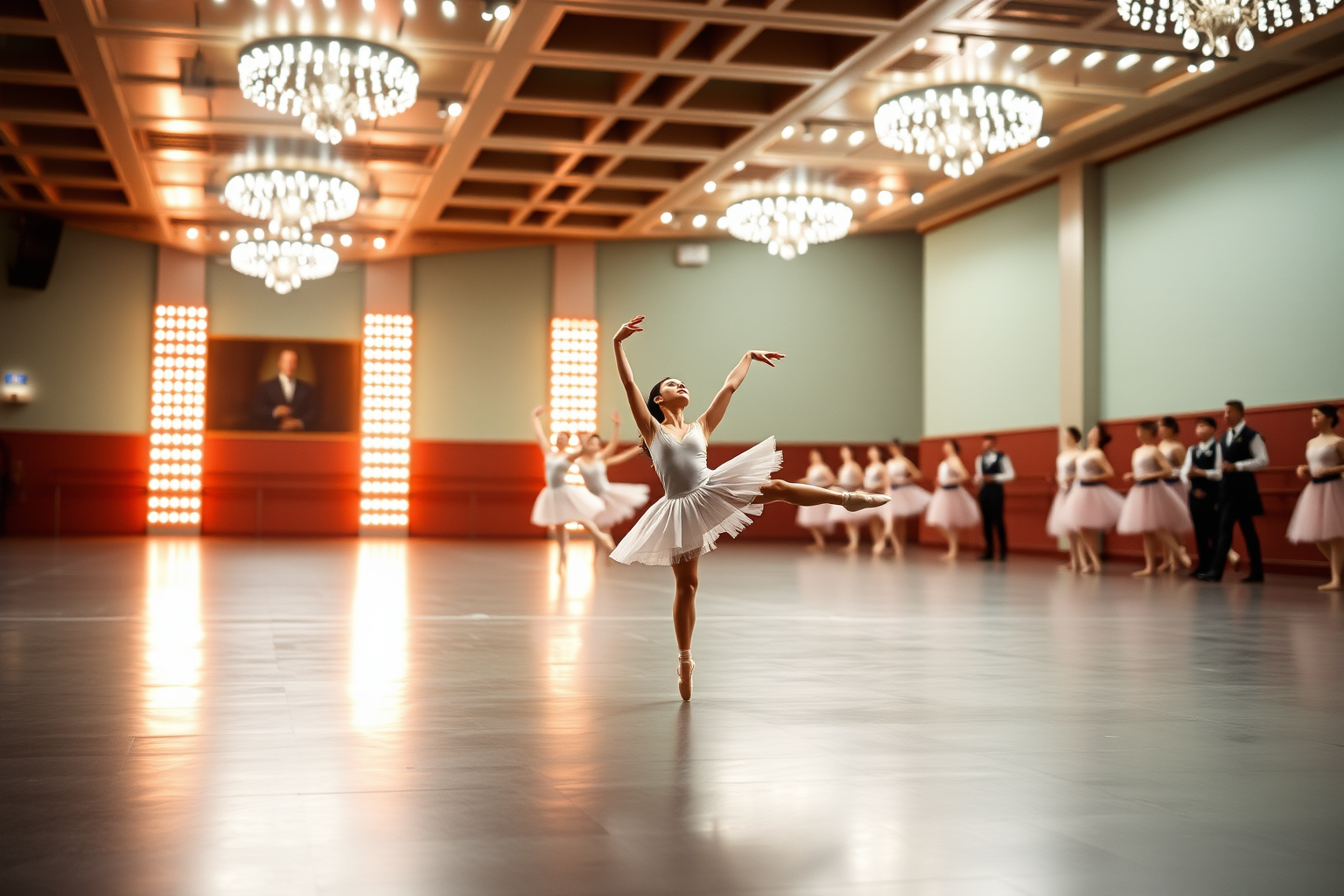
At Amplified Productions' family of competitions, a routine performed in front of three judges can earn a maximum of 300 points—and must secure at least 291 to receive the top adjudication. That level of numerical precision sits at the heart of a question the competitive-dance world keeps wrestling with: how do you objectively score an art form?
"Judging art is always going to be a challenge," says Ivan Koumaev, managing director of Monsters Dance, a hip-hop competition under the umbrella of Amplified Productions, which also runs Adrenaline Dance and Revive Dance Convention. A clear rubric helps judges "put all contestants on a level playing field," he says.
At Amplified's events, judges rate dancers in four categories: technical execution (maximum 30 points), choreographic execution (maximum 30), performance quality (maximum 20), and overall impression (maximum 20). Three judges produce a cumulative score out of 300.
The ballet competition Youth America Grand Prix also uses a 100-point system, but splits it differently: dancers receive separate technique and artistry scores, each out of 100, which are averaged, then averaged again across the panel. "We designed it like the American school system," says Larissa Saveliev, YAGP's founder and artistic director. "You can think of 96–100 as an A+, 93–95 as an A, and so forth."
YAGP's regional events use four to six judges; the international finals typically field 10 to 12, with the highest and lowest scores dropped. "When you have more people, you have more variety of opinions," which can produce outliers, Saveliev explains.
Other organizations build far stricter structures around the judging itself. The World DanceSport Federation, which runs competitions worldwide in ballroom, breaking, and other categories, sets strict boundaries on music, choreography, and technique. In its Caribbean Dance competitions, "missing or incorrectly executed fundamental steps, violating structural salsa/bachata requirements, [and] using non-authentic music" can significantly hurt a score, the WDSF wrote in a statement to Dance Magazine. "The system is rule-driven and discipline-specific, not purely aesthetic"—designed to reduce subjectivity while leaving room for artistry.
Some judges bristle at compressed scoring ranges. Longtime judge Nina Hudson, who co-founded the competition and convention DEViATE: The Process, points out a common flaw: "If the range is between 1 and 30 in a category, but you can't score anyone lower than 20, that's really only a range of 1 to 10." At DEViATE, routines are scored from 1 to 10 in three categories—routine (choreography, costumes, music, props); execution of routine (technique, musicality, energy); and overall impression—for a potential total of 30 from each judge. "Our judges are allowed and encouraged to use the full range," Hudson says. "If a dancer's technique was a 3, we think it's helpful for them to know that."
The Matter of Taste
No rubric eliminates personal taste. "That's why it's important to have a wide lens of expertise on every judging panel," says Mikeal Knight, creative director at Amplified Productions. "Casting for judging needs to align with the genres competing during that segment, including the most unique genre being presented."
Saveliev says YAGP always aims for a diverse panel representing different ballet styles and different roles in the dance world. "Current dancers might focus on technical elements, like number of pirouettes, while a school director might be looking at quality of execution, like clean transitions," she says. She recommends treating diverging tastes as a feature, not a bug: "If you get a high score from someone with a Balanchine background and a low score from somebody European, that can give you direction."
Many competitions park subjective response in a dedicated "overall impression" category, quantifying a judge's reaction to choreography, music, costumes, or age-appropriateness separately from technique. Rubrics may also separate what dancers control from what they don't. Within Amplified's events, "We don't critique how well the art is created, because we don't want to penalize studios that may not have the resources to hire professional choreographers," Koumaev says. "It's about the execution of the work."
The goal, most judges agree, is fidelity between number and performance. "I want the number that I'm assigning to reflect what I'm seeing," says Allie Kronick, a competition judge who also teaches at Ella Marie School of Dance in Hicksville, New York. "Every judge comes in with their own training background and set of values, but we all want to get it right."
Reading the Results
After competitions, studios typically receive judges' written or recorded comments alongside each entry's score breakdown. "Hearing what the judges were looking for and seeing what they saw helps the dancers understand their scores," Kronick says. "The critiques are more valuable than the numbers."
Teachers can also mine the scores for patterns. "If there's a pattern to the scoring, that tells us something," says Marthavan McKeon, owner and artistic director of South Shore Ballet Theatre in Hingham, Massachusetts. Consistently low technique scores may point to an issue to fix in class; lower artistry scores may raise a question of artistic development. "What can we work on?" she asks.
Results still swing widely across a season. "I've seen students place first or second one weekend and 15th the next, with the same routine," says Jenny Hogan, owner of Brava Dance Center in Rye and Port Chester, New York. Some scoring systems also generate frequent ties. "I've had a bunch of dancers all receive a 90, but that doesn't make them equal 90s," McKeon says. "It's more challenging to explain how they compare to their peers when they all scored the same."
That is why critiques, not scores, drive the take-home lesson at Brava. "We'll listen to critiques together as a team," Hogan says, "and we'll mention the scores—but we explain that this is just the opinion of a few people at one particular moment in time. What matters is the work we're putting in in the studio. At the end of the day, it's process over prize."
Source: Dance Magazine
Elena Vasquez
Show full bio
Senior reporter covering media and advertising at Arts & Voices.