Film & Screen
Jennifer Peedom's 'Tenzing' Puts the Sherpa Legend at the Center
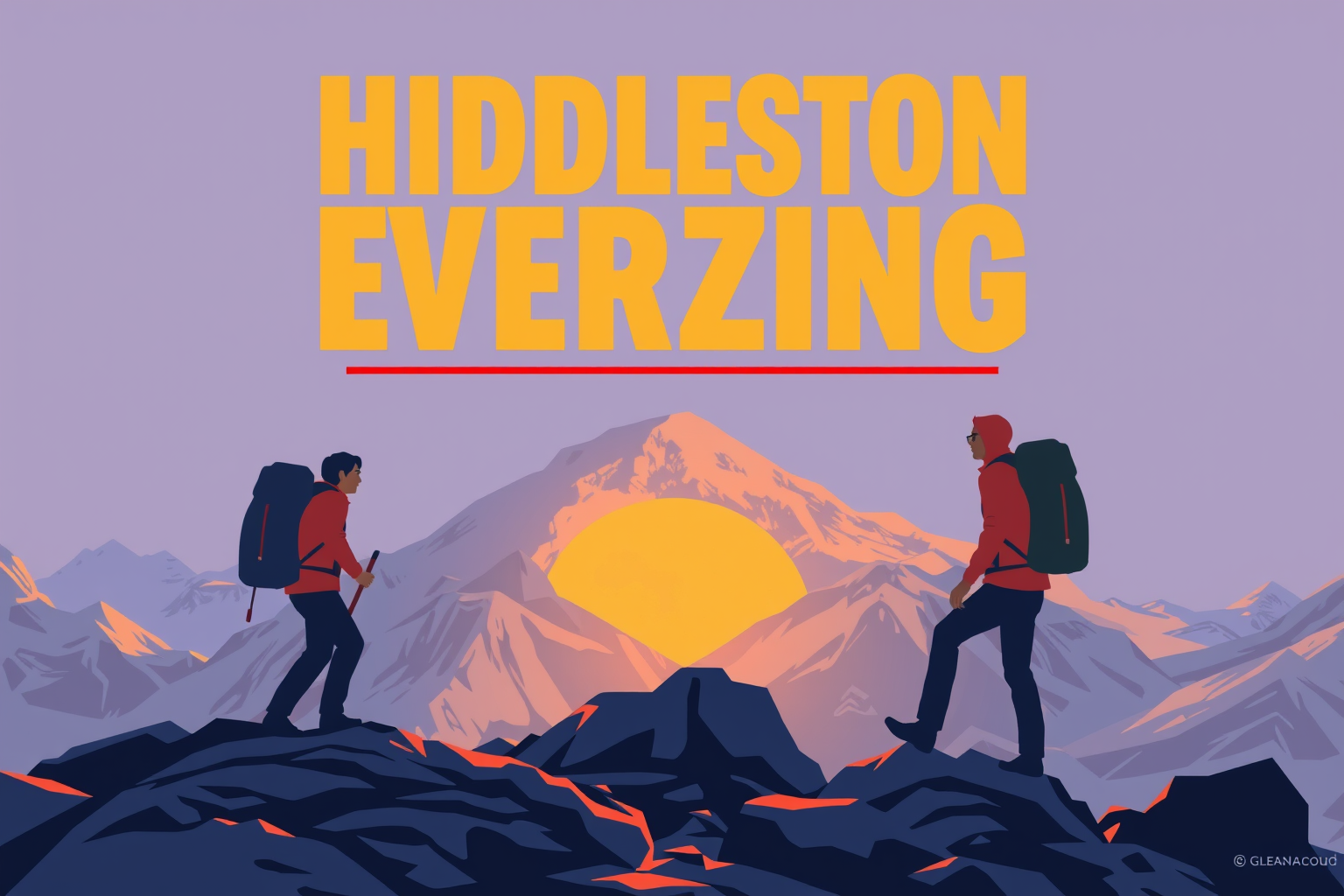
Jennifer Peedom's Apple Original 'Tenzing,' starring Genden Phuntsok and Tom Hiddleston, reframes the 1953 Everest first ascent around the Sherpa who lived it.

Tenzing Norgay summited Mount Everest first in 1953. Jennifer Peedom's Apple Original film "Tenzing," which opened the Zurich Film Festival, now reframes the famous ascent around the Sherpa mountaineer rather than his climbing partner Edmund Hillary.
"It's often reduced to a familiar shorthand: Hillary conquered Everest, assisted by a Sherpa. But Tenzing had more experience on Everest than anyone else on that 1953 expedition. He wasn't just helping another man achieve his dream. He had his own dream," says Peedom.
Genden Phuntsok stars as Tenzing, joined by Tom Hiddleston as Hillary, Thinley Lhamo, Caitríona Balfe and Willem Dafoe, who plays expedition leader Colonel John Hunt.
For the lead role, Peedom needed a specific combination of qualities. "I needed someone with tremendous emotional depth, physical strength, warmth and humor, but also a kind of quiet authority. Tenzing is not a character who announces everything he's feeling, so I needed an actor who could carry a lot internally," she recalls, adding that Phuntsok was "completely fearless."
The casting carried cultural weight. Phuntsok grew up on the Tibetan Plateau, at altitude, in a landscape connected to Tenzing's world. "He has this extraordinary, contained force," the director says. She also welcomed the on-set dynamic: "It was wonderful to see actors with very different histories and methods – Genden, Tom and Willem – meet each other as equals inside the world of the film."
The film corrects a record Peedom knows well. She made the short "The Sherpas' Burden" and the feature documentary "Sherpa," and was "struck by this extraordinary imbalance" in mountaineering history. "The Sherpas did much of the essential work: carrying loads, fixing ropes, setting up camps and making repeated journeys through some of the most dangerous terrain. When something went wrong, they were often the ones who went back up to rescue others. Yet the heroic narrative still tended to belong to the Western climber," she stresses.
"These were elite mountaineers, often with multiple Everest summits, doing some of the most dangerous and skilled work. Yet, outside of Nepal, almost nobody knew their names."
Tenzing's own path to the mountain took decades. He first tried to join an expedition in 1933 and got his first opportunity in 1935, initially as a porter. Over two decades he built his reputation until, by 1953, he ranked among the most experienced Everest mountaineers in the world.
"He wasn't a man who was given an opportunity and then proved himself on the mountain. He had to fight for the opportunity in the first place," says Peedom, who found this "incredibly moving" in her research.
Celebrated for her documentaries, Peedom turned to drama because so much of Tenzing's journey is internal. "Documentary could tell me what happened, and I had spent years gathering that history, but drama allowed us to get closer to what those experiences might have felt like," she says. "I wanted the audience to experience the expedition from his perspective."
The mountain carried spiritual meaning for the Buddhist climber. As a boy, Tenzing herded his father's yaks on the Tibetan high plateau beneath Everest. "I think the journey was, in some sense, a journey home," notes Peedom. When he reached the summit, he prayed and left offerings.
"In many Western mountaineering stories, the mountain is an adversary, something to defeat or conquer. For Tenzing, the relationship was much more complex. There was ambition, certainly. But there was also reverence."
The film deliberately ends before Tenzing's post-Everest fame, when his identity became politicized and different countries wanted to claim him. "We leave him coming back down the mountain before the fame and politics take hold," says Peedom. "For that brief moment, the achievement simply belongs to him."
Importantly, restoring Tenzing does not mean diminishing Hillary. "I think their partnership becomes much more interesting when you understand the stature of both men and what each brought to that rope," the director says — a framing that positions "Tenzing" as another chapter in her long-running question: what happens when the person traditionally at the edge of the frame moves to the center of the story.
Source: Variety Film
Marcus Bennett
Show full bio
Staff writer covering industry trends and analytics at Arts & Voices.