111 Paintings, 43 Artists, 19 Years: Botanical Art Blooms at Bell Museum
Wild Beauty at the Bell Museum shows 111 paintings of the Eloise Butler Wildflower Garden, the fruit of 19 years of work by 43 Minnesota botanical artists, through Jan. 3.
Programme
- Wild Beauty runs through Jan. 3 at the University of Minnesota's Bell Museum.
- The exhibition presents 111 paintings by 43 artists documenting the Eloise Butler Wildflower Garden.
- Marilyn Garber founded the Minnesota School for Botanical Art in 2001; 78 students attended her first class.
- The first contemporary U.S. florilegium was created by the Brooklyn Botanic Garden in 2000, with Garber among 50 invited artists.
- All works will be donated to the Minneapolis Parks and Recreation Board for archival keeping.
The Bell Museum in Minnesota is showing 111 botanical paintings by 43 artists in "Wild Beauty: The Botanical Art of the Eloise Butler Wildflower Garden Florilegium," on view through Jan. 3 at the University of Minnesota.
The exhibition is the result of 19 years of work by artists from the Minnesota School for Botanical Art, founded by Marilyn Garber in 2001. Every painting documents a plant growing in the Eloise Butler Wildflower Garden in Minneapolis, the oldest public native plant garden in the United States.
"How do we go about communicating the intricacies and beauties of plants with people?" asks Susan Wilkins, garden curator of the Eloise Butler Wildflower Garden. The florilegium, she says, is "amazing to have," and its "close attention to all of the details and nuances" matches the care Eloise Butler herself brought to the garden. "At the garden, we work so hard to build bridges between plants and people," Wilkins says. "The space inspires you to open up and be curious. The art is an extension of this."
How did a farm girl build a school?
Garber grew up on a farm in northern Iowa. "I would go up in the spring and draw the flowers that were coming up through the snow on the north side of the hill," she remembers. "And I was very connected to nature. I think when you grow up on a farm, you are."
She founded the Minnesota School for Botanical Art in 2001, when the state had no comparable program. After years of tracking classes at the New York Botanical Garden and the Morton Arboretum in Chicago, she decided to act. "I finally decided, well, if nobody else is going to do this, I guess I'd better," Garber says. She hoped for about 10 students in her first class. Seventy-eight showed up. "We had to expand, and we accommodated everyone," she says. "We were off and running from the beginning."
What does the art form's marginal status change for artists?
Botanical art sits between two worlds, Garber explains. "Oftentimes, the fine art community looks at it and says, Well, that's science. And then we go to the science community, and the science community [says], Well, that's fine art. That's not really science." This limbo, she says, is why the tradition "kind of disappeared" after centuries of practice.
A florilegium — Latin for "gathering of flowers" — is a rare historical record of the plants of one place at one time. No contemporary American florilegium existed until the Brooklyn Botanic Garden curated one in 2000. Garber was among the 50 artists invited to participate, and the project became her model.
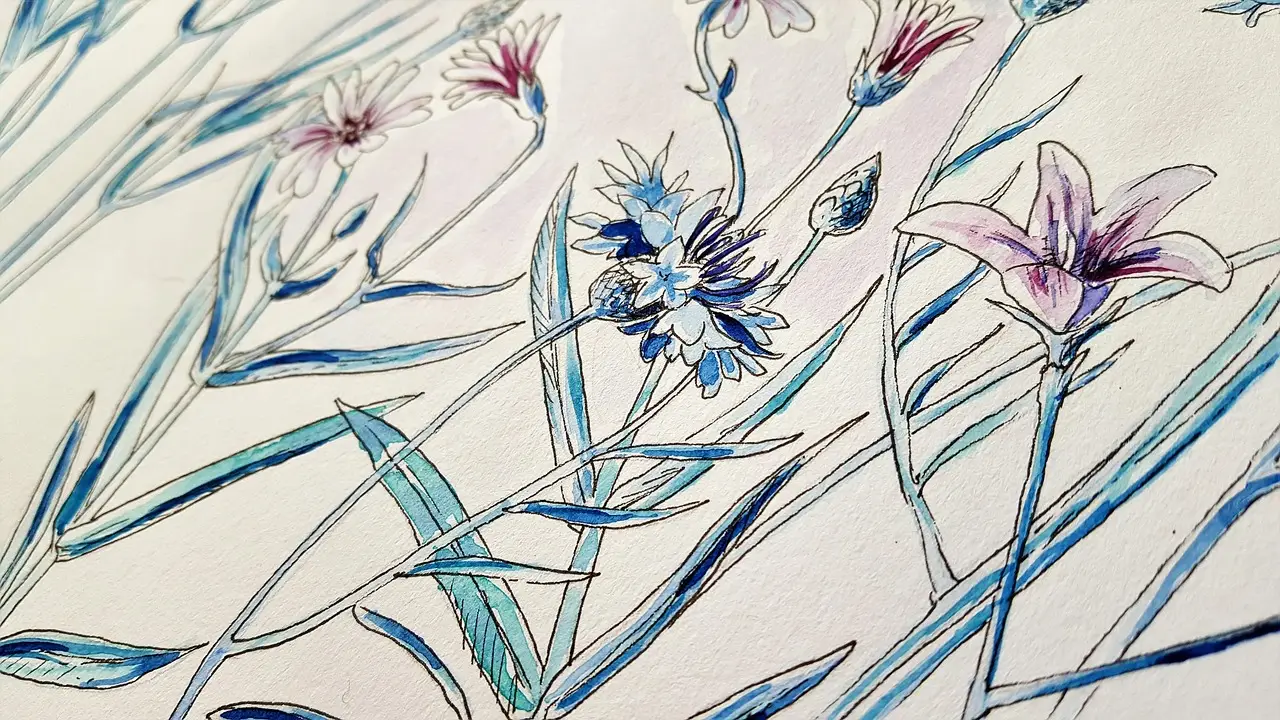
The artists visited the Eloise Butler garden year after year, working at the mercy of fleeting blooms and unpredictable weather. The drawings capture meadow, wetland and woodland — grass, fern, flower and weed. Garber colored her drawing of blood root with the plant's own deep red juice. "All of us had discoveries along the way about this ingenious mother earth," she says.
After the exhibition, the school's artists will donate each work to the Minneapolis Parks and Recreation Board, which will keep them in archival conditions. Garber and Wilkins hope the collection will serve as an educational time stamp of the garden for future generations.
Garber is retiring from directing the school after 25 years. The Minnesota Landscape Arboretum has taken up her mission, offering classes taught by many of the school's former teachers and students. Her advice to newcomers: "You don't have to be a botanist to do it, and you don't have to know all the technical names of the plant parts. But you have to be an observer."
Source: mspmag.com
More from Marcus Bennett
Show full bio
Staff writer covering people, launches and day-to-day practice in arts in the broadest sense at Arts & Voices.
1,189 articles