A $4.5 Trillion Mirror: Why the Ideal City Keeps Failing Us
The Line has consumed $50 billion and is now priced at $4.5 trillion. Paul Goldberger's new book explains why total visions keep producing unlivable cities.
Programme
- The Financial Times reported in late 2025 that the Line, after roughly $50 billion spent, faces a total estimated cost of about $4.5 trillion.
- The Line is planned at 170 kilometers long, 500 meters high and 200 meters wide as the centerpiece of Neom.
- Letchworth, the first garden city, was built in 1904 on nearly 4,000 acres, 34 miles north of London.
- California Forever's billionaire group has acquired over 50,000 acres in Solano County, north of San Francisco.
- The Mukaab in Riyadh's New Murabba would be roughly 1,200 feet tall with twenty times the Empire State Building's space.
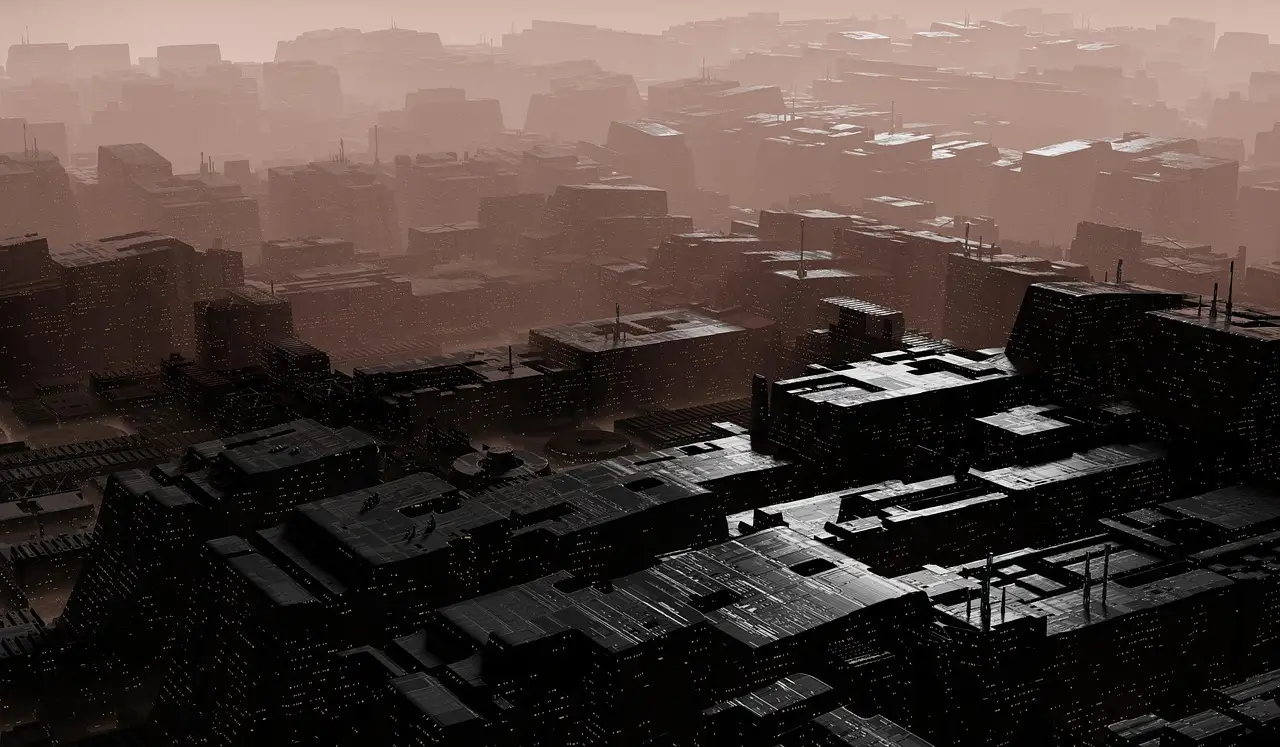
Saudi Arabia's the Line, a planned 170-kilometer mirrored linear city, is now estimated to cost $4.5 trillion — and, according to the Financial Times, is "in danger of joining the ranks of the world's grandest follies." Paul Goldberger's new book, The Imperfect City: Design, Serendipity, and the Real Life of Cities (Knopf, 2026), takes that failure as his exhibit A. His verdict is blunt: "the Line is not a city but a conceit, and a conceit is not a place."
What went wrong with the Line?
After some $50 billion in spending, the Financial Times reported in late 2025 that barely anything has been completed and many design issues remain unresolved. The project, conceived by Crown Prince Mohammed bin Salman as the centerpiece of the Neom development, has been scaled back. Sections were to be designed by Thom Mayne, the office of the late Zaha Hadid, Rem Koolhaas and Ben van Berkel — though Goldberger notes the predetermined plan leaves little room for their ideas.
The structure, if built in full, would run 105 miles long, 500 meters high and 200 meters wide. It is, Goldberger writes, "the megastructure to end all megastructures, effectively a single building that pretends to be a city and would stretch across an entire region." Its car-free interior would rely on trains along a single axis, with pedestrians and infrastructure on separate levels.
Does perfect geometry ever work?
Goldberger's history says no, with instructive nuance. The lineage runs from:
- Tony Garnier's 1904 Cité Industrielle, with rigidly separated quadrants and, remarkably, no jails or courthouses
- Antonio Sant'Elia's Città Nuova, "a radical break with all known models of town planning," as Esther da Costa Meyer put it
- Le Corbusier's and Hilberseimer's slabs in open space
- The megastructure craze: Arcosanti, Paul Rudolph's Lower Manhattan Expressway project, Yona Friedman's hovering urban visions
The garden city movement gets fairer treatment. Ebenezer Howard, whose Garden Cities of Tomorrow appeared in 1902, wanted to pair radial layouts with landowning cooperatives for working-class ownership. At Letchworth, the first garden city — built in 1904 on nearly 4,000 acres, 34 miles north of London — the terrain forced a less geometric plan, and cooperative ownership never found capital. Letchworth became, in Goldberger's phrase, "more of an improved, slightly urbane version of a suburb than a reinvention of the city."
The pattern repeats. New Delhi, Edwin Lutyens's imperial capital, is "stately" at best, navigable only by car; old Delhi, where chaos is the stock-in-trade, is the place that feels resplendent. Chandigarh comes off better — its low-rise districts around small parks beat their Brasília equivalents — while Walt Disney's EPCOT died with him in 1966, surviving only as a name on a conventional theme park.
Who's still chasing the dream?
Plenty. Marc Lore, the tech billionaire, proposes Telosa for the American Southwest — no site yet — with designs by Bjarke Ingels, recent co-designer of Google's headquarters. "This is not just building a new city — this is a new model for society," Lore says, governed by "equitism." Goldberger finds the renderings "an updated version of Disneyland's Tomorrowland... utterly devoid of tension."
California Forever, a group of Silicon Valley billionaires, has bought more than 50,000 acres of Solano County farmland north of San Francisco through a shell corporation. They promise affordable housing and walkable urbanism. Goldberger's question: why not spend that money on existing cities, given that California's homelessness and affordability crises are, in San Francisco and Silicon Valley, "to a large degree of the tech industry's making"?
What's the alternative?
Riyadh's New Murabba offers a smaller-scale warning. Its centerpiece, the cube-shaped Mukaab, would stand roughly 1,200 feet tall — twenty times the floor space of the Empire State Building, its sponsors claim — and resembles, Goldberger observes, the Kaaba in Mecca "blown up to gargantuan scale."
His core argument cuts across all of it: "the real issue with the Line, and with New Murabba and so many totally planned cities, is that they emerge out of an obsession with a total, singular vision." They leave residents no say in shaping their own environment, more rigidly even than Lúcio Costa's Brasília. The mirrored wall hides urban life inside rather than behind it — an interior life with no exterior one.
The book's closing logic lands squarely. Every ideal-city vision rests on someone's certainty that a new physical form will cure social ills; the imperfect city, with all its mess, keeps proving more livable than the drawing.
Original: bookshop.org
More from Daniel Okafor
Show full bio
News editor covering companies, deals and strategy in arts in the broadest sense at Arts & Voices.
1,510 articles