Judge Shields East Potomac Golf Course, But Its Fairways Sit Empty
Judge Ana Reyes kept East Potomac Park open for two weeks, but the golf course lost its operator Nov. 15 as Trump's championship redesign goes to review Thursday.
Programme
- Judge Ana Reyes issued a two-week restraining order late Saturday, hours before the National Park Service planned to close East Potomac Park indefinitely.
- The government's lease with operator National Links Trust expired Sunday, Nov. 15, leaving the course without an operator.
- Architect Tom Fazio's 64-page plan would replace three courses with one 18-hole championship layout totaling 6,013 yards from the shortest tees.
- Current rounds cost $17–$48; the plan cites benchmark courses charging locals up to $90 per weekend round with a discount.
- East Potomac hosted about 125,000 rounds in 2025 and opened in July 1920 at 25 cents per round.
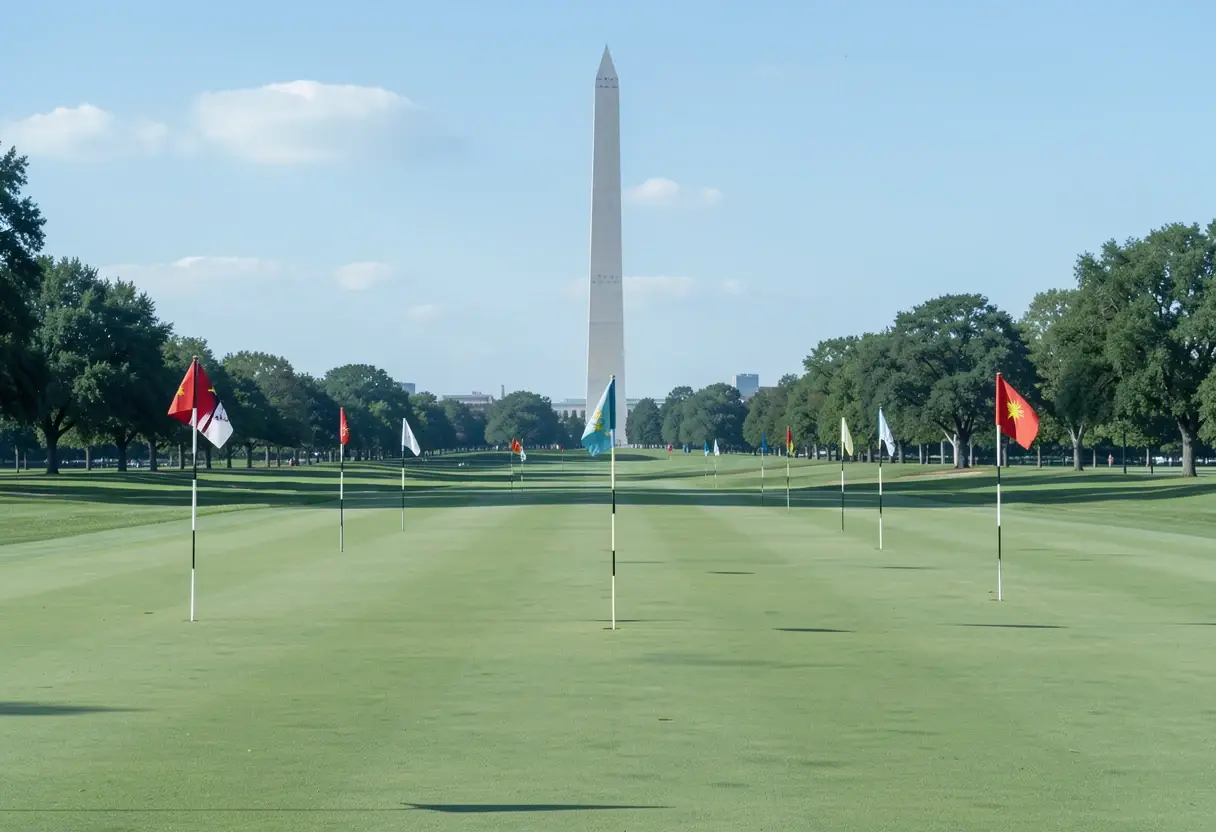
Federal Judge Ana Reyes issued a restraining order late Saturday keeping Washington, D.C.'s East Potomac Park open for two weeks — hours before the National Park Service planned to cut off public access indefinitely. But the park's historic golf course now sits without flags on its holes, after the government's lease with operator National Links Trust expired Sunday.
Reyes did not order the government to keep running the golf course itself, though she signaled she may consider it. On Monday, she ordered both parties to brief her on "whether the Court may require the Government to operate East Potomac Golf Course in order to maintain the status quo."
"Whether and how Defendants do so is solely within their discretion, but Defendants cannot use the absence of golf operations as a reason to exclude the public from the Course," Reyes wrote in her 30-page order.
Why did the judge block the closure?
Reyes criticized the government's "pretextual" justification and "arbitrary" timeline, writing that closure would "irreparably harm" people who use the park daily — including the preservationists and golfers who sued in February to protect the course.
"Plaintiffs' harms are tied to 'East Potomac's beauty, historic layout, and historic designs,'" Reyes wrote. "While there are other parks in Washington, D.C., there is no other East Potomac Park."
President Trump slammed the ruling and said his administration will appeal. "What she's done is she stopped it for 15 days," Trump told reporters Monday. "You can't stop that."
The National Park Service and Interior Department did not respond to NPR's questions about the course's future.
At a Friday hearing, government lawyers pointed to Trump's social media directives and cited the long-eroded seawall needing repair — while acknowledging no repair plan exists — and the lack of an operator, a situation Reyes called "entirely self-inflicted." Reyes wrote: "The Government tied the knot itself."
What does the redevelopment plan propose?
Administration officials present their vision Thursday to the federal Commission of Fine Arts. According to the government's 64-page submission, architect Tom Fazio's design would replace East Potomac's three courses with one 18-hole championship layout stretching across nearly the entire peninsula.
The plan is broadly unpopular in the District. It would eliminate the perimeter road used by runners and cyclists and the grassy picnic and birdwatching areas. Current prices run $17 to $48 per round; the administration has not announced new pricing, saying only that locals would get a 50% discount. Trump has promised the course will be "acclaimed as being the Best Golf Course anywhere."
The proposal cites "benchmark" championship courses in California, Texas and New York where locals pay up to $90 per weekend round even with a discount — figures the government admitted Friday were merely illustrations. Reyes noted the redesign totals 6,013 yards even from the shortest tees and asked how that compares with recommended lengths for seniors and young players. She got no answer.
Lawyers told Reyes no contract exists between the government and Fazio, despite Trump's posts saying work would begin Nov. 15.
Why is this course historically significant?
Congress designated the man-made peninsula a public park in 1897, declaring it should be "forever held and used as a park for the recreation and pleasure of the people." The golf course spans 220 acres and first opened in July 1920, charging 25 cents per round with locker room privileges. It drew 16,345 golfers in its first year, nearly quadrupling by 1921.
Walter Travis, one of America's top amateur golfers, designed the first 18 holes during the "golden age of golf," modeling them on Scottish links-style courses — and making them reversible. The course grew into three layouts (red, white and blue) plus one of the country's first miniature golf courses, now the oldest continually operating in the U.S., featuring tiny White House and Capitol replicas.
"Travis captured a design style that characterized the era's greatest courses, including East Potomac: difficult for aggressive elite players, yet playable for unskilled beginners," plaintiffs wrote in their February complaint.
The site carries civil-rights history. Black players were initially limited to a few hours one day per week. In June 1941, three Black golfers with tickets demanded to play, completed 18 holes amid "boos and chorus of insults," and the next day the interior secretary ordered the course open to all players regardless of race. The Park Service credits the protest with opening the door to full integration of national park facilities in 1945.
"We're not just talking about some putt-putt thing that went up by the beach you take your kids to," Reyes said at a mid-October hearing. "There was bravery in the people who first desegregated this golf course."
What happens next?
East Potomac hosted roughly 125,000 rounds in 2025 alone, making it the busiest of the three remaining municipal courses the federal government built in D.C. between 1917 and 1948. The National Links Trust, which held a 50-year lease signed in 2020, still manages the city's other courses after the government terminated its East Potomac lease last December over alleged failures to make capital improvements.
Reyes has ordered an inquiry into potential misconduct by government lawyers after they cut down hundreds of trees on short notice in October and repeatedly contradicted the president's announcements in court. Whether she can compel the government to operate the course — and whether the administration's plan survives federal review — will determine the fate of a course that has closed only briefly, during World War II and after Martin Luther King Jr.'s assassination in 1968.
Original: x.com
More from Elena Vasquez
Show full bio
Senior reporter covering technology and product news in arts in the broadest sense at Arts & Voices.
1,533 articles