AI Slashed an $80 Million Christmas Film Budget to $1.5 Million
Tom Walsh turned Bobbi Hess's Christmas-witch tale into a two-hour film for $1.5 million using AI — after estimating a traditional budget of $80 million. It still has no distributor.
Programme
- Tom Walsh estimated a traditional budget of $80 million but produced 'Merry the Christmas Witch' for $1.5 million using AI.
- The film adapts Bobbi Hess's 2012 children's book about the first witch born on Christmas Day; Walsh discovered it in 2014.
- Roughly 50 people worked on the film during its 10-month production cycle.
- AI tools used include ElevenLabs' voice generator and video generators Seedance and Nanobanana, with AI studio Phatty Acid.
- The finished film has no distributor, though 'optimistic' talks are underway with 'a few different companies.'
Tom Walsh budgeted his holiday film 'Merry the Christmas Witch' at $80 million. He made it for $1.5 million, with AI. That gap, roughly 98 percent, is the whole pitch.
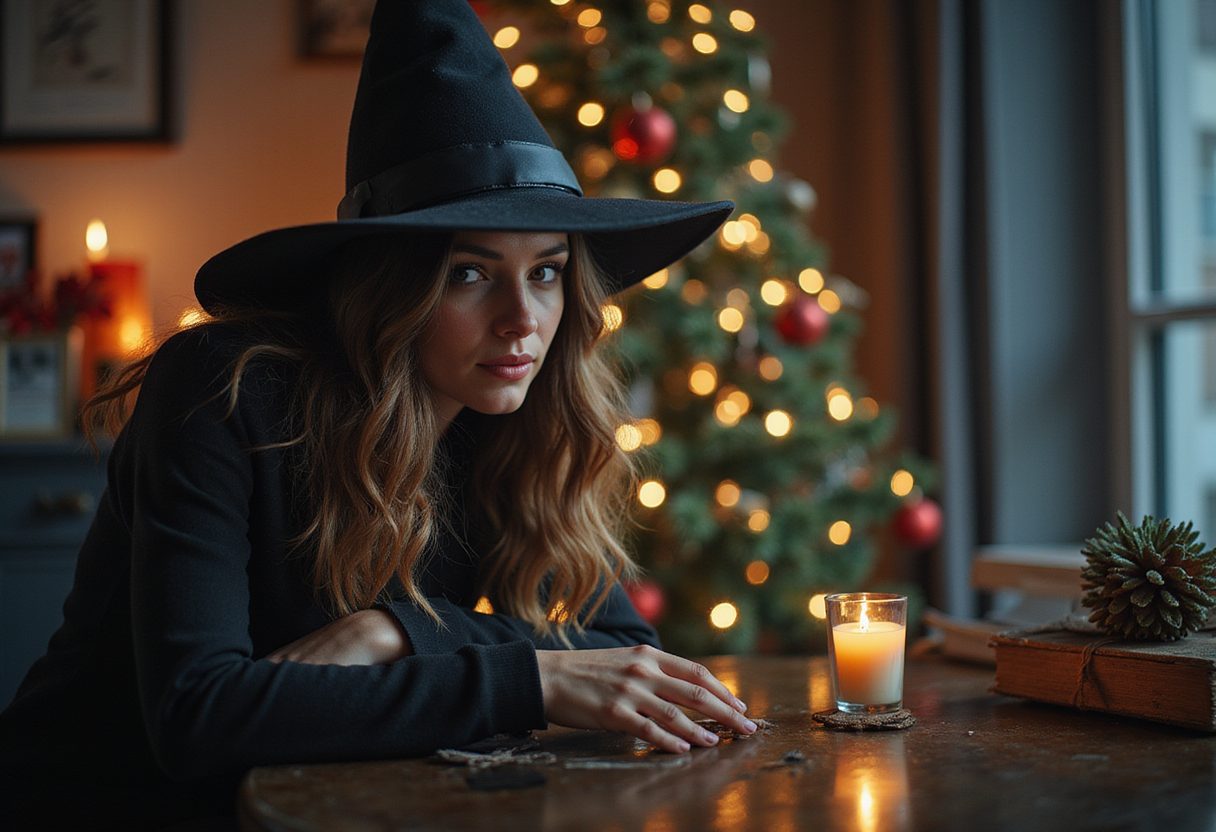
Walsh, CEO of the independent production company TW3 Entertainment, directed and co-wrote the adaptation of Bobbi Hess's 2012 children's book. The story: Merry, the first witch born on Christmas Day, must defeat a coven of evil witches who have kidnapped Santa Claus. A Christmas witch versus a witch coven. festive, sort of.
Hess, a 70-year-old New Orleans-based technical writer, discovered the project had landed in friendly hands. "AI enhanced the whole idea," she told Variety. "It was created by a human — the character Merry was created by me — but then Tom, with his amazing imagination and his wonderful ability to create wonderful creatures, it just came together."
How did an $80 million film become a $1.5 million one?
Walsh found Hess's book in 2014, during a Los Angeles meeting with her late husband, who handed him a copy. He wanted to adapt it. Then he ran the numbers. Studios, he reasoned, would balk at $80 million for what he called "an unknown property."
So AI came in through the closed door. "We were kind of stuck," Walsh told Variety. "The doors are not very open to new kind[s] of ideas and new kind[s] of stories and everything, and that makes it a little tough for independent filmmakers, so that's where AI came in."
The production wasn't a man and a laptop. Roughly 50 people worked on the film across a 10-month cycle, including foley artists (the craftsmen who create everyday sound effects), editors, sound designers and a composer. Human actors recorded the script and guided how characters should move and sound. Walsh ultimately dropped their voices — syncing problems, he said — and switched to AI-generated ones.
The AI studio Phatty Acid worked on the film, using tools including ElevenLabs' voice generator and the video generators Seedance and Nanobanana. Walsh calls the result a "hybrid AI production," one he thinks could become standard for projects strangled by big budgets.
He's blunt about the prerequisites. "The quality of your AI production depends on the quality of your traditional production staff," he said. "If you have inexperienced people who don't know production…and timing and how shots should look, it's going to look like garbage."
Will anyone distribute — or watch — an AI holiday film?
That's the open question, and Walsh doesn't have an answer yet. The two-hour film currently has no distributor, though a spokesperson said "optimistic" conversations were underway with "a few different companies." Christmas cinema is a crowded shelf, and AI itself remains a liability: outrage tends to follow any film or studio that admits using the technology, even as AI films such as 'Gods Don't Give Gifts' attempt to compete in cinemas.
Walsh argues audiences should judge the story, not the pipeline. "They should really just be looking at the story and the characters," he said. "They shouldn't really be getting down to, well, 'are these human or not human?' It's almost like when you're watching animation, you're not thinking you're watching animated characters on that kind of basis."
Hess, for her part, says she has "no issues at all with AI."
What happens if the film flops?
Not much, apparently. Walsh is already working on another AI-generated picture, and he and Hess have stayed in touch about future adventures for the Christmas witch. "AI can again continue to help to create those adventures that children will love," Hess said.
On distribution, Walsh is philosophical. "It's a little scary on taking those chances, but I think you have to take it in order to hit," he said. "We would never have gotten a movie like 'Merry' made if we didn't take that chance. It would have just sat in a screenplay never made, and so I have no regrets of taking that chance."
A screenplay that would have sat in a drawer is now a finished two-hour film. Whether 'Merry' finds an audience or becomes a cautionary footnote, the budget math alone guarantees imitators.
Source: Variety Film
More from Daniel Okafor
Show full bio
News editor covering companies, deals and strategy in arts in the broadest sense at Arts & Voices.
410 articles
Also on view
Mark Addy and Yasmin Al-Khudhairi Lead London Table Read for Indie Film 'First Christmas'
Kevin Feige Calls the Audience 'the Real Movie Magic' at Pioneer of the Year Tribute
Chase Infiniti to Star in Dylan Clark's 'Portrait of God' at Lionsgate
Artemis Fowl Animated Series Greenlit at Disney Channel and Disney+