Behnaz Farahi Turns Kendall Plaza Into an Ocean of Hopes at MIT
Behnaz Farahi's Ocean of Dreams covered 2,850 square feet of Kendall Plaza with tides and hopes from 400 participants, built in three weeks for MIT's first Future Fest.

Programme
- Behnaz Farahi's Ocean of Dreams covered about 2,850 square feet (264 square metres) of Kendall Plaza in Cambridge, Massachusetts.
- The installation used two Panasonic 30,000-lumen laser projectors mounted on the MIT Museum.
- Text in dozens of languages came from more than 400 international participants.
- MIT Museum director Michael John Gorman said the team completed the piece in three weeks.
- MIT's inaugural Future Fest ran from 30 September to 4 October and focused on ocean issues.
Designer Behnaz Farahi and her Critical Matter Group at the MIT Media Lab projected an ocean, complete with crowd-sourced hopes for the future, across 2,850 square feet (264 square metres) of Kendall Plaza in Cambridge, Massachusetts. The installation, called Ocean of Dreams, served as the centerpiece of MIT's inaugural Future Fest symposium, which ran from 30 September to 4 October.
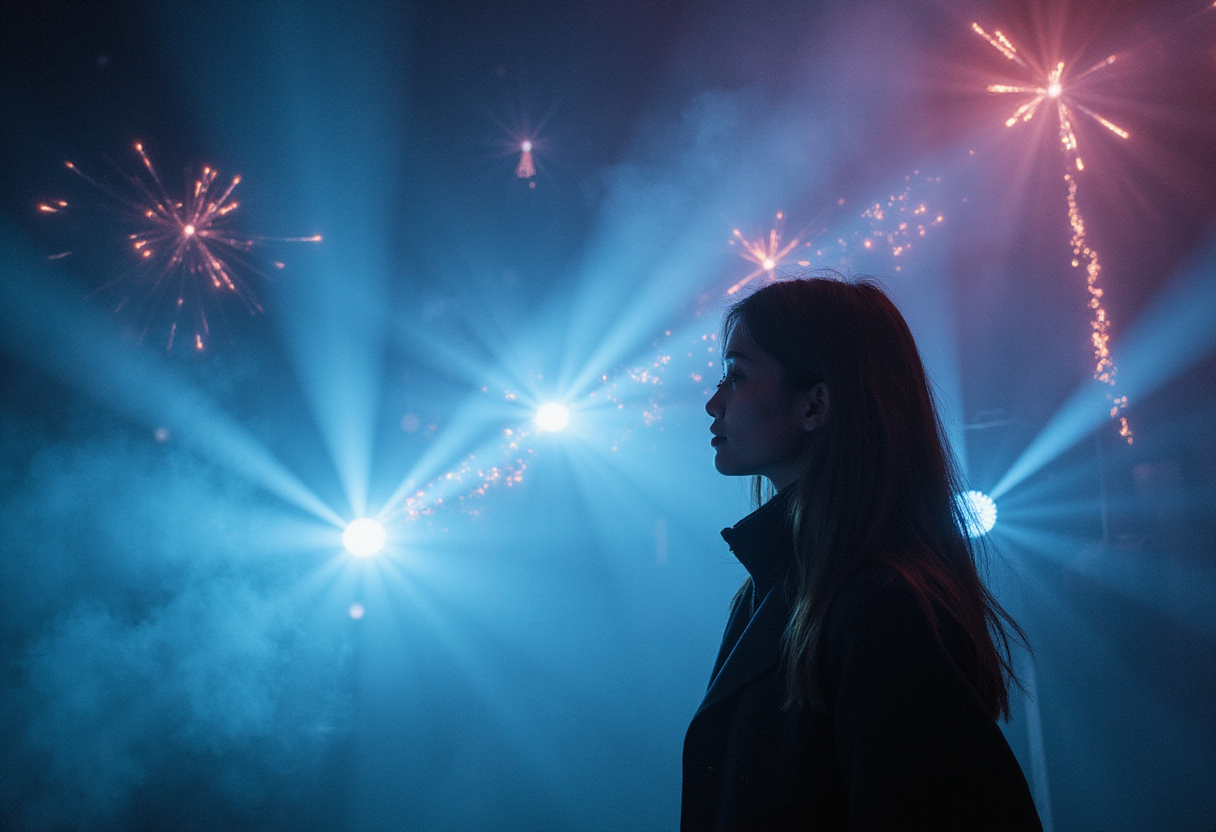
Two Panasonic 30,000-lumen laser projectors, mounted at the top of the MIT Museum, cast a hyper-realistic aerial view of tides rolling in and out onto the central square. Passersby could walk directly through the projection. Beneath the lapping waves ran words and phrases in dozens of languages, collected from more than 400 international participants — messages such as "end to all wars" and "end poverty."
Farahi framed the piece as an argument about hope rather than a decorative spectacle. "Ocean of Dreams approaches hope not as passive optimism, but as a form of agency, the capacity to imagine that things could be otherwise," she said.
She was blunt about the mood behind the work. "At a time when the future feels increasingly uncertain and shaped by anxiety, I wanted to create a space where people could reclaim the act of imagining it," Farahi said. "Perhaps one of the most radical things we can do right now is imagine."
How the piece was built
The mechanism is straightforward. Photographer Jan Erik Waider supplied the ocean footage. Musician Justin Boreta mixed ambient tracks with recorded ocean sounds. Farahi's group layered the participant-submitted text underneath the wave imagery, then projected the whole composition down onto the plaza floor from the museum's roofline.
The production timeline was unusually tight. MIT Museum director Michael John Gorman, who led the event's organisation, noted the turnaround. "She and her students pulled that together in three weeks just for this," he told Dezeen. Gorman said the effort reflected the university's broader willingness to rally around the festival.
What does this change for public art?
For Farahi, the installation models a "way of thinking" that goes beyond designing objects. "From that perspective, we can also think about designing the future: not predicting it, but actively imagining and shaping the kinds of futures we want to live in," she said.
She extended the idea into a working definition of her practice. "For me, design is ultimately a way of asking: what could be otherwise, and how might we help bring that possibility into being," Farahi said. "That is also how I think about Ocean of Dreams, as a space for collectively imagining and designing possible futures."
In practical terms, the project shows how quickly large-scale participatory projection can now be assembled — three weeks from brief to plaza — and how institutions can use existing architecture, here a museum roof and a public square, as installation infrastructure.
Future Fest brought together MIT scholars and outside thinkers to discuss evolving technologies. For its first edition, the festival focused on issues surrounding the ocean and included talks and open labs alongside the installation.
Ocean of Dreams joins a wave of recent sensory installations, including Aesop's suspended paper books turned temporary perfumeries and an immersive kaleidoscopic attraction in a New York skyscraper. Whether Future Fest returns with new commissions next year will test whether this model of rapid, plaza-scale public imagination becomes an annual fixture at MIT.
Original: behnazfarahi.com
More from Grace Kim
Show full bio
Correspondent covering technology and product news in arts in the broadest sense at Arts & Voices.
526 articles