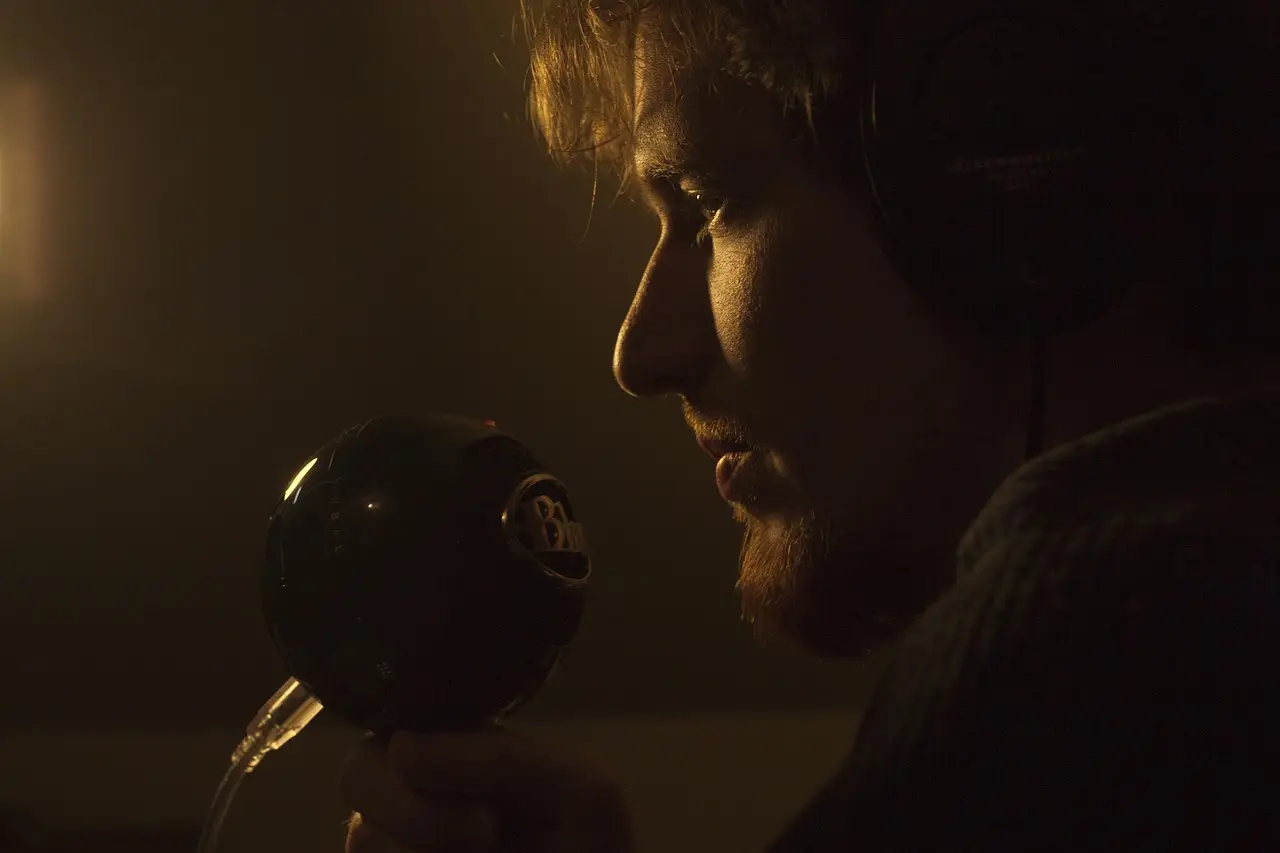
Ben Labat’s Echolocationism: 11 Tracks, a Grandfather’s Guitar
Ben Labat’s self-recorded Echolocationism turns a reclaimed family guitar and dolphin-inspired title into 11 mostly original folk-rock songs, centering creative control in his work.

Programme
- *Echolocationism* contains 11 tracks, and Ben Labat wrote 10.
- Labat self-recorded the album on a Martin D-28 acoustic guitar once owned by his grandfather.
- *Echolocationism* is his seventh studio LP in a series beginning in 2006.
- The Terms released *Small Town Computer Crash* in 2006 under producer Greg Ladanyi.
- Ben Labat & the Happy Devil released four full-length records starting in 2010.
By Grace Kim
According to Rolling Stone, Ben Labat’s Echolocationism contains 11 tracks. He wrote 10 and recorded the album himself, playing a Martin D-28 acoustic guitar his grandfather once owned. The profile follows the Louisiana native through nearly three decades in music, including a major-label deal with Capitol Records.
Rolling Stone reports that his music appeared in what it calls zeitgeist television shows, from The Real World to Jersey Shore. Labat said he now feels most comfortable processing his own life through folk-rock songs, with writing and singing serving as personal outlets.
He said more music, aided by artificial intelligence and technology, had moved away from simple approaches to lyrics and melodies. That shift pulled him in the opposite direction.
Labat told Rolling Stone: “I like the reverse of AI and the use of technology, and all the wild and crazy things you can do with it in film and writing and graphic design and music. It felt good to just be me and an acoustic guitar.”
Science, family history and a guitar
Rolling Stone connects the album’s title to Labat’s former work as a physics teacher and his fascination with echolocation (the sonar-like sense marine animals such as dolphins use to navigate the open ocean). Echolocationism is his seventh studio LP since 2006.
One track breaks the otherwise original run: his cover of Harry Styles’ hit “Matilda,” which Labat calls his daughter’s favorite song. He wrote the other 10 tracks.
The instrument had been sold for a time before Labat bought it back, and its return persuaded him to build an album around it. He described the process this way: “I started digging through the songs that never made it to a full-band cut, and then they just kind of all came together.”
The album opens with “Set a New Course,” delivered in Labat’s gravelly Louisiana drawl over that reclaimed guitar. Rolling Stone hears echoes of Springsteen’s stripped-down material in the melody, especially in the lyric: “Life tuned me up and played me like a song/so I set a new course.”
“It’s really about finding that new path,” Labat says. “Whether it’s a job or a relationship, moving to a new city, having children. I’m trying to be a parent and explain that things are not always gonna go your way.”
He continued: “You’re gonna have to embrace the change, and sometimes, things are gonna happen and you won’t be the same. The way you look at things and how you react will be different.”
The pared-back method took root 20 years ago in Labat’s full-band debut with the Terms, the Louisiana alt-rock outfit he fronted. Rolling Stone reported that their first record, Small Town Computer Crash, arrived in 2006, produced by the late Grammy winner Greg Ladanyi, whose credits included Jackson Browne and Warren Zevon.
Labat said Ladanyi’s attention to detail set the benchmark for his own studio work. The mechanism was old-fashioned: finalize the arrangement, rehearse, then test the emotional result.
- “It set a very high bar for my current recording process,” he says.
- “Finalizing arrangements, rehearsing until you were tired of it, listening back to the recordings, feeling the emotion in the vocal — all those little things and that technical attention to detail still carry through to the quality of music I try to produce today.”
Labat also recalled checking masters with Ladanyi across an array of formats. “I remember listening to masters with Greg on as many different formats as possible — car stereo, high quality headphones, low quality headphones, studio speakers, TVs,” he continued.
He kept the habit. “I still do that today. And while I didn’t bounce ideas off of another human being, I would often ask myself, ‘Would Greg approve?’”
According to Rolling Stone, Small Town Computer Crash reached Billboard’s Heatseeker chart and brought the Terms television appearances. An auto accident forced an early end to the band soon after its release.
After a brief stint in New York pursuing a new record deal, Labat returned to Louisiana, started a family and launched the largely regional Ben Labat & the Happy Devil, according to Rolling Stone. The band released four full-length records beginning in 2010.
The Happy Devil remains active, but Labat now tours solo around a day job and the coaching of youth soccer. Labat said he enjoys the intimacy of those shows and sees it as a reflection of his approach to art and songwriting.
Rolling Stone closes Labat’s account with an image of dolphins: like the animals that partly inspired the album, he trusts his senses to navigate where his music goes next. The metaphor makes the record’s method literal: sound, reflection and instinct guide the choices.
What does the stripped-back approach change for listeners?
For listeners, the practical change is concrete: the songs arrive through Labat’s own writing, recording and current solo performance. He said that closeness reflects his approach to art and songwriting.
He also drew a line between commercial writing and self-directed work. Labat said: “I tried to write commercially for a little bit, and I can do it, but it was not easy for me.”
His stated aim was equally direct: “I wanted to write songs when I felt like writing about whatever material I wanted to write about. That was my creative outlet.”
The Rolling Stone profile was written by journalist and author Josh Crutchmer. His book, Sonoran Sounds, is scheduled for release in March 2027 through Back Lounge Publishing.
Labat’s next phase already has a practical shape: solo performances around his day job and youth-soccer coaching, with Ben Labat & the Happy Devil still active. The test ahead is whether that smaller setting can sustain the level of detail he once learned from Ladanyi and now seeks in his own songs.
Source: rollingstone.com
More from Grace Kim
Show full bio
Correspondent covering technology and product news in arts in the broadest sense at Arts & Voices.
1,162 articles