Blind Visitor Sues British Museum Over Bayeux Tapestry Access
Yusuf Ali Osman, who is registered blind, is suing the British Museum for damages after it offered no audio-described tours of its Bayeux Tapestry exhibition.
Programme
- Yusuf Ali Osman, a registered blind man, filed the lawsuit through law firm Leigh Day.
- The claim alleges the British Museum failed to comply with the Equality Act.
- The museum assigns 40-minute viewing slots and has banned photography at the exhibition.
- The museum says it is exploring adding an audio-described tour to its app-based guide.
- Osman seeks damages, policy changes, and disability awareness training.
A registered blind man has sued the British Museum for failing to provide audio-described tours of its Bayeux Tapestry exhibition, The Telegraph reports.
Yusuf Ali Osman, who has no sight in either eye, filed the lawsuit through the law firm Leigh Day. The firm sent the museum a letter arguing that the British Museum failed to comply with the Equality Act, the UK's anti-discrimination legislation.
Osman had called the museum before his visit to ask whether audio guides would be available. Staff told him they would not be.
What do the museum's accessibility measures include?
A British Museum spokesperson defended the exhibition's provisions in a statement.
"The Museum is committed to making the Bayeux Tapestry exhibition as accessible as possible and has worked with specialist access consultants to inform the exhibition experience," the spokesperson said. "Provisions include a sensory map to help visitors prepare for their visit, as well as dedicated tours during the exhibition run, which will include an in-person audio-described tour. We are also exploring including a separate audio-described tour as part of the exhibition's app-based audio guide."
According to Leigh Day, the museum justified its approach by pointing to the exhibition's popularity. The institution said it would restrict the number of visitors entering the gallery and prioritize self-guided visits over programmed tours and events.
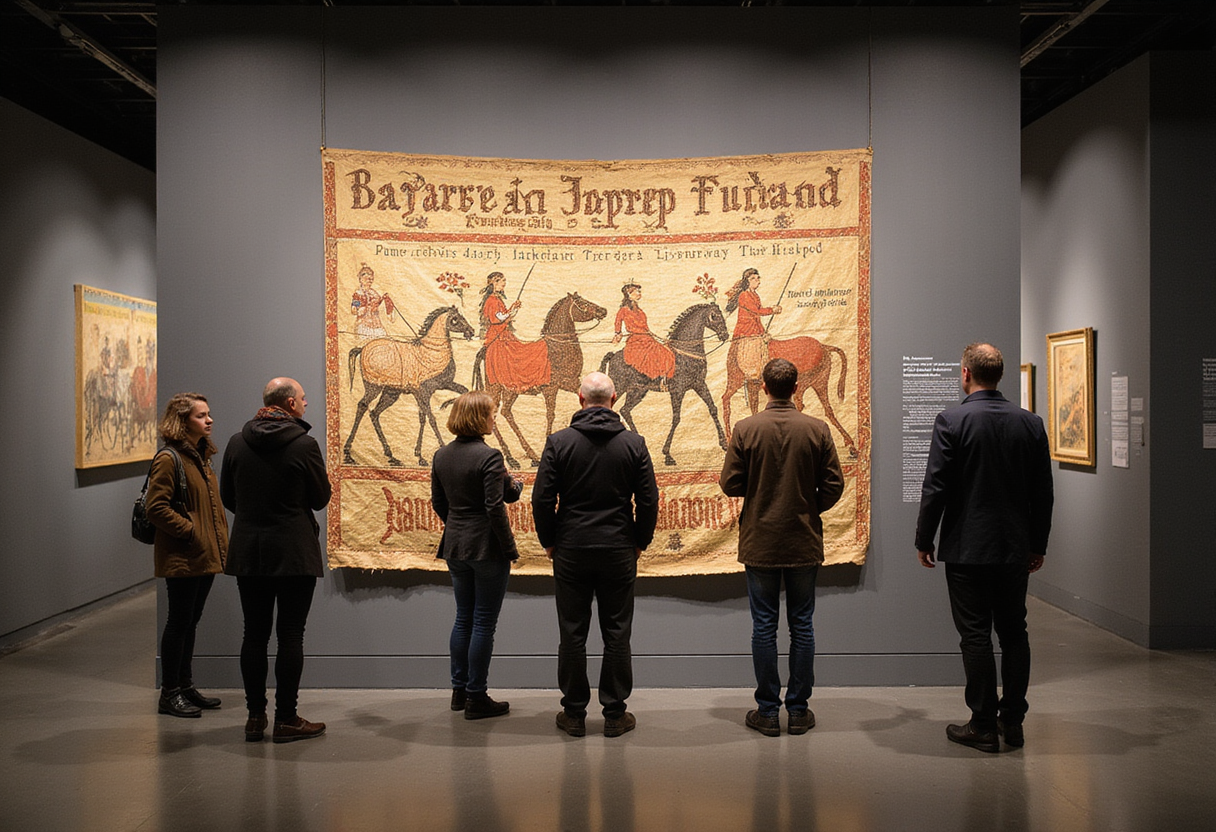
Crowd-control measures at the show are strict. The museum has assigned visitors 40-minute viewing slots and banned photography in an effort to keep queues moving.
What is Osman demanding?
Osman is seeking damages from the British Museum. He is also asking the museum to change its policies and provide disability awareness training to staff.
"I want to be able to visit the Bayeux Tapestry and experience it for myself," Osman said. "I understand that there are important restrictions around how the tapestry is displayed, but it is disappointing to find that blind visitors are not being offered an audio-described way of experiencing it."
He framed the case as a test of how major institutions plan blockbuster exhibitions. "I hope that this legal action will help make sure that blind and partially sighted people are properly considered when major exhibitions are planned, so that we can enjoy and engage with our national cultural institutions on a more equal footing," Osman said.
The case puts fresh pressure on the British Museum at a moment of intense public demand for the tapestry, one of the most significant medieval artifacts in existence. If Osman's claim succeeds, it could force the museum — and by extension other UK cultural institutions — to treat audio description as a baseline requirement rather than an optional extra when staging high-attendance exhibitions.
Original: telegraph.co.uk
More from Elena Vasquez
Show full bio
Senior reporter covering media and advertising at Arts & Voices.
360 articles