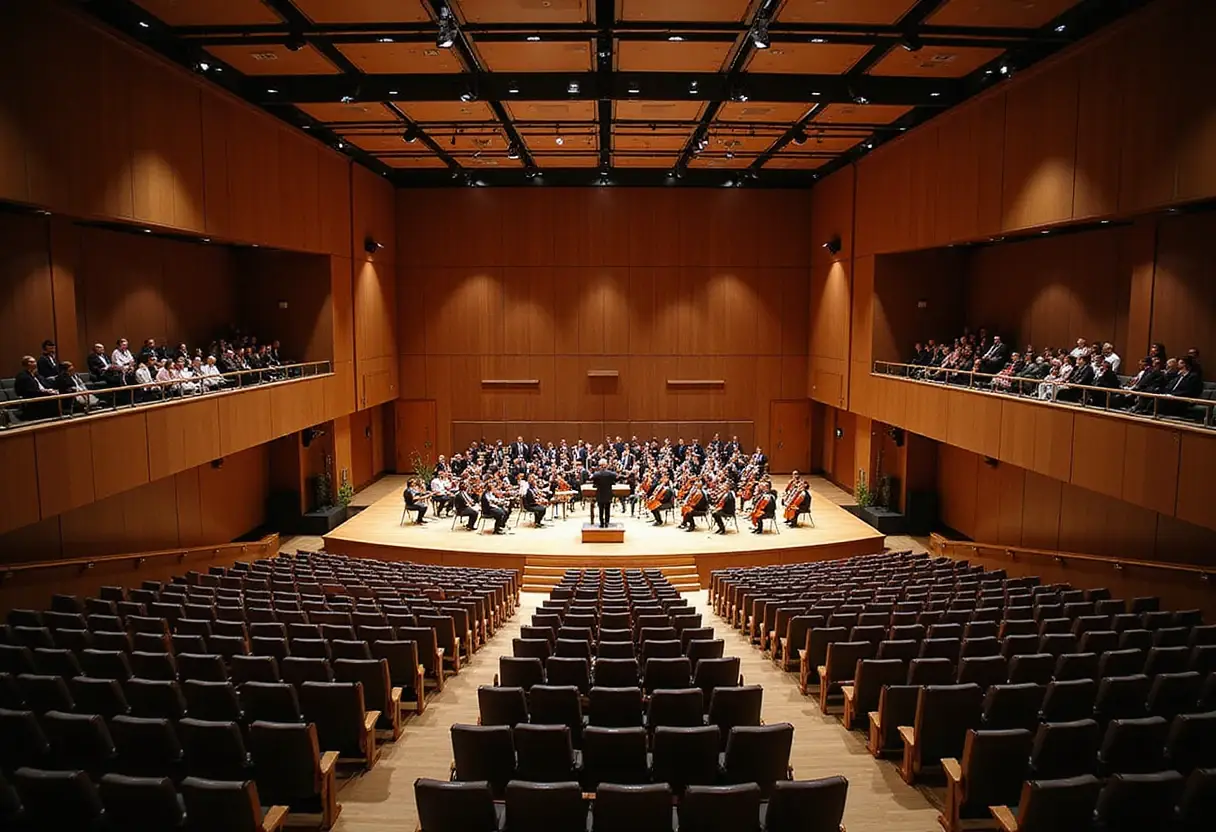
Christian Van Horn's First Recital Disc: A Bass in Full Voice, Racing the Clock
After 25 years on stage, bass Christian Van Horn self-produces his first solo recital, due online in December 2026: 11 tracks of Verdi and Boito, luxurious in tone but briskly paced under Constantine Orbelian.

Programme
- Christian Van Horn's first solo recital, 11 tracks, is released online in December 2026 with limited pressings
- Van Horn debuted memorably at Carnegie Hall on Oct. 21, 2018 in Verdi's 'Nabucco'
- His 'Ella giammai m'amò' runs 8:57, over a minute faster than Solti's 1965 studio recording
- Constantine Orbelian conducts; the 'Mentre gonfiarsi l'anima' tempo di mezzo is omitted
- The bass is a Tucker Award recipient, previously recorded in Currentzis's 2014 'Figaro'
Bass Christian Van Horn releases his first solo recital online in December 2026, self-produced after two and a half decades on stage. The 11-track program arrives with limited physical pressings. It marks his recorded debut outside ensemble opera sets — apart from Teodor Currentzis's 2014 "Figaro" — and it confirms a voice already familiar from Carnegie Hall and the Metropolitan Opera.
Van Horn made an impression at Carnegie Hall on Oct. 21, 2018, singing "O chi piange" from Verdi's "Nabucco" in a rounded, resonant voice — guttural at times, cavernous despite its booming tops. A Tucker Award recipient, he fits neither the basso cantante nor the profondo mould, the reviewer notes, but something in between: America's answer, perhaps, to Ildebrando D'Arcangelo, at home in repertoire from early Verdi to Britten, Offenbach and Boito. At the Met he sang Mefistofele with fiendish delight, a charismatic and steadfast devil.
What does the disc deliver?
Luxury of tone, first of all. "Ella giammai m'amò" still rings true to his 2018 Tucker Gala performance; the nostalgia is bittersweet. High-tessitura passages such as the profezia of "Del futuro" carry a quasi-ceremonial gravitas, with martial but not brute staccato accents.
The verdict is mixed elsewhere. In "Mentre gonfiarsi l'anima," the omission of the tempo di mezzo — "Oltre quel limite" grafted directly onto the cantabile — deprives the scena of breathing room, and conductor Constantine Orbelian's pacing turns unforgiving, even metronomic, after "In me tai detti suonano." Attila's narration shows spot-on portamento but little rubato; Verdi's slentando markings and the andante piuttosto mosso get a direct reading where meditation might serve better.
Where he excels: the devil's music
Boito's Mefistofele suits Van Horn's directness. He sculpts "Ecco il mondo" with stentorian command and open vowels, building menace in the waltz metre — though Boito's sarcasm on lines like "riso e scherno è a lei l'inferno" could suggest a hushed parlando that remains under-explored. "Son lo spirito" becomes a dazzler: clipped staccato edges, a near-imperative emphasis on the repeated "no," and real depth in the middle register. The pendant "Ave Signor!" booms at "Boriosa polve! Tracotanto atomo!" — wait, "Tracotato atomo!" — with slight reverb rendering the sound corporeal across audio devices.
Bertram's "Nonnes qui reposez" from Meyerbeer's "Robert le Diable" rests on the same spectacle: luxurious, fierce, authoritarian. The commands "m'entendez-vous" and "soulevez-vous" have been executed more subtly elsewhere on record — but seldom with greater conviction, especially in the repetition of "Roi des enfers, c'est moi qui vous appelle." Here he fudges slightly: the reviewer writes "Tracotato atomo!" as the score's climax.
The timing problem
Orbelian's tempo for "Ella giammai m'amò" — 8 minutes 57 seconds for prelude and aria — runs over a minute faster than Georg Solti's landmark 1965 studio recording. Hastened fermatas and flat metronomic variation undercut Verdi's "come in un sogno" marking, even if Van Horn's shaded, almost somnambulant tone fits the brief. The color on "languenti" bristles with fatigue and resignation.
Smaller imprecisions show. In Fiesco's "A te, l'estremo addio," the curse of "O maledetto" starts before the tutti chords die down; the score confirms the slip, whoever caused it. Yet the vocal modulations are freer here, and the first "Prega, Maria, per me" beams with delicate pianissimo — despite an anticipated final low note, almost a crutch.
The reviewer's conclusion: Van Horn is, for now, less an exegete of the philosophical — think "Don Carlo" — than a showman, a fulminant performer of roles like Mefistofele, capable of stunning but risking the monolithic when his musical choices and the conductor's pacing misalign. Whether future releases widen that range will decide if the recital disc becomes a career statement rather than a victory lap.
Source: Opera Wire
More from Tom Whitfield
Show full bio
Market editor covering people, launches and day-to-day practice in arts in the broadest sense at Arts & Voices.
1,741 articles