Christie's Pulls $3.5M Frida Kahlo Painting Hours Before Sale
Christie's withdrew Frida Kahlo's $2M–$3.5M 'Congreso de los pueblos por la paz' hours before its November 17 New York sale, citing 'further research.'
Programme
- Christie's withdrew a Frida Kahlo painting estimated at $2M–$3.5M hours before the November 17 evening sale in New York.
- Mexico's INBAL says the 1952 work left the country before Kahlo's art was declared an artistic monument on July 25, 1984.
- The current seller bought the painting at Sotheby's in 2020 for $2.6 million.
- The Frida Kahlo Museum says the work is part of an ongoing investigation by Mexican authorities.
- Hilda Trujillo's April 2025 post alleged several works from Rivera's Casa Azul inventory, including this one, are unaccounted for.
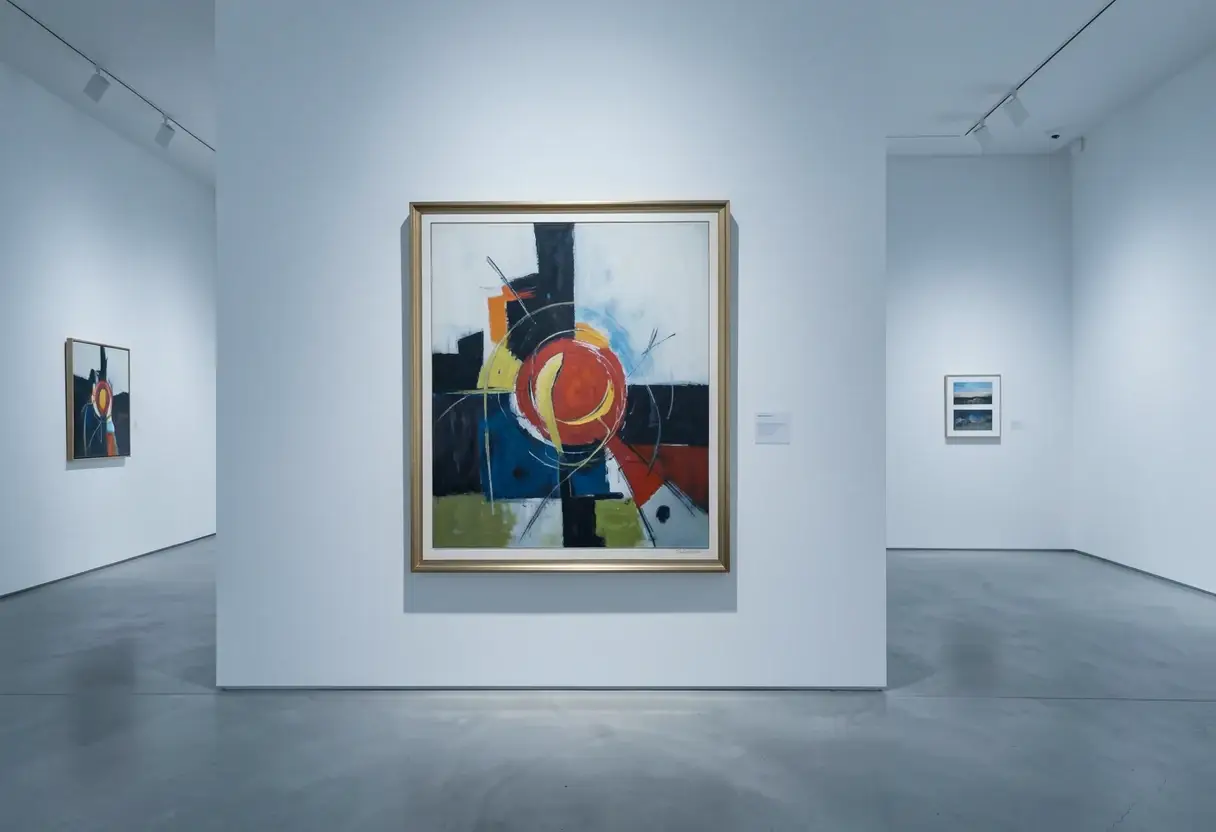
Christie's withdrew a Frida Kahlo painting estimated at $2 million to $3.5 million hours before it was set to cross the block in New York on November 17. The auction house pulled the 1952 oil-on-masonite work, Congreso de los pueblos por la paz (Congress of the Peoples for Peace), from its 20th Century Evening Sale amid a dispute over whether the painting was legally permitted to leave Mexico.
"In collaboration with the seller, we decided to withdraw the lot at this time for further research. We look forward to selling this work at a later date," a Christie's spokesperson told ARTnews.
Why did Mexico object?
In the days before the sale, Mexico's cultural authorities faced accusations of failing to protect a work considered part of the nation's legally protected heritage. An online campaign, run by the collective Defendamos la Colección Gelman (Let's Defend the Gelman Collection), argued that the painting belonged to a trust Kahlo's husband, Diego Rivera, created for the Casa Azul after her death in 1954 — and that it cannot legally leave Mexico.
The collective asserts the work was among hundreds of objects Rivera inventoried after Kahlo's death, when he established the trust. That inventory, the group says, carried explicit instructions from Rivera that the items stay on the premises during his lifetime and after his death. Where the painting was held before arriving in New York remains unclear.
The Frida Kahlo Museum told ARTnews the painting is part of an ongoing investigation by Mexican authorities. "In accordance with established protocols, the auction house Christie's has been informed that the work is part of an ongoing investigation being conducted by the competent Mexican authorities," a museum representative said. "An investigation file exists that gathers information on several works, including Congreso de los pueblos por la paz."
According to the museum, the National Institute of Fine Arts and Literature (INBAL), the body responsible for Mexico's patrimony, has "requested from Christie's documentation proving the provenance and ownership of the painting." Christie's did not address whether it provided that documentation.
INBAL did not respond to ARTnews by publication time. In a November 16 statement to the Mexican newspaper Excélsior, the institute said the painting "was donated by the artist during her lifetime and left Mexico before the declaration of her work as an artistic monument." To whom Kahlo would have donated it is unclear.
What does the provenance show?
- A provenance listing on Christie's website, since removed, named the earliest owner as Galería Ramis Barquet, a Monterrey gallery with a New York branch — with no date for when Barquet acquired it.
- An unnamed collector bought it from the gallery and consigned it to Sotheby's in 2020.
- The current seller bought it at that sale for $2.6 million.
INBAL's statement cited research by art historian Luis-Martín Lozano, who collaborated in cataloguing the painting for Christie's. Lozano says Rivera took the painting to Vienna in late 1953, as recorded in the memoirs of Emma Hurtado, Rivera's wife from 1955 until his death in 1957. The statement also cited Raquel Tibol's 1977 book Frida Kahlo: Crónica, testimonios y aproximaciones, which reproduces the painting on plate 17.
Defendamos la Colección Gelman called that timeline into question. "The account — attributed to historian Luis-Martín Lozano — that the work was taken to the Congress in 1953 is chronologically impossible, as the Congress had already concluded months earlier," the collective wrote. "There is no evidence that Rivera returned to Europe that year; his travels were extensively documented — notably in the files that the FBI kept on him."
How does Mexico's heritage law work?
Kahlo painted the work two months before the Congress of the Peoples for Peace met in Vienna in December 1952. INBAL claims the painting left Mexico before July 25, 1984, when a decree declared her art an "artistic monument" (a designation making works part of Mexico's strict cultural patrimony). Once designated, works may be bought and sold within Mexico but can leave only temporarily, unless INBAL grants an exceptional authorization.
"In previous cases, the INBAL has specified that the definitive export prohibition applies to works that were in national territory when the declaration of July 25, 1984 was published," the institute said.
Where did the controversy begin?
After Kahlo's death, Rivera notarized an inventory of the couple's possessions as the basis for a trust administered by the Banco de México. The trust holds the properties and collections, oversees reproduction rights, and funds the Frida Kahlo Museum (Casa Azul) and the Museo Anahuacalli. It remains active today.
The inventory became a public controversy in April 2025, when Hilda Trujillo, who directed both museums from 2002 to 2020, published an online post alleging several inventoried works were unaccounted for — including Congreso de los pueblos por la paz, listed as A.F. 18. The collective provided ARTnews with a blurry reproduction of the entry, whose dimensions match Christie's lot entry of 18.7 x 24.8 centimeters. Trujillo traced later ownership through a 2011 list naming gallerist Mary-Anne Martin and Helga Prignitz-Poda's 1988 catalogue raisonné, which attributed the work to Barquet. "It is unclear how or why it left the Frida Kahlo Museum," she wrote.
Trujillo accused the trust of mismanagement, claiming administrators dismissed evidence in 2009 and 2013 that Casa Azul works may have been stolen and sold to US collectors. The trust responded: "The person making these accusations today never filed a formal complaint during their professional association with the trust."
Defendamos la Colección Gelman tied the case to the government's alleged lack of transparency around the loan of the Gelman Collection — more than 300 works by Kahlo, Rivera, José Clemente Orozco and David Alfaro Siqueiros — to the Faro Santander museum in Spain. What once looked like an exception, the collective warned, "is beginning to become the rule." Christie's, for its part, says it still intends to sell the painting at a later date.
Original: excelsior.com.mx
More from Grace Kim
Show full bio
Correspondent covering technology and product news in arts in the broadest sense at Arts & Voices.
1,596 articles