Colburn’s “Voices of Vienna” Recover Four Silenced Composers
Colburn students and Music Restored brought Nazi-silenced works by Hugo Kauder, Eric Zeisl, Ernst Toch and Ernst Krenek into focus at “Voices of Vienna.”

Programme
- The Music Restored program featured four composers: Hugo Kauder, Eric Zeisl, Ernst Toch and Ernst Krenek.
- Colburn students opened with Kauder’s second string quartet; violinist Adriel Sloss and violist Grace van der Sloot played the middle strings.
- Adam Millstein and Dominic Cheli performed Zeisl’s “Brandeis” Sonata, written for a Jewish summer camp in Simi Valley.
- Cheli played five short Toch pieces drawn from three compositions, including works from 1924 and 1929.
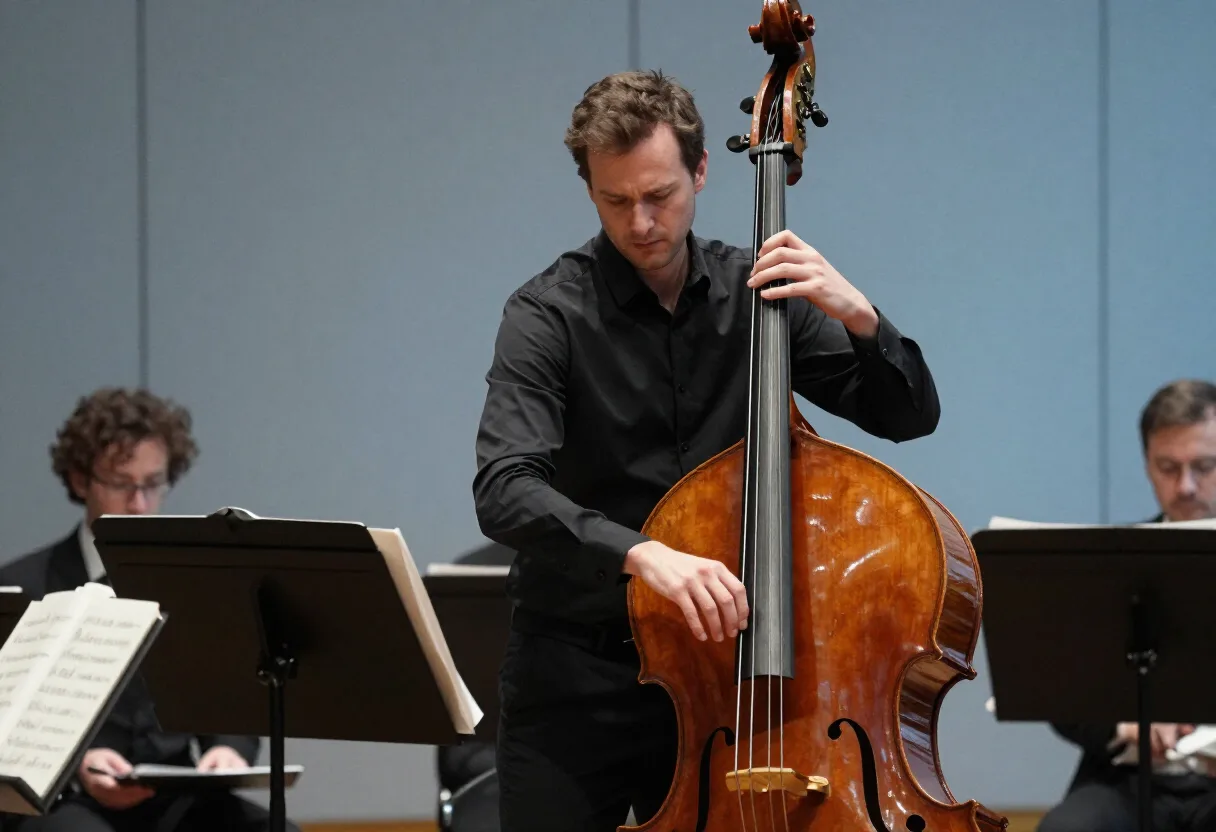
- Millstein, Cheli and cellist Jakob Taylor closed with Krenek’s 1929 *Triophantasie*.
By Grace Kim
Four composers pushed into relative obscurity by Nazi oppression—Hugo Kauder, Eric Zeisl, Ernst Toch and Ernst Krenek—supplied the repertoire for the Colburn School’s “Voices of Vienna” concert, presented by Music Restored: The Ziering-Conlon Center for Exiled and Suppressed Composers.
The title might have suggested Joseph Haydn’s light classicism or Alban Berg’s expressionist atonality (music without a central key). Instead, Colburn students performed works by Kauder, Zeisl, Toch and Krenek, whom Kim identifies as overshadowed by the Second Viennese School—Schoenberg, Berg and Webern—and the Golden Age of Hollywood.
What does this concert change for four silenced composers?
At a preconcert panel, The New Yorker’s music critic Alex Ross, Hugo Kauder Society executive director Barbara von Bechtolsheim and Music Restored program director and violinist Adam Millstein discussed the composers’ lives. Kim reported that the discussion centered on Vienna and Los Angeles, with the latter presented as a place of exile and opportunity for several artists.
Music Restored’s stated mission is to recover a generation of silenced voices. “Voices of Vienna” applied that mission through chamber works performed by Colburn students.
Kauder’s folky second string quartet opened the program with gentle pizzicatos (plucked notes) and airy melodies passed among four instruments. A brisk fugue (music built by imitating one motif across voices) supplied its central thread, and the motif returned in the quartet’s other two movements.
Kim found the fugal subject hard to distinguish when its imitations and episodes merged into a murky texture. The performance’s balance came through in the middle strings, especially violinist Adriel Sloss and violist Grace van der Sloot, who finessed the line between subject and accompaniment.
Adam Millstein joined pianist Dominic Cheli for Zeisl’s “Brandeis” Sonata, originally written for a Jewish summer camp in Simi Valley. Cheli’s weighty, pesante (heavy-footed) chords charged the sonata, while Millstein moved from a recitative-like, speech-song opening to an allegretto (moderately quick) dance.
In the introspective second movement, Andante religieuse (hebraique), Millstein clearly articulated the high-pitched melodies, producing what Kim judged a sound both free and firm.
The third movement was a jaunty rondo (a section organized around a returning theme). Above a klezmer-style “oompah” pulse of bass and chords, Millstein moved from a vociferous Sol G theme to bright parallel fifths, with two lines remaining a fifth apart as they moved together.
The opening pesante theme returned for both instruments before a presto (very fast) finish. The sequence drew a partial standing ovation midway through the concert.
After intermission, Cheli returned alone for five short pieces drawn from three Toch compositions. The first came from Toch’s 1924 Three Piano Pieces, Op. 32: “Ruhig und durchwegs sehr zart.” Kim heard in it the atonal uncertainty of Schoenberg’s piano pieces and relaxed, jazzlike inflections.
The next selections were middle movements of the 1929 Kleinstadtbilder (Echoes from a Small Town). Their first two vignettes suggested youthful, Bartók-esque textures, moving from schoolchildren’s skipping steps to tender, childlike sadness.
Cheli then leapt into pounding staccato (short and detached) triplets before the final showpiece, “The Juggler” from Three Burlesques, Op. 31. His fiery speed and crisp articulation captivated the hall, in Kim’s assessment.
Kim thought the final two pieces’ brevity and similar textures made them seem like one. Their pairing, however, clarified Toch’s stylistic links across the 1920s and displayed both the composer’s versatility and Cheli’s ability to move between contrasting idioms.
To close, cellist Jakob Taylor joined Millstein and Cheli for Krenek’s 1929 Triophantasie, a work starkly more tonal (centered on a key) than the rest of his output. Millstein said Krenek “hated” the work and “wouldn’t be too happy [they’re] playing it.”
Taylor and Millstein traded lyrical phrases charged with yearning and tension over Cheli’s lilting piano pulses. Kim heard the sensuous work become a crowd-pleaser and likened its quality to part of a romance-film score, while the trio sustained a balanced restlessness through the later Allegro agitato (fast and agitated). The final note shimmered, then faded like sunset light.
For Kauder, Zeisl, Toch and Krenek, the practical change is concrete access: a Colburn audience could hear unfamiliar works by each composer within one program. The panel and concert also placed Vienna and Los Angeles in the same frame, connecting the composers’ Viennese formation with their American exile and opportunity.
Kim’s wider claim is that early-20th-century Vienna influenced far more than Schoenberg, Berg and Webern. It also brought to life the work of Kauder, Zeisl, Toch, Krenek and other composers silenced by the Third Reich. Kim’s prescription is forward-looking: intellectual and accessible recitals like this one can and should recover more of those voices.
Source: sfcv.org
More from Grace Kim
Show full bio
Correspondent covering technology and product news in arts in the broadest sense at Arts & Voices.
1,185 articles