Corkinho Builds a Demountable Cork Pavilion for Silence in Alentejo
Corkinho has installed a demountable pavilion of solid cork blocks at Casa No Tempo in Alentejo, a still room for meditation with no glue, no screws and designer-claimed carbon neutrality.
Programme
- Antwerp studio Corkinho installed a solid-cork 'still room' pavilion at Casa No Tempo, southern Portugal, designed by Cédric Etienne with Madeiguincho.
- The pavilion is fully demountable, with no glue and no screws; cork blocks are held by metal rods and a timber roof.
- Casa No Tempo is a former farmhouse converted into a holiday home by Manuel Aires Mateus in 2014 for João Rodrigues.
- Corkinho launched the still room concept in 2020 at the former Noorderpershuis power station in Antwerp.
- Designer says interior stays around 22–23 degrees when it is 40 degrees outside; cork supplied by local firm Sofalca.
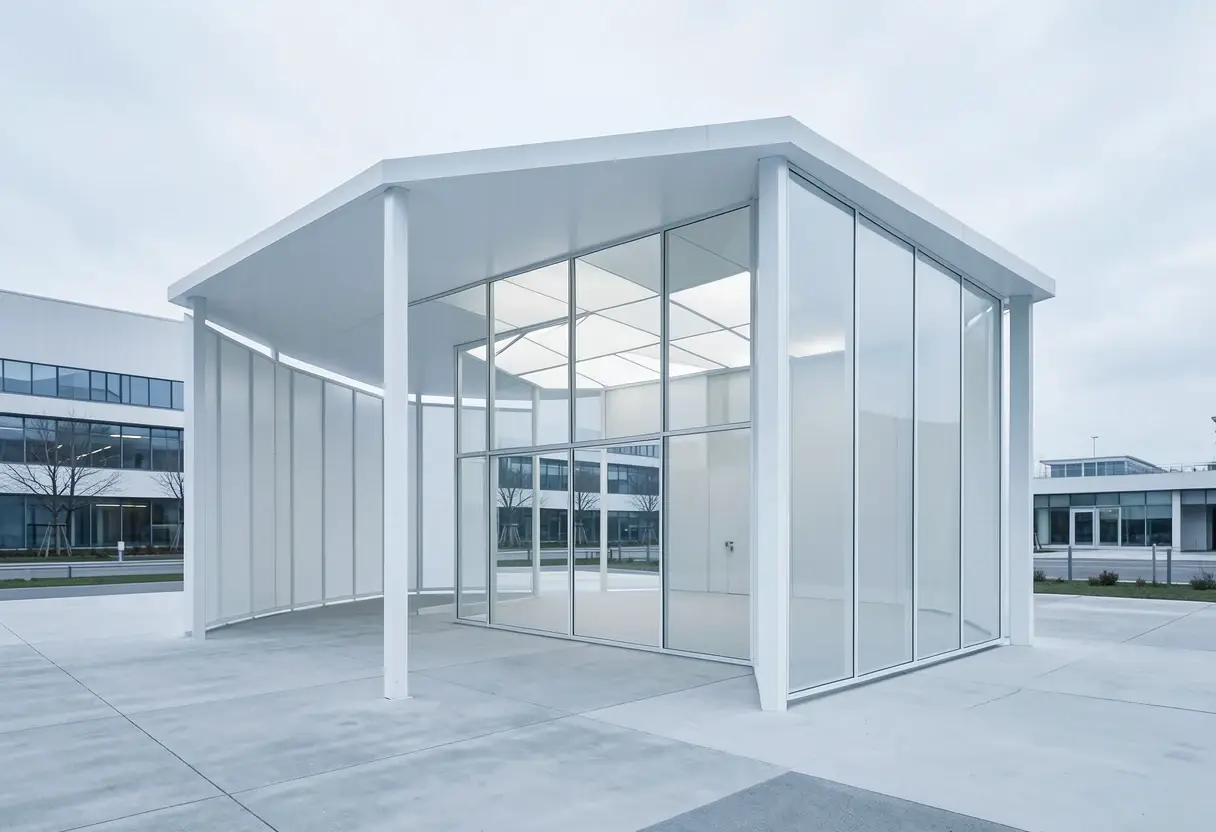
Antwerp studio Corkinho has installed a pavilion with walls of solid cork at Casa No Tempo, a former farmhouse in southern Portugal that architect Manuel Aires Mateus converted into a holiday home in 2014.
The structure is the studio's latest "still room" — a space dedicated to silent, introspective activities such as reading, yoga, tea ceremonies and meditation. Lead designer Cédric Etienne devised the fully demountable building with architect and master carpenter Gonçalo Madeira Marrote of Madeiguincho.
The construction method is straightforward and reversible. A timber deck floor slab sits on a foundation of removable concrete blocks. Above it, solid cork blocks stack like giant bricks to form the walls, secured by metal rods threading through milled channels. A timber roof, which Etienne describes as "like a hat with four screws", weighs the cork blocks down.
How does a building achieve zero waste?
"I wanted it to be zero waste and carbon-neutral," Etienne told Dezeen. "If we need to dismantle it, we can place it somewhere else. There is no glue and no screws."
He compared the approach to traditional Japanese practice: "It's like the Japanese way of building teahouses, with total respect of the local materials and no harm to the land."
The designer's claims rest on the absence of adhesives and permanent fixings — the source does not offer independent verification of the carbon-neutral calculation. What is documented is the material itself: cork blocks supplied by local company Sofalca, heat-treated to improve durability.
Etienne credits the material with the room's performance. "All the technical properties of cork – the acoustics, the scent, the softness – all become architectural conditions," he said. "You really feel like you're coming into a womb. Even when it's 40 degrees outside, the temperature inside is around 22 or 23."
Those temperature figures come from the designer; no measurements by a third party appear in the source.
Where did the still room concept come from?
Corkinho, as the name suggests, specialises in objects and spaces built from cork. The studio first launched the still room concept in 2020, when it moved into the former Noorderpershuis power station in Antwerp and turned one room into a silent sanctuary.
Etienne defines a still room as any space where you can pause your mind and be still. "It's a place where you disconnect from noise and distractions and invite a deeper sense of presence," he said.
After consulting with hotel brands keen to adopt the concept, Etienne pitched it to hospitality entrepreneur João Rodrigues, owner of Casa No Tempo, and his company Silent Living. The company runs five properties, all designed by Aires Mateus, all focused on slow living.
"I had been to Casa No Tempo many times, so I knew the place like an inner home," Etienne said. "It felt so aligned in terms of feeling and senses, so I thought it could be a really beautiful challenge to move the concept forward in this place."
What does this change for guests and designers?
Villa guests can use the room, and it also hosts curated programmes. Etienne has been running four-day silent retreats for groups of designers and hospitality professionals to learn about the still room concept.
The pavilion's real test is durability: cork construction at this scale remains rare, and whether the demountable design survives repeated assembly cycles is a question only time — or a second installation — will answer.
Original: corkinho.com
More from Tom Whitfield
Show full bio
Market editor covering people, launches and day-to-day practice in arts in the broadest sense at Arts & Voices.
978 articles