Death in Venice Opens Teatro Grande di Brescia Season
Britten's final opera reached the Teatro Grande di Brescia for the first time, opening the 2026–27 season with Toby Spence and conductor Daniel Smith in a staging critics call OperaLombardia's finest in five years.
Programme
- Death in Venice opened the Teatro Grande di Brescia's 2026–27 Opera and Ballet season, reaching the Brescia stage for the first time, in an OperaLombardia co-production with theatres in Emilia-Romagna.
- Toby Spence sang Aschenbach, Dominic Sedgwick took seven roles, and Daniel Smith conducted the I Pomeriggi Musicali Orchestra in a staging by Rodula Gaitanou with sets and costumes by Takis.
- Britten completed the score in March 1973, postponing a heart operation to finish it; complications prevented him from attending the premiere. The production continues in Como, Pavia and Cremona.
Britten's Death in Venice opened the Teatro Grande di Brescia's 2026–27 Opera and Ballet season — the first time the 1973 opera has reached the Brescia stage. The production, co-produced by the OperaLombardia association with theatres in Emilia-Romagna, drew a great ovation at curtain call, warmest for tenor Toby Spence, baritone Dominic Sedgwick and conductor Daniel Smith.
The reviewer calls it OperaLombardia's finest production of the past five years, crediting a creative team and cast that was "literally perfect."
Britten's last opera carries heavy biographical weight. The composer, whose relationship with tenor Peter Pears was no secret, wrote the role of Aschenbach specifically for Pears and his deteriorating voice. He postponed an essential heart operation until completing the score in March 1973; complications from the procedure kept him from the premiere. Until 1967, British law regarded Britten as a criminal, since homosexuality was a crime — a fact, the review notes, that would be naïve to pretend had no impact on his work.
Based on Thomas Mann's novella Der Tod in Venedig, the opera follows the writer Gustav von Aschenbach to Venice, where his relationship to beauty, desire and artistic creation undergoes a profound transformation. Among the drafts, Britten even considered having Aschenbach physically consummate his attraction to the boy Tadzio, an idea he abandoned — a decision the reviewer says increased the dramatic tension. The work's subject, a mature intellectual's homosexual attraction to an adolescent, unsettles audiences more than the coded incest of Peter Grimes or the explicit rape in The Rape of Lucretia, precisely because it contains no scenes of violence or sex.
Stage director Rodula Gaitanou, working with a modest budget, demonstrated that budget is irrelevant when art and performers' talent take priority. The Greek director entrusted Takis with set and costume design. The visual concept is simple: a dark, gloomy stage exactly like Mann's Venice, furnished with a handful of elements — a chair, clocks, a barber's chair, an office desk, gondola oars — that place the action precisely where it needs to be. Costumes evoke the early twentieth century, from Aschenbach's suits to the boys' bathing suits on the beach.
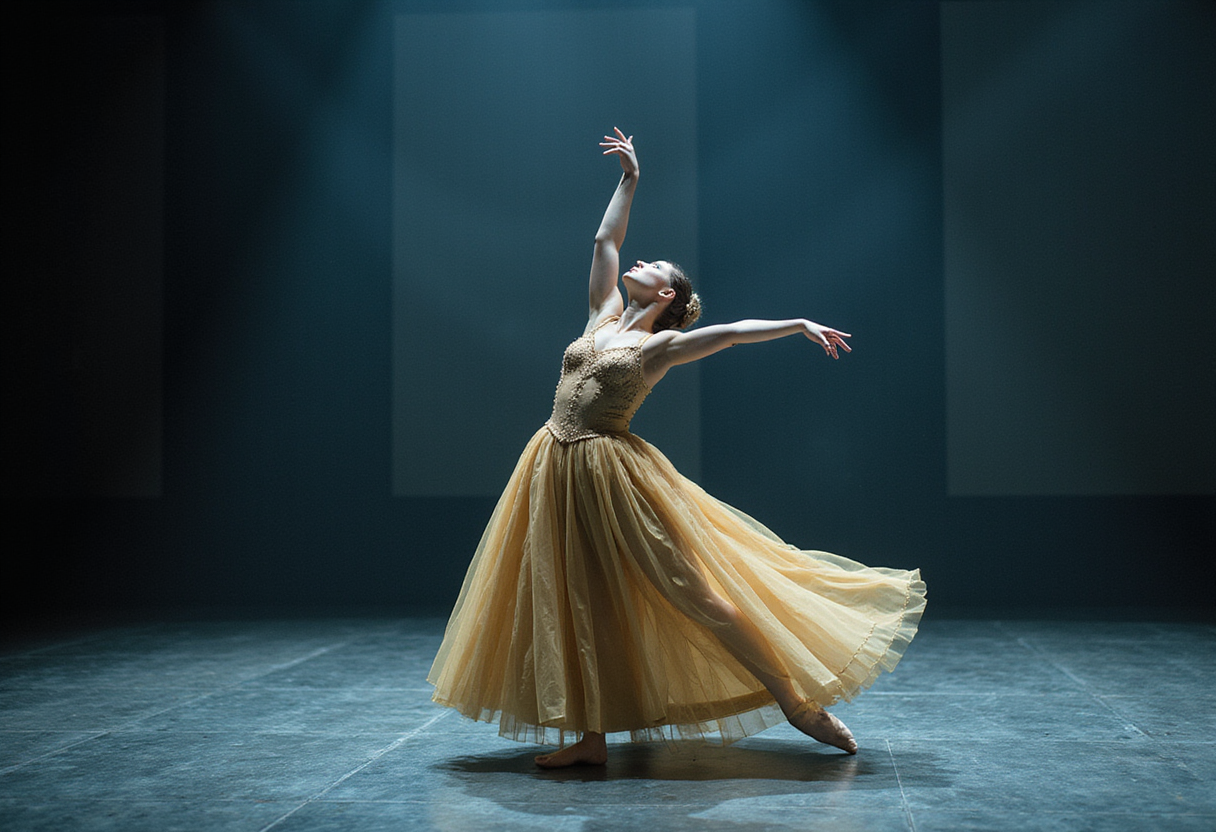
Dick Straker's video projections proved particularly striking, and Fiammetta Baldiserri's lighting design singled Tadzio out with discreet illumination, just as Aschenbach sees him: apart from the rest. The team conjured Venice's canals with white smoke across the floor, producing a chiaroscuro effect that made the canals appear to move. Gaitanou also worked extensively on the singers' acting, so that every movement and glance revealed something essential to the drama.
From the podium, the Australian conductor Daniel Smith delivered a reading the reviewer describes as clear, precise, melancholic and analytical, with rigorous attention to nuances and tempi. The I Pomeriggi Musicali Orchestra responded with a decisive, dynamic and moving account, with special praise for the percussion section's gloomy Venetian atmosphere. The OperaLombardia Chorus, prepared by Diego Maccagnola, performed with the utmost discipline.
Toby Spence anchored the evening as Aschenbach, a role that amounts almost to a monologue. The British tenor showed complete command of Britten's style, impeccable pronunciation and a voice ideally colored for the role — an Aschenbach both elegant and humane, outstanding vocally and dramatically. Dominic Sedgwick took on the seven roles from gondolier to barber, hotel manager and the Voice of Dionysus, differentiating each character through incisive singing and physical characterization. Countertenor Danilo Pastore, though somewhat unsettled and at times slightly flat, gave a satisfactory performance as the Voice of Apollo, with a golden-toned characterization "as though he were a sculpture made of gold."
The non-singing role of Tadzio belongs to a young dancer; Filippo Polli's work was commendable, and Mattia Agatiello's choreography captured Tadzio's elusive beauty as seen through Aschenbach's eyes. Smaller roles filled out the production's human mosaic: Xin Zhang as the Hotel Porter, Serena Pulpito as the Strawberry Seller and Danish Lady, Dario Battaglia in three roles including the Polish Father, Chiara La Porta, Ilaria Molinari, Fabio Sabadini, Federica Cassetti, Chiara Torosani, Marcello Zinzani, Renato Cadel, Marco Tomasoni, Davide Cucchetti, Jacopo Grenti, Letizia Egaddi and Isabella Di Pietro.
The production now travels on to Como, Pavia and Cremona.
Source: Opera Wire
More from Tom Whitfield
Show full bio
Market editor covering industry trends and analytics at Arts & Voices.
210 articles