Verdi's "Alzira" at Festival Verdi: A Flop Reconsidered, Not Rehabilitated
Verdi's "Alzira," the opera the composer called "really ugly," played Teatro Regio di Parma on October 17 with James Conlon conducting — and earned reconsideration, not rehabilitation.

Programme
- Verdi's "Alzira," premiered in Naples in 1845, was performed October 17 at the Teatro Regio di Parma as part of Festival Verdi.
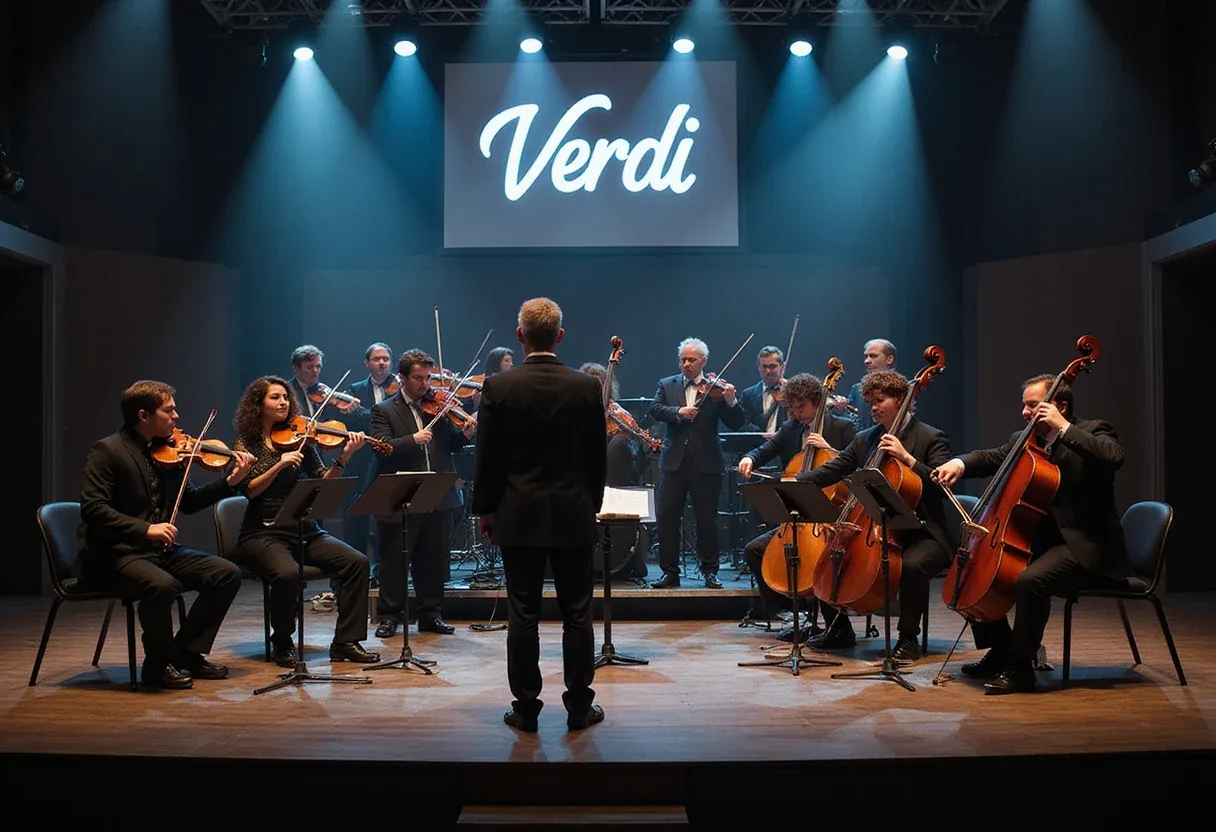
- James Conlon conducted; Manuel Renga directed; the Filarmonica Arturo Toscanini played in the pit.
- The libretto by Salvatore Cammarano adapted Voltaire's 1736 tragedy "Alzire, ou les Américains."
- Marta Torbidoni sang the title role, recently having sung Abigaille at the Arena di Verona and Lady Macbeth at Macerata.
- The review concluded the production achieved reconsideration rather than rehabilitation of Verdi's eighth opera.
Verdi's "Alzira," the opera the composer himself allegedly dismissed as "questa è proprio brutta" ("this is really ugly"), received a rare and serious hearing at the Teatro Regio di Parma on October 17, in a Festival Verdi production conducted by James Conlon and staged by Manuel Renga.
The verdict from the reviewer at OperaWire: respectable reconsideration, not rehabilitation. The 1845 Naples premiere work, Verdi's eighth stage opera and among the least performed in his catalogue, emerged as "a more interesting musical proposition than its standing might suggest" — but its libretto, by Salvatore Cammarano, still failed its source material.
What went wrong with the libretto?
The timing damns the piece. "Alzira" followed "Ernani" by barely a year and preceded "Macbeth" by two, yet the distance between them was considerable. Where those operas turned drama into music of compelling urgency, "Alzira" remained unevenly constructed, its promising confrontations undermined by abrupt transitions and an ending that demanded more psychological preparation than the libretto supplied.
The core failure was one of adaptation. Cammarano drew on Voltaire's 1736 tragedy "Alzire, ou les Américains," an Enlightenment play that questioned colonial domination, religious intolerance and the moral authority claimed by European conquerors. The librettist kept the outline and discarded the intellect. The struggle between the Spanish governor Gusmano and the Indigenous warrior Zamoro collapsed into romantic rivalry, while Alzira herself became, too often, a prize contested by opposing powers.
The finale exposed the problem most starkly. Gusmano — authoritarian ruler, implacable rival — forgives Zamoro after receiving a mortal wound, relinquishes Alzira and blesses the lovers. The reviewer found this conversion "more expedient than earned," the consequence of dramatic necessity rather than a sustained moral struggle. Voltaire's play also ended in forgiveness, but its philosophical framework gave the gesture a context the operatic version substantially weakened.
What did the staging add?
Renga's production resisted turning colonial Peru into picturesque exotica. Instead it emphasized the asymmetry of power between conquerors and conquered. A vast canvas depicting a scene from Hell, in the manner of Pieter Bruegel the Elder, served as a recurring backdrop — an apt visual echo, the review noted, of the suffering inflicted on the subjugated Incas by their Spanish rulers.
Both camps appeared in dual-period costume:
- The Indigenous characters alternated between stylized Inca attire and nineteenth-century dress evoking the Mexican Revolution.
- The Spaniards shifted between sixteenth-century courtier garb and nineteenth-century aristocratic dress.
- Paintings in the style of the Spanish Siglo de Oro adorned Gusmano's quarters.
The result was a visual dialogue between the era depicted and the era of composition. The reviewer praised the staging's elegance and its political intent, while conceding one complication: Renga made Gusmano "even more detestable and immoral" than the libretto already did — which made the governor's final act of forgiveness harder to believe, not easier.
How did the music and cast fare?
Conlon supplied "a much-needed sense of direction," drawing out the score's rhythmic vitality, orchestral color and theatrical impulses. The Filarmonica Arturo Toscanini offered effective support. Conlon did not pretend the score matched Verdi's later structural mastery; he argued for its particular qualities on their own terms. At times, however, the pacing turned overly expansive where momentum would have helped.
Marta Torbidoni, in the title role, was the production's most compelling singer, bringing immediacy and dramatic authority to Alzira's predicament. The casting raised questions. Torbidoni, recently Abigaille in "Nabucco" at the Arena di Verona and Lady Macbeth at Macerata, is a substantial, penetrating spinto soprano — not the lighter, more pliant voice listeners might expect in this role. The result compelled through personality and stage authority, if not conventional fit.
Antonio Poli sang Zamoro with ardor and a ringing lirico spinto tenor, brilliant squillo and an easy top register. Daniel Luis de Vicente offered an imposing Gusmano, though sheer vocal weight occasionally substituted for psychological shading — nuance that might have lent the unconvincing finale some credibility. Bass Alessio Cacciamani completed the principal cast as Alvaro.
What does this change for "Alzira"?
Not its reputation. The review's conclusion was measured: the evening's achievement was "one of reconsideration rather than rehabilitation." "Alzira" did not emerge as a neglected masterpiece, but it proved more worthy of attention than Verdi's dismissive remark implies. For a composer of Verdi's stature, even an imperfect early work — heard with this level of commitment — deserves more than historical curiosity.
Source: Opera Wire
More from Tom Whitfield
Show full bio
Market editor covering people, launches and day-to-day practice in arts in the broadest sense at Arts & Voices.
696 articles