Ed Perkins: 25 Years Building Mythical Worlds by Hand and Algorithm
British artist Ed Perkins has spent 25 years fusing painting, collage and algorithms into mythical landscapes of golden forests, crescent moons and celestial discs — with occasional AI input.
Programme
- Ed Perkins has worked in mixed-media and generative art for approximately 25 years.
- His process combines painting, drawing, collage, scanning, digital manipulation and algorithmic systems, occasionally with AI-generated elements.
- His imagery draws on fairy-tale symbolism and the writings of Joseph Campbell and William Blake.
- The portfolio was published by Design You Trust; the artist's work is shared via Instagram.
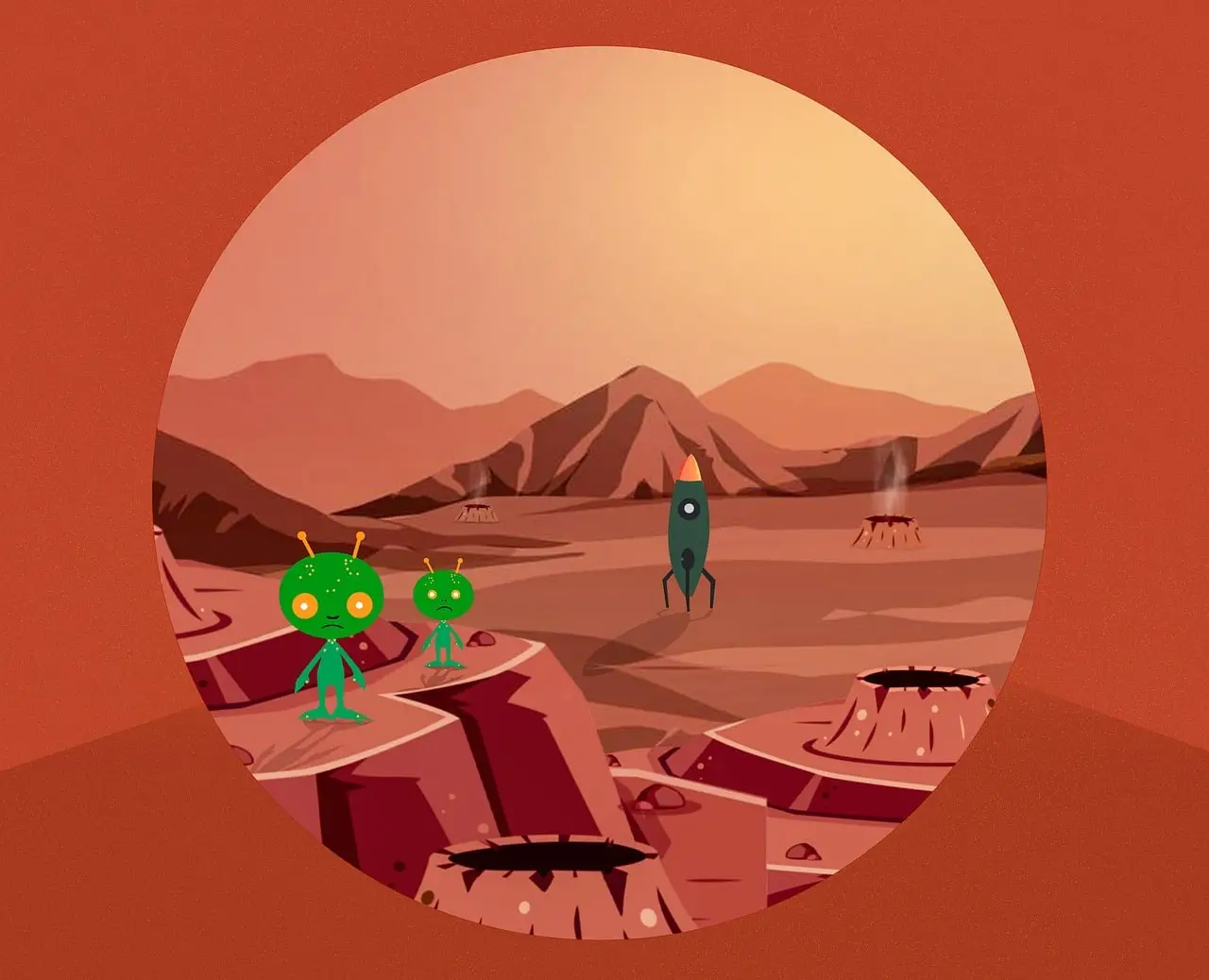
British artist Ed Perkins has spent roughly 25 years making fantasy landscapes that look, at first glance, like pages from an ancient book of myths. A golden forest glows beneath the evening sun. A mysterious creature stands beneath a perfect crescent moon. An enormous celestial disc rises above a restless ocean.
Those scenes are not painted in any single medium. According to Design You Trust, which published the portfolio, Perkins works across mixed media and generative art, combining painting, drawing, collage, scanning, digital manipulation and algorithmic systems — and, occasionally, AI-generated elements.
That last detail deserves scrutiny. AI imagery now floods social feeds, and most of it looks nothing like this. Perkins's stated method resists the comparison. Rather than treating technology as a shortcut to finished images, he builds and refines his compositions through multiple stages, shaping their colors, lighting, textures and atmosphere by hand.
What does the process actually involve?
The artist's background is unusually hybrid: music composition, programming and experimental technology. The portfolio text suggests each image passes through several layers of making — analog first, digital after, algorithmic throughout — before it reaches the luminous, decorative finish that recalls vintage illustration.
No gallery, price list, exhibition dates or representation details appear in the source. Readers wanting to see the work in person have no venue named to visit; the published trail leads to his Instagram account alone.
Where do the symbols come from?
Mythology and psychology anchor the imagery. The artist draws on the symbolic traditions of fairy tales and on the writings of Joseph Campbell, the American theorist of the hero's journey, and William Blake, the English poet-printer whose illuminated books set a precedent for visionary art over two centuries ago.
The reading the source proposes is consistent with those influences:
- A glowing doorway might represent a new beginning.
- An enchanted forest might conceal an inner journey.
- A distant light could become a symbol of hope.
Perkins creates environments that suggest something deeper than their immediate appearance, and the work invites viewers to wander through these landscapes and find whatever personal meaning they carry. That is an interpretive offer, not a fixed program — no iconographic key accompanies the images, and none is promised.
What does this change for digital art?
A claim often made about AI-assisted work is that it collapses craft into a prompt. Perkins's 25-year trajectory is a counterexample: the same artist who writes algorithmic systems also paints, draws, cuts collage and scans it. The tools multiply; the hand stays in the loop.
The caveat is size. What survives here is a portfolio description and a body of images, without exhibition history, critical reception or sales record to test the work against. The pictures are striking; the institutions have yet to weigh in.
For now, the fullest public record of Perkins's golden forests and crescent moons lives on his Instagram, where the artist posts new work directly.
Source: designyoutrust.com
More from Tom Whitfield
Show full bio
Market editor covering people, launches and day-to-day practice in arts in the broadest sense at Arts & Voices.
1,420 articles