Eric Bentley's HUAC Testimony Play Runs at Arena Stage Through Dec. 6
Eric Bentley's HUAC testimony play 'Are You Now or Have You Ever Been?' runs at Arena Stage in Washington through December 6, 2026, directed by Anna D. Shapiro.
Programme
- 'Are You Now or Have You Ever Been?' runs through December 6, 2026, at Arena Stage, Washington, DC
- Running time is one hour and 45 minutes with no intermission
- Eric Bentley wrote the play from actual HUAC hearing testimony; Anna D. Shapiro directs
- Kevin Mambo plays Paul Robeson; Peter Jacobson plays Abe Burrows
- Tickets: Box Office 202-488-3300, Tuesday–Sunday, noon–6 pm
Arena Stage in Washington, DC, is staging "Are You Now or Have You Ever Been?" through December 6, 2026. The production runs one hour and 45 minutes with no intermission at 1101 Sixth Street SW.
Eric Bentley wrote the play from the actual words of artists questioned by the House Un-American Activities Committee during the Red Scare. Anna D. Shapiro directs. The piece recreates hearings in which witnesses were interrogated about their political beliefs, associations and loyalties — proceedings that destroyed careers, produced blacklists and left many unable to find work again.
How does the production stage a hearing?
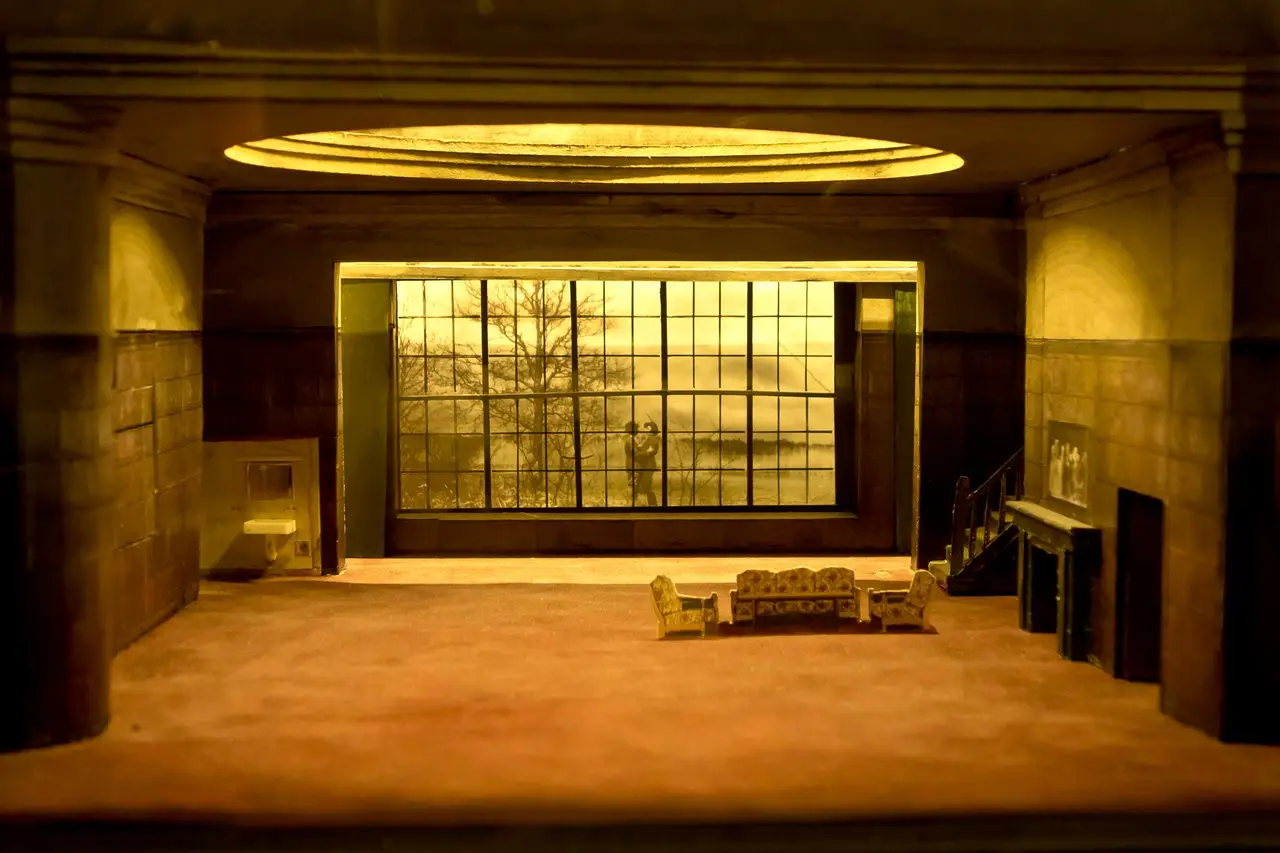
Andrew Boyce's set design establishes the hearing-room atmosphere, and Brittany Bland's projections add context while moving the audience through different moments in time. A translucent screen carries particular force: witnesses who finish their testimony remain visible behind it, standing nearly motionless as the next person takes their place — a simple device that shows how many people were caught up in the proceedings. Donald Holder's lighting distinguishes the passage of time and the shifts between public hearings and private moments.
The sound design by Rob Milburn and Michael Bodeen is a standout. Voices arrive from all directions, sometimes from people who have not yet entered the stage, creating an almost omnipresent presence. The typewriter sounds as though it sits in front of you; a gavel strike can seem to land beside your ear. The reviewer noted the effects are so well integrated that it was occasionally unclear whether they were live or prerecorded. Johanna Pan's costumes — notably a sea of tan suits — complete the period transportation.
What does Shapiro's direction do with the material?
Shapiro makes excellent use of the intimate space. There is not much movement, and none is needed; the focus stays on the testimony and the people delivering it. Actors interact naturally with the audience. When a spectator sneezed, an actor responded, "Bless you." When a line drew a big laugh from the front row, the actor acknowledged the person directly. These moments made the experience feel less like a performance and more like an actual hearing the audience happened to be sitting in on.
Who stands out in the cast?
- Peter Jacobson, as Abe Burrows, brings a much-needed burst of energy, getting laughs just as the proceedings grow heavier.
- Kevin Mambo is equally compelling as Paul Robeson. His testimony carries an emotion the review calls difficult to put into words, and the racial dimension of Robeson's experience adds a layer: he confronts the hypocrisy of a country questioning his loyalty while failing to offer its own citizens equal treatment.
- Edward L. Simon, Greg Stuhr and Stephen Cefalu Jr., playing Man 1, Man 2 and Man 3, move between multiple real-life figures with impressive ease; the reviewer occasionally wished for more differentiation through vocal choices or small costume changes.
- John Leslie Wolfe gives the Chairman an air of authority; Philip Earl Johnson and Jason Babinsky establish the committee's weary, fed-up atmosphere; Aaron Bliden brings affecting sincerity to Larry Parks; Rivka Borek gives Lillian Hellman a strong presence; Jeff Still makes an impression as Lionel Stander with clear conviction.
Does the play tell audiences what to think?
A brief stretch about a third of the way through sees the energy dip, but the production rebuilds steadily to a strong finish. The reviewer found the circumstances complicated: different people faced different pressures, made different choices and understood the situation through very different perspectives — like two people watching the same news broadcast and walking away having seen entirely different things.
The play does not tell the audience what to think. It puts the questions, testimonies and consequences in front of viewers and lets them sit with them — a posture the reviewer appreciated in a work about a period that feels, in the review's words, "uncomfortably relevant." At one performance, a spectator muttered "Don't answer, don't answer" as the committee pressed a witness — a small reaction that showed how invested the room had become.
Tickets are available through the Arena Stage Box Office at 202-488-3300, Tuesday through Sunday, noon to 6 pm, or online.
Source: mdtheatreguide.com
More from Elena Vasquez
Show full bio
Senior reporter covering technology and product news in arts in the broadest sense at Arts & Voices.
1,465 articles