Florent Lebrun's Fantasy Ruins: Concept Art on an Epic Scale
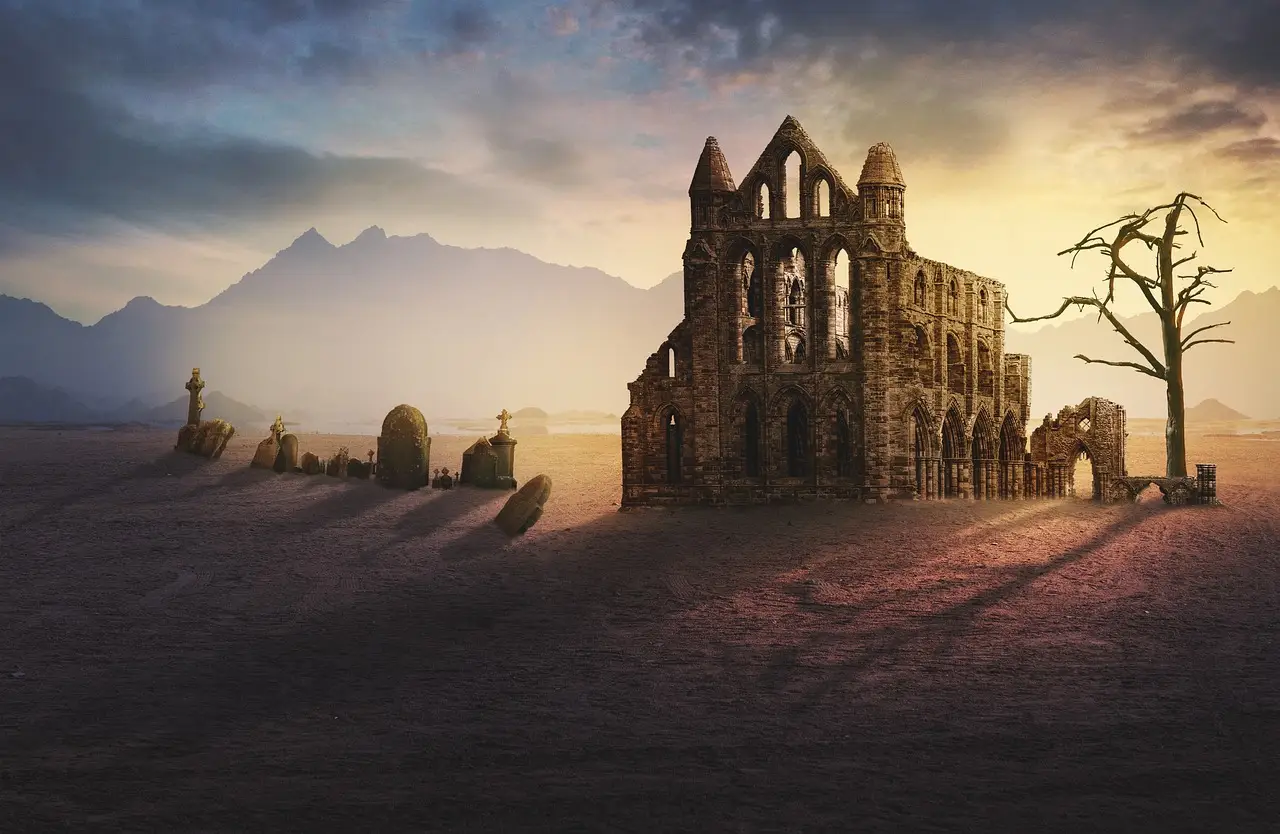
French concept artist Florent Lebrun — credits include Game of Thrones and The Last of Us Part II — paints vast fantasy ruins built from 3D modeling, digital painting and photobashing.
Programme
- Florent Lebrun is a French concept artist originally trained in visual effects
- His credits include Harry Potter, Game of Thrones, Alien: Covenant and The Last of Us Part II
- He began his career making matte paintings for film before moving into video game concept art
- His portfolio includes work for Magic: The Gathering
- His process combines 3D modeling, digital painting and photobashing
French concept artist Florent Lebrun has a credit list most illustrators would trade a limb for: Harry Potter, Game of Thrones, Alien: Covenant and Naughty Dog's The Last of Us Part II. His personal work, now circulating on Design You Trust, is a gallery of vast fantasy landscapes — ruined temples, mist-swallowed towers and travelers dwarfed by forgotten civilizations.
A narrow stone bridge spans a bottomless canyon. A lone shepherd follows a flock of sheep past the remains of an enormous, unnamed empire. These are the places Lebrun likes to imagine, and, as Design You Trust puts it, they're "exactly the sort of places you'd want to explore if you weren't quite so worried about falling to your death."
Who is Florent Lebrun?
Lebrun trained originally in visual effects. He began his career producing matte paintings (painted backdrops merged into live-action film shots) for film productions before moving into video game concept art. His portfolio also includes card art for Magic: The Gathering and a substantial body of personal fantasy and science fiction environments.
The scale of the credits matters here. This is an artist who has built imagery for two of the biggest franchises in contemporary visual culture. His personal landscapes read like concept art for a film that was never greenlit — which, in this genre, is a compliment.
What makes the images work?
According to Design You Trust, one of the most appealing things about Lebrun's work is "how much storytelling he manages to squeeze into a single image." A few tiny figures are often enough to make an enormous environment feel alive. Weathered stone, unusual architecture and carefully placed light suggest centuries of history without explaining any of it.
That restraint is the point. The images withhold their own backstory.
His process combines three techniques:
- 3D modeling — constructing the architecture digitally before painting
- Digital painting — rendering surfaces, light and atmosphere by hand
- Photobashing — compositing photographic elements into painted scenes
The result, per Design You Trust, is intricate environments that feel "both fantastic and strangely believable." That balance — the impossible rendered with documentary patience — is what separates his work from generic fantasy illustration.
Why the scale trick matters
Whether he's painting a ruined temple, a futuristic structure or a lonely traveler crossing an unfamiliar landscape, his compositions carry what the site calls "a remarkable sense of scale and atmosphere." The device is consistent: the human figure shrinks, the architecture looms, and the viewer's eye does the rest.
It's a comparison worth making once. Lebrun's ruins function the way Caspar David Friedrich's mountains once did — as sublimity delivered through the smallness of the figure in the frame. The rhetoric has simply moved from oil on canvas to Photoshop.
The full gallery of several dozen images is viewable on Design You Trust, and Lebrun posts ongoing work on his Instagram. For anyone tracking where film-grade world-building migrates when it isn't under contract, his personal feed is the place to watch.
Source: designyoutrust.com
More from Daniel Okafor
Show full bio
News editor covering companies, deals and strategy in arts in the broadest sense at Arts & Voices.
1,078 articles