Former cellist threads cameras inside instruments for cathedral-scale views
Charles Brooks threads endoscopes inside instruments, stacks thousands of images, and shows the results at three-metre height in Adelaide until 5 December. The clarinet, it turns out, is a tunnel.
Programme
- Architecture in Music runs at Immersive Light and Art, Adelaide, until 5 December
- Each instrument takes at least eight hours to photograph and up to two weeks to assemble
- Exhibition screens are three metres high and about eight metres long
- Featured instruments include a 1780 Lockey Hill cello and a Muramatsu 14k rose gold flute
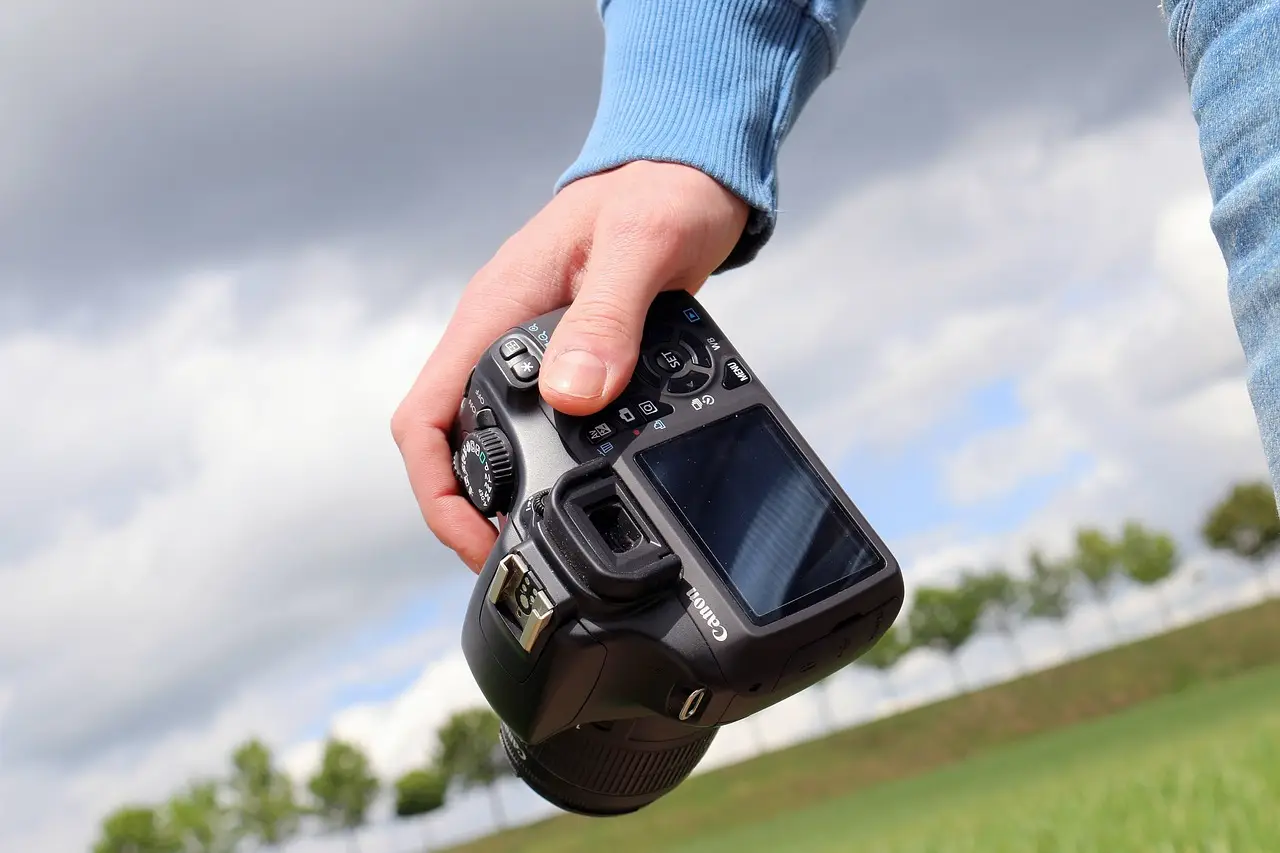
- Brooks uses endoscopes and Lumix cameras, taking hundreds to thousands of images per instrument
A clarinet becomes a dark tunnel. A Steinway grand becomes a futuristic train station. Photographer Charles Brooks makes both happen with endoscopes (tiny tube-mounted lenses a few millimetres thick) threaded inside instruments, and his exhibition Architecture in Music runs at Adelaide's Immersive Light and Art gallery until 5 December.
Brooks, 48, is Melbourne-based and was born in New Zealand. He trained as a cellist before turning to photography. The project began during Covid lockdowns, when musicians couldn't perform and instruments sat in repair shops. "The effect was sort of immediate," he says. "The moment I saw these photos coming together I realised there was something special here. I had to get into other instruments."
How do you photograph inside a flute?
Slowly. The minuscule lens captures only a small area in focus at a time. Brooks takes "anywhere between a few hundred and sometimes many thousands of images, moving that focus point, rotating the lens a fraction of a millimetre at a time", then stacks them in software. A single shot takes at least eight hours; assembly can take a couple of weeks. He adjusts lighting and uses temperature monitors to protect the instruments. "I'm very careful with the instruments. They're never modified at all," he says.
The method reveals wear as biography. A Muramatsu 14k rose gold flute, handmade in Japan and owned by Orchestra Victoria flutist Jessie Gu, shows thousands of fine lines down its barrel from daily cleaning. "All of these are living instruments. They're not sitting in a museum. These are the marks of them being played," Brooks says. Cleaning before a shoot has its own old trick: "You pour dry rice in and swill them around and the static electricity binds all the dust to it and you can just shake it out."
What's in the pictures?
- Yidaki (didgeridoo), shot with a Laowa Probe lens on a Lumix S1R — ridges carved by termites, with ochre from the mouthpiece drifting inside. "With the light coming through the end, it looks like a nebula."
- Steinway grand piano — wippen, spoons and springs, thousands of handmade parts, with roughly 20 tons of string pressure on the frame. "I think a piano is probably the most complex wooden thing that's still handmade anywhere."
- Bandoneón — German-made, inseparable from Argentine tango. The bellows read like stairs inside a European opera house.
- Timpani, loaned by Orchestra Victoria's principal timpanist Guy du Blêt — "What look like enormous discs are actually the size of a coin."
- Martin D-35 guitar in Madagascar rosewood, owned by Peter Mrkusich — a warm, expansive concert hall from the inside.
- 17-inch Zildjian K symphonic cymbals, stacked flat with a tiny gap, hand-hammered surfaces reading like a seascape or sunset.
- Fazioli grand piano — 100 images stacked for back-to-front sharpness. "Your brain doesn't think it's small."
- Buffet Crampon Prestige Low C bass clarinet in African blackwood, grain flecked with whites and browns.
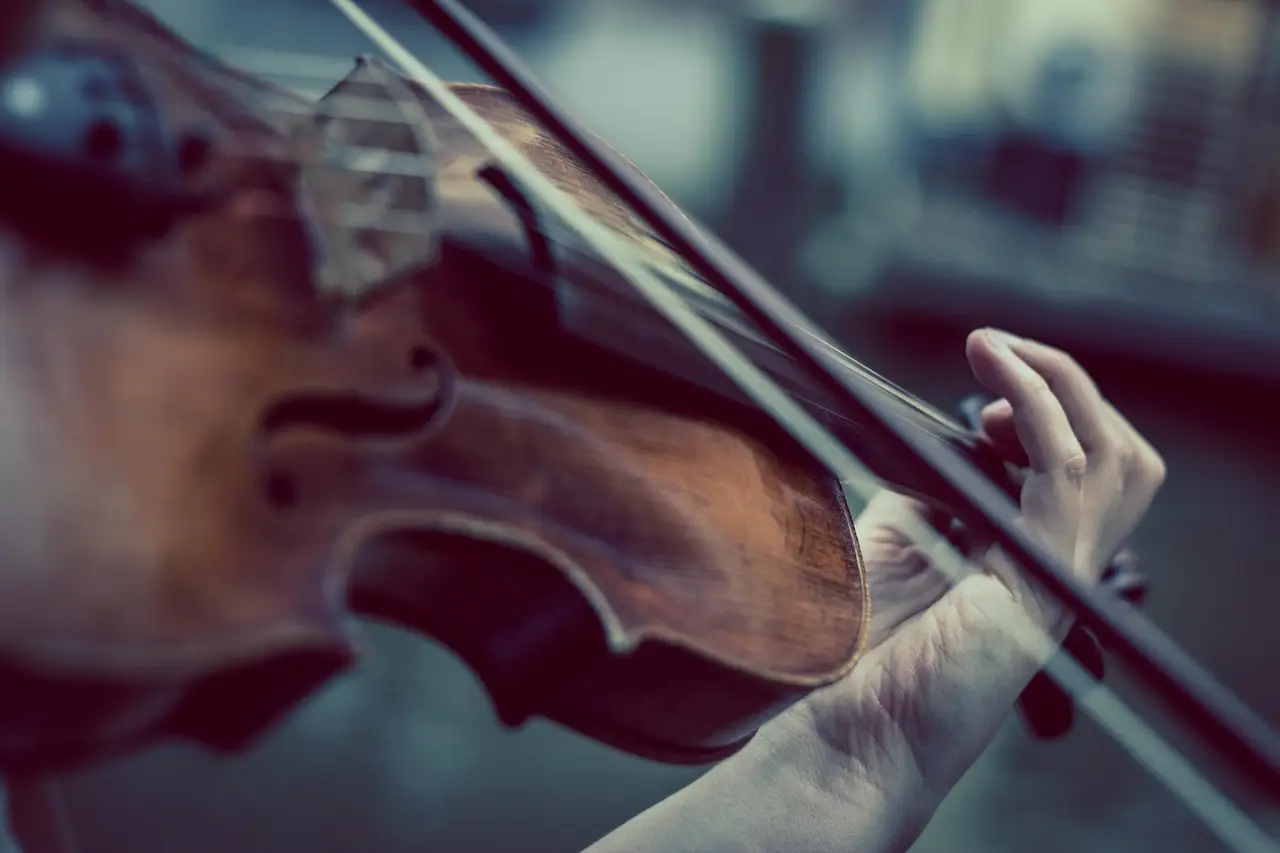
- Lockey Hill cello, made in England around 1780 and now under restoration, showing original tool marks and repairs.
- Double-bell bass trombone by Adelaide maker Bret Gustafson, played by Orchestra Victoria's Ben Anderson, its valves built to switch between tones.
- Organ pipes at St Mark's church, Auckland, each under a centimetre across. "People say it's a bamboo forest or hair follicles," Brooks says. "This one really does mess with your sense of scale."
Why Adelaide is the first
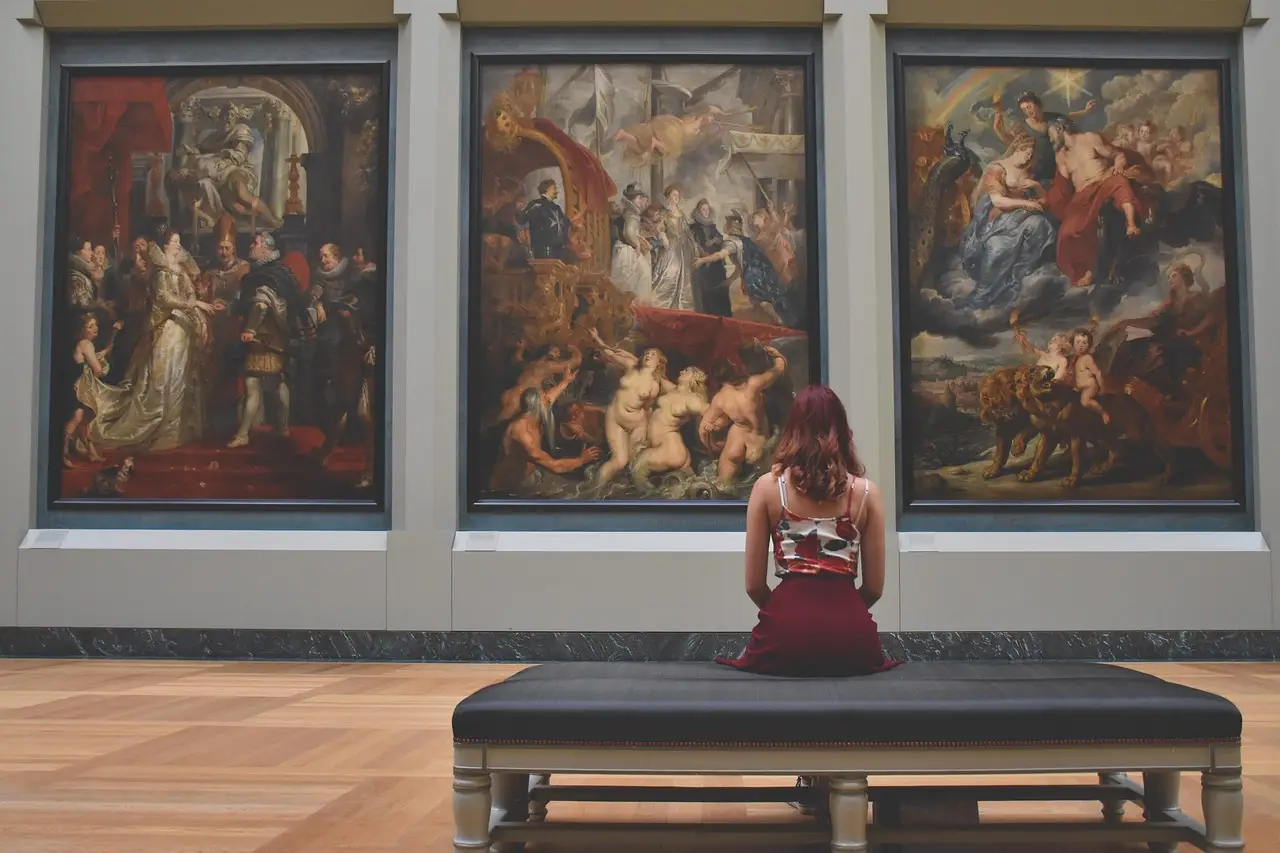
For the first time in Australia, the images show at monumental scale. "You see them on a screen that's three metres high and about eight metres long and curves around you — suddenly you're not just looking at a picture of a space, you are standing physically inside the belly of a Stradivarius violin or a magnificent Steinway piano," Brooks says. Visitors have until 5 December to test that claim from the inside.
Source: theguardian.com
More from Daniel Okafor
Show full bio
News editor covering companies, deals and strategy in arts in the broadest sense at Arts & Voices.
1,683 articles